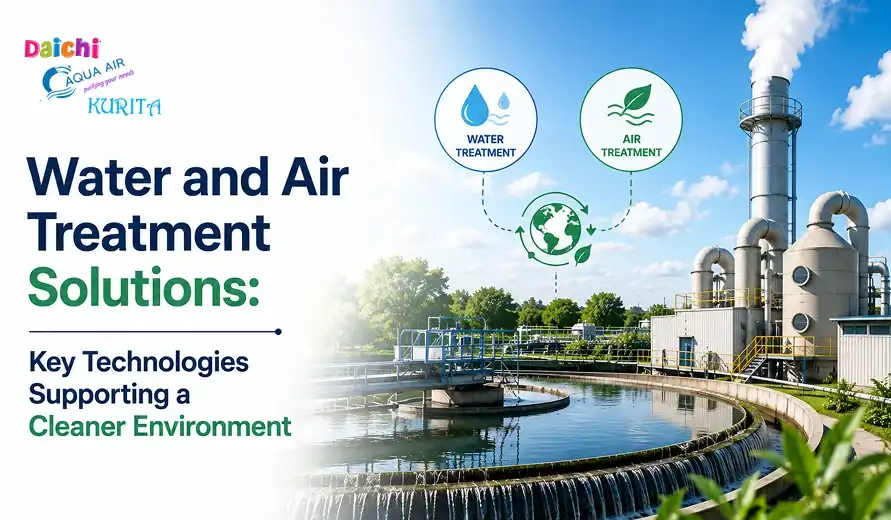
Clean water and clean air are essential for healthy communities, productive industries, and a safe environment. As cities grow and industrial activity increases, businesses need practical ways to manage wastewater, airborne pollutants, and contaminated water. Water and Air Treatment Solutions provide the technologies needed to reduce pollution, improve resource quality, and support responsible industrial operations.
Modern treatment systems are designed for different requirements, from removing suspended particles from water to controlling gases and fine pollutants released into the atmosphere. By selecting the right combination of treatment processes, industries can manage waste more responsibly while meeting environmental standards.
Why Water and Air Treatment Solutions Matter
Industrial operations use water for manufacturing, cooling, cleaning, processing, and other activities. After use, this water may contain oils, chemicals, suspended solids, organic matter, salts, or other contaminants. Releasing untreated wastewater can damage rivers, groundwater, soil, and nearby ecosystems.
Air pollution is another major concern. Manufacturing plants, chemical facilities, power plants, and other industrial sites can release dust, fumes, gases, vapors, and fine particles. These pollutants can degrade air quality and pose risks to workers and nearby communities.
Water and Air Treatment Solutions help industries control these problems at their source. Treatment equipment can separate contaminants, reduce pollutant concentrations, recover usable resources, and prepare water or air for safe discharge or further use.
Industrial Water Treatment Systems for Better Resource Management
Water treatment begins with understanding what is present in the incoming water and what the treated water needs to achieve. Different industries may require different processes because water quality can vary significantly between applications.
Industrial Water Treatment Systems commonly combine several stages. Preliminary treatment may remove larger materials and suspended particles. Chemical treatment can help separate certain dissolved or suspended contaminants. Physical processes may then remove remaining solids, while membrane or advanced treatment can address smaller impurities.
A typical industrial setup may include:
- Screening and pre-treatment
- Clarification and sedimentation
- Chemical dosing
- Multimedia filtration
- Activated carbon treatment
- Membrane separation
- Reverse osmosis
- Demineralisation
- Water softening
- Disinfection
The exact combination depends on the source water, production process, contaminant profile, flow rate, and required water quality.
Water Filtration Systems
Water Filtration Systems are commonly used as part of industrial treatment plants. They can remove suspended solids, sediments, turbidity, and other unwanted materials before water moves into more advanced treatment stages.
Sand filters, multimedia filters, cartridge filters, bag filters, and other filtration units can be selected according to the quality of the incoming water. Proper filtration also helps protect downstream equipment from excessive solids and fouling.
Water Purification Technologies and Their Industrial Uses
Water Purification Technologies have developed considerably as industries have become more focused on water quality and resource conservation. Modern plants can use several processes to produce water suitable for manufacturing, boilers, cooling systems, cleaning operations, or reuse.
Reverse osmosis is one widely used process. It uses a semi-permeable membrane to reduce dissolved salts and many other impurities. The process is commonly applied where industries require lower total dissolved solids in treated water.
Ultrafiltration uses membranes with smaller pores to separate suspended particles, microorganisms, colloids, and certain larger molecules. Nanofiltration can target selected dissolved substances while operating at different pressure levels from reverse osmosis.
Ion exchange is another useful method. It can reduce hardness and remove selected ions from water. Demineralisation systems may also be used when industries require water with very low concentrations of dissolved minerals.
Disinfection is often included when microbial control is required. Depending on the application, treatment may involve ultraviolet systems, ozone, or carefully controlled chemical processes.
Industrial Wastewater Treatment
Industrial wastewater requires careful assessment because its composition depends heavily on the manufacturing process. Food processing wastewater may contain high organic loads, while metal processing can produce wastewater containing metals and chemical compounds. Textile operations may generate coloured wastewater, and chemical plants can produce streams with complex dissolved contaminants.
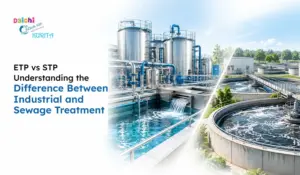
Industrial Wastewater Treatment generally involves multiple stages rather than one single process. Primary treatment focuses on physical separation. Secondary treatment may use biological processes to reduce biodegradable organic matter. Tertiary treatment can provide additional removal of nutrients, dissolved substances, colour, or other contaminants.
Common processes include:
- Equalisation tanks
- Oil and grease separation
- Dissolved air flotation
- Chemical coagulation
- Biological treatment
- Clarification
- Membrane filtration
- Sludge treatment
- Disinfection
Water reuse can also be considered where the treated water meets the required quality. Reusing suitable treated water for cooling, gardening, washing, or selected production processes can reduce demand for fresh water.
Air Pollution Control Systems for Industrial Facilities
Water management is only one part of environmental protection. Industries must also control pollutants released into the atmosphere.
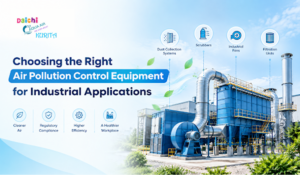
Air Pollution Control Systems are selected according to the type and concentration of pollutants generated by a facility. Dust collectors can capture particulate matter, while scrubbers can remove certain gases and particles from industrial exhaust streams.
Baghouse filters are widely used for particulate control. Electrostatic precipitators can collect fine particles from large volumes of industrial gas. Wet scrubbers bring contaminated gas into contact with a liquid, allowing selected pollutants to be removed through absorption or chemical reactions.
Cyclone separators use centrifugal forces to separate larger dust particles from air. They are often used as a preliminary stage before finer filtration equipment.
The selection of an air pollution control system depends on factors such as gas temperature, flow rate, particle size, chemical composition, moisture level, and required emission limits.
Industrial Air Treatment Solutions for Cleaner Workplaces
Industrial Air Treatment Solutions can address pollutants generated inside production areas as well as emissions from exhaust systems. Local exhaust ventilation can capture contaminants close to where they are produced, reducing their movement through the workplace.
Air treatment may involve dust collection, gas removal, ventilation, filtration, odour control, or combinations of these methods. For processes that generate fumes or vapours, the treatment system should be designed around the specific characteristics of the pollutant.
Regular inspection is important because filters, ducts, fans, scrubbers, and collection units can lose performance when maintenance is neglected. Pressure readings, airflow measurements, filter condition, and equipment performance should be checked according to the operating requirements of the plant.
How Modern Treatment Technologies Support Environmental Protection
The main benefit of integrated Water and Air Treatment Solutions is better control of pollution from multiple sources. Instead of treating environmental management as a single activity, industries can address water, wastewater, air emissions, and resource consumption through connected systems.
Automation can also improve treatment operations. Sensors can monitor parameters such as pH, turbidity, pressure, flow, dissolved solids, and other process conditions. Control systems can then help operators maintain treatment performance within defined operating ranges.
Energy efficiency is another consideration. Pumps, blowers, compressors, membranes, and other equipment can consume substantial amounts of energy. Choosing appropriately sized equipment and maintaining operating conditions can help control unnecessary energy use.
Resource recovery is also becoming more important. Some treatment processes allow industries to recover water, useful materials, heat, or other resources that might otherwise be lost. This approach can reduce waste while supporting more efficient use of raw materials.
Choosing the Right Treatment Approach
Every industrial facility has different treatment requirements. A system designed for a food processing plant may not be suitable for a pharmaceutical facility, metal processing unit, textile plant, or chemical manufacturer.
Before selecting equipment, industries should assess:
- Source water and wastewater characteristics
- Air emission sources
- Contaminant types and concentrations
- Required treatment capacity
- Treated water quality requirements
- Applicable environmental standards
- Available space
- Energy requirements
- Maintenance requirements
- Future expansion plans
Laboratory testing and process analysis can help determine which treatment technologies are suitable. A properly planned system should also allow operators to monitor performance and carry out routine maintenance.
The Future of Environmental Treatment
Environmental treatment is moving toward greater water reuse, lower waste generation, energy-conscious equipment, improved monitoring, and better resource recovery. Membrane systems, advanced filtration, automation, sensors, and hybrid treatment processes are likely to remain important in industrial applications.
Industries are also paying greater attention to the complete treatment cycle. This means considering what happens to removed solids, concentrated wastewater, used filters, captured dust, and other residual materials.
A long-term environmental strategy should therefore look beyond the installation of treatment equipment. It should include regular testing, preventive maintenance, operator training, process monitoring, and periodic system evaluation.
Conclusion
Water and Air Treatment Solutions provide industries with practical methods for controlling pollution, protecting natural resources, and maintaining cleaner operating environments. From filtration and membrane separation to wastewater treatment, dust collection, gas scrubbing, and air filtration, different technologies can be combined according to specific industrial requirements.
The right treatment approach depends on the type of contaminants, operating conditions, required capacity, environmental standards, and future needs of the facility. With appropriate system planning, regular maintenance, and continuous monitoring, industries can manage water and air quality more responsibly while making better use of valuable resources.
FAQ
What are Water and Air Treatment Solutions?
Water and Air Treatment Solutions include technologies and processes used to remove contaminants from water, wastewater, and industrial air streams. They can include filtration, membrane treatment, wastewater processing, dust collection, gas scrubbing, and other pollution-control methods.
Which technologies are used for industrial water treatment?
Common technologies include screening, clarification, chemical treatment, filtration, activated carbon, reverse osmosis, ultrafiltration, ion exchange, softening, demineralisation, and disinfection. The appropriate combination depends on water quality and the intended application.
How do industries control air pollution?
Industries can use dust collectors, baghouse filters, cyclone separators, electrostatic precipitators, scrubbers, ventilation systems, and other emission-control equipment. The choice depends on the type of pollutant, gas conditions, emission volume, and required removal level.
Can treated industrial wastewater be reused?
Yes, treated wastewater can be reused when its quality meets the requirements of the intended application. Depending on the treatment level, reuse may be possible for cooling, cleaning, irrigation, process applications, or other suitable industrial purposes.
Why is regular maintenance important for treatment plants?
Regular maintenance helps treatment equipment operate within its intended performance range. Inspection of filters, membranes, pumps, blowers, sensors, ducts, tanks, and other components can help identify wear, fouling, blockages, or performance problems before they affect the overall treatment process.