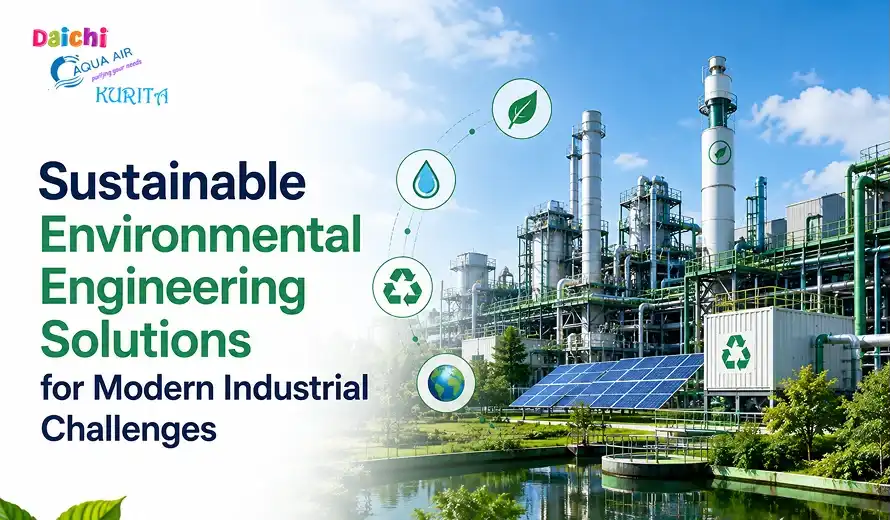
Industries are under increasing pressure to manage water, waste, emissions, energy use, and natural resources responsibly while maintaining productive operations. Sustainable Environmental Engineering Solutions provide practical methods for addressing these challenges through better resource management, pollution prevention, wastewater treatment, waste reduction, and efficient industrial processes. Modern environmental planning is no longer limited to treating waste after it is generated. It also focuses on reducing waste at its source, reusing resources, recovering useful materials, and designing systems that remain practical over the long term.
Sustainable Environmental Engineering Solutions for Changing Industrial Needs
Industrial facilities operate with different raw materials, production processes, equipment, and environmental requirements. A solution that works well for one facility may not be suitable for another. Environmental engineering therefore begins with understanding how a particular industrial process uses resources and generates waste.
Manufacturing plants may consume large quantities of water for processing, cleaning, cooling, and steam generation. Chemical industries can produce wastewater containing complex compounds, while food processing facilities may generate wastewater with high organic content. Metalworking facilities can produce wastewater containing oils, suspended particles, and dissolved metals. Each situation requires careful assessment before selecting treatment equipment or management methods.
Sustainable Environmental Engineering Solutions address these requirements by combining environmental protection with practical industrial planning. The objective is to control pollution while keeping treatment systems suitable for the facility’s production capacity, available space, energy requirements, maintenance resources, and future expansion plans.
Important areas of modern environmental engineering include:
- Industrial wastewater treatment
- Water recycling and reuse
- Air emission management
- Industrial waste reduction
- Resource recovery
- Energy-efficient treatment processes
- Environmental monitoring
- Pollution prevention
- Sludge treatment and management
- Compliance monitoring
Rather than treating these areas as separate concerns, businesses can assess how they affect one another. For example, reducing water consumption can lower wastewater generation, while recovering materials from waste can reduce disposal requirements.
Sustainable Environmental Engineering Solutions for Industrial Water Management
Water is one of the most important resources used by industrial facilities. Depending on the sector, water may be required for production, cooling, washing, boilers, cleaning, or other operational activities. Poor water management can increase operating costs and place pressure on local water resources.
Sustainable Water Treatment Systems can help industries treat wastewater and prepare suitable water for reuse. Depending on wastewater characteristics, treatment may include screening, equalisation, sedimentation, biological treatment, filtration, membrane processes, disinfection, or other specialised methods.
The treatment process should begin with a detailed analysis of the wastewater. Parameters such as pH, suspended solids, organic load, dissolved substances, oil content, chemical characteristics, and flow variations can influence technology selection.
Water reuse is also becoming an important part of industrial resource planning. Treated water may be suitable for applications such as equipment washing, cooling, landscaping, flushing, or other non-potable uses, depending on its quality and the intended application.
A well-planned water management system can include:
- Measuring water consumption across production areas.
- Identifying processes with high water demand.
- Separating different wastewater streams where appropriate.
- Treating wastewater according to its characteristics.
- Evaluating opportunities for treated-water reuse.
- Monitoring water quality and treatment performance.
This approach can reduce unnecessary freshwater consumption while helping facilities manage wastewater more efficiently.
Sustainable Environmental Engineering Solutions for Industrial Waste Management
Industrial waste can include production residues, packaging materials, sludge, oils, chemicals, contaminated materials, metals, organic waste, and other by-products. Handling all waste in the same manner can create unnecessary costs and environmental risks.
Industrial Waste Management Solutions begin with identifying where waste is produced and determining whether the quantity can be reduced at the source. Waste segregation is especially important because different materials may require different storage, recycling, treatment, or disposal methods.
Industries can consider several waste management practices:
- Source reduction
- Material segregation
- Recycling
- Reuse of suitable materials
- Recovery of valuable components
- Sludge management
- Safe storage of hazardous materials
- Controlled disposal of residual waste
Waste audits can help businesses identify recurring sources of material loss. For example, excessive packaging, production rejects, spills, inefficient material handling, and process residues may contribute to avoidable waste.
Resource recovery can also provide another option. Some industrial by-products may have potential for reuse in another process when their quality and safety characteristics permit it. This reduces dependence on disposal and can improve the overall use of raw materials.
Waste management should also consider employee safety. Proper labelling, storage, handling procedures, containment systems, and staff training are important when facilities handle hazardous or chemically contaminated materials.
Air Quality and Industrial Pollution Management
Industrial processes can generate dust, fumes, gases, vapours, and particulate matter. Boilers, furnaces, chemical processes, material handling systems, and manufacturing equipment may all contribute to atmospheric emissions.
Industrial Pollution Control Solutions should be selected according to the source and characteristics of the emission. Common technologies include bag filters, cyclone separators, wet scrubbers, electrostatic systems, activated carbon units, and specialised gas treatment equipment.
The appropriate system depends on factors such as:
- Type of pollutant
- Gas flow rate
- Operating temperature
- Particle size
- Chemical characteristics
- Required emission limits
- Available installation space
- Maintenance requirements
Pollution control equipment should also be checked regularly. Blocked filters, damaged ducts, poorly maintained fans, or inefficient operating conditions can affect system performance.
Air quality management should not depend only on equipment installation. Process improvements can also reduce emissions by addressing the source itself. Better material handling, enclosed production areas, improved combustion control, and proper equipment operation can contribute to cleaner industrial processes.
Sustainable Industrial Engineering for Resource Efficiency
Sustainable Industrial Engineering focuses on improving industrial processes while considering resource consumption and environmental impact. Instead of examining environmental systems only after production has taken place, engineers can evaluate how production methods themselves affect water use, energy consumption, raw material use, and waste generation.
Energy efficiency is an important part of this approach. Environmental systems often use pumps, blowers, fans, compressors, mixers, and other equipment. Their energy requirements can represent a significant part of operating expenses.
Efficient equipment selection, appropriate sizing, variable-speed operation, improved process control, and preventive maintenance can help reduce unnecessary energy use.
For wastewater treatment, for example, aeration can account for a substantial share of electricity consumption in biological treatment systems. Controlling aeration according to actual treatment requirements can help avoid excessive energy use.
The same principle applies to water pumping, ventilation, filtration, and other environmental systems. Equipment should be selected according to actual operating requirements rather than simply choosing systems with unnecessarily high capacity.
Environmental Engineering Services for Modern Facilities
Environmental Engineering Services can support businesses at different stages of an industrial project. These services may include environmental assessments, wastewater treatment planning, pollution-control design, waste management planning, monitoring, system optimisation, and compliance support.
During the planning stage, engineers can examine the proposed production process and identify possible environmental concerns before construction begins. This can make it easier to allocate space for treatment systems, pipelines, storage areas, monitoring equipment, and other infrastructure.
Existing facilities may require a different approach. Older treatment systems may have insufficient capacity, high energy consumption, poor process control, or outdated equipment. A technical assessment can identify areas that require modification or replacement.
Environmental engineering can also support expansion projects. When production capacity increases, water consumption and waste generation may increase as well. Treatment systems should therefore be reviewed before expansion so that additional loads can be managed safely.
Eco-Friendly Engineering Solutions and Resource Recovery
Eco-Friendly Engineering Solutions focus on reducing environmental impact without ignoring practical operating requirements. These solutions may involve water reuse, energy-efficient equipment, waste recovery, cleaner production methods, or improved pollution prevention.
Resource recovery is an important part of this approach. Industrial facilities may have opportunities to recover water, materials, heat, or other useful resources from processes that would otherwise create waste.
For example, treated wastewater can potentially be reused for suitable applications. Certain waste materials may be separated for recycling. Heat generated by industrial processes may also be recovered where technical and economic conditions support it.
The goal is to move away from a simple model of “use, treat, and dispose.” Instead, industries can assess whether resources can remain useful for longer within the facility or through suitable recovery processes.
Monitoring and Maintaining Environmental Systems
Even a well-designed environmental system requires regular monitoring and maintenance. Treatment performance can change when production loads vary, equipment wears out, or wastewater characteristics shift.
Facilities may monitor parameters such as water flow, pH, turbidity, dissolved oxygen, pressure, temperature, emissions, energy consumption, and waste generation. The exact monitoring requirements depend on the industry and applicable environmental standards.
Routine inspections can identify issues before they become major operational problems. Preventive maintenance of pumps, filters, blowers, fans, membranes, sensors, valves, and other components can also support consistent system performance.
Data from environmental monitoring can help operators understand whether a system is working within its intended operating range. It can also provide useful information for planning upgrades and identifying areas where resource consumption may be reduced.
Building Long-Term Industrial Environmental Strategies
Environmental planning should account for both current operations and future needs. A treatment system designed only for today’s production may become insufficient if the facility expands or changes its manufacturing processes.
Long-term planning can include:
- Current and projected production capacity
- Future wastewater volumes
- Expected changes in raw materials
- Water availability
- Energy consumption
- Waste generation
- Environmental standards
- Maintenance requirements
- Available land and infrastructure
- Potential reuse opportunities
This makes environmental engineering part of wider industrial planning rather than a separate activity added after production systems are already established.
Businesses can also review their environmental performance periodically. Regular assessments help identify changing conditions and provide opportunities to improve treatment, reduce waste, and manage resources more carefully.
Conclusion
Sustainable Environmental Engineering Solutions give modern industries practical ways to manage wastewater, industrial waste, air emissions, energy consumption, and natural resources. The most suitable approach depends on the industry’s processes, environmental requirements, production capacity, available infrastructure, and long-term operating plans.
Modern environmental engineering places greater attention on prevention, reuse, recovery, efficient treatment, and continuous monitoring. By combining appropriate treatment technologies with responsible resource management, industries can reduce unnecessary waste and manage environmental responsibilities as part of everyday operations.
A carefully planned environmental strategy can support cleaner production, better resource use, responsible waste handling, and long-term operational stability. As industrial requirements continue to change, sustainable engineering practices will remain an important part of building productive facilities that use resources responsibly and manage their environmental impact.
FAQ
What are sustainable environmental engineering solutions?
Sustainable environmental engineering solutions are engineering methods designed to help industries manage wastewater, waste, emissions, energy consumption, and natural resources while reducing environmental impact.
Why is sustainable engineering important for modern industries?
Sustainable engineering helps industries use water, energy, and raw materials more responsibly while supporting pollution control, waste reduction, resource recovery, and compliance with applicable environmental requirements.
How can industries improve their wastewater management?
Industries can improve wastewater management by analysing wastewater characteristics, selecting suitable treatment processes, monitoring treatment performance, and reusing treated water where appropriate.
What role does waste management play in industrial sustainability?
Industrial waste management helps facilities reduce waste generation, separate recyclable materials, recover useful resources, safely handle hazardous waste, and minimise unnecessary disposal.
Can environmental engineering help reduce industrial operating costs?
Yes. Properly planned environmental systems can reduce water consumption, waste disposal requirements, energy use, and material losses. The actual savings depend on the facility’s processes, resource consumption, and treatment requirements.