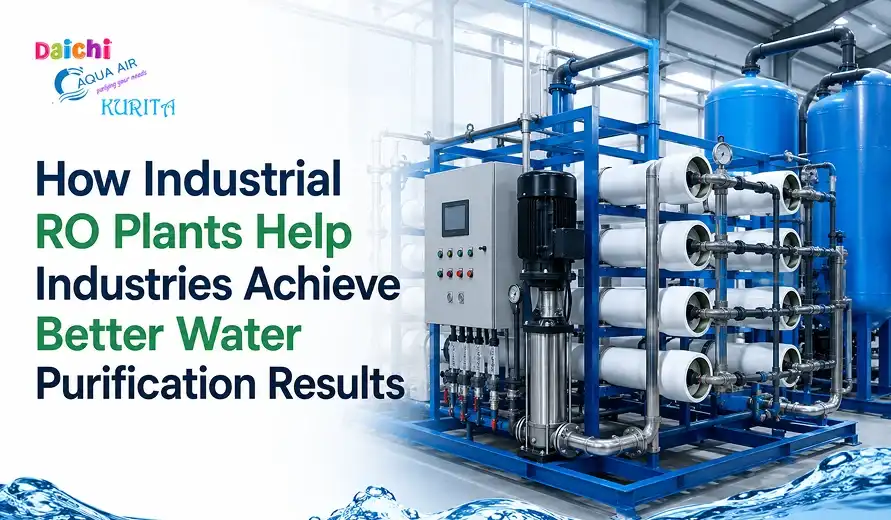
Water quality directly affects industrial productivity, equipment performance, and product consistency. Industries that use untreated or poor-quality water often experience scaling, corrosion, higher maintenance costs, and interruptions in production. Industrial RO Plants provide a dependable way to remove dissolved salts, impurities, and harmful contaminants, helping businesses maintain the water quality required for daily operations. From manufacturing and pharmaceuticals to food processing and power generation, these systems support reliable water purification while helping industries manage operational costs and meet quality standards.
Understanding Industrial RO Plants
Industrial facilities require water that meets specific quality requirements before it can be used in production. Reverse osmosis technology is designed to remove dissolved solids, minerals, heavy metals, bacteria, and other contaminants that ordinary filtration cannot eliminate.
An industrial reverse osmosis system works by forcing water through a semi-permeable membrane under high pressure. Clean water passes through the membrane, while unwanted impurities remain on the other side and are discharged as reject water. The purified water is then stored for industrial use.
Unlike conventional filtration methods, reverse osmosis produces highly purified water suitable for demanding industrial processes where consistency matters.
Why Industries Depend on Industrial RO Plants
Every industry has unique water quality requirements, but the need for purified water remains the same. Contaminated water can damage machinery, reduce production efficiency, and affect the quality of finished products.
Without proper treatment, industries may face:
- Scale formation in boilers and pipelines
- Corrosion of expensive equipment
- Reduced production efficiency
- Product quality issues
- Higher maintenance costs
- Increased downtime
- Greater operating expenses
Installing reliable purification equipment helps businesses avoid these challenges while supporting long-term operational stability.
How Industrial RO Plants Improve Water Purification
Removal of Dissolved Salts and Minerals
Water from borewells, rivers, or municipal supplies usually contains dissolved minerals such as calcium, magnesium, sodium, and chlorides. Excessive mineral content causes scaling inside industrial equipment and reduces operational efficiency.
Industrial RO systems remove a high percentage of dissolved solids, supplying cleaner water for manufacturing processes.
Better Performance Through Industrial Water Purification Systems
Modern Industrial Water Purification Systems are designed to treat water with varying contamination levels. By combining pre-treatment with reverse osmosis technology, these systems produce water suitable for industries that require strict quality standards.
Cleaner water reduces scaling, improves equipment performance, and supports consistent production throughout the manufacturing cycle.
Removal of Heavy Metals and Harmful Contaminants
Industrial water sources may contain unwanted contaminants such as:
- Lead
- Mercury
- Arsenic
- Chromium
- Cadmium
Reverse osmosis membranes remove many of these contaminants before the water enters production, helping industries maintain cleaner processing conditions.
Improved Water Quality with Industrial Reverse Osmosis Systems
Many industries choose Industrial Reverse Osmosis Systems because they deliver consistent purification even when incoming water quality changes. This consistency supports manufacturing processes where even small variations in water quality can affect the final product.
The technology also helps reduce dependence on chemical treatment methods for controlling impurities.
Protection Against Microorganisms
Industrial water may contain bacteria, viruses, algae, and other microorganisms.
Although additional disinfection methods are often used where required, reverse osmosis membranes remove many microorganisms due to their extremely fine filtration capability, making the water safer for industrial applications.
Better Product Quality
Many industries use water as a direct ingredient or during production.
Examples include:
- Food manufacturing
- Beverage production
- Pharmaceuticals
- Cosmetics
- Chemical processing
Using purified water improves consistency, reduces contamination risks, and helps maintain product quality standards.
Main Components of a RO Water Treatment Plant
A properly designed RO Water Treatment Plant includes several important components that work together to deliver purified water.
Raw Water Storage: Stores untreated water before the treatment process begins.
Pre-Treatment Equipment: Pre-treatment protects RO membranes by removing larger particles and reducing hardness.
This stage may include:
- Sand filters
- Activated carbon filters
- Water softeners
- Cartridge filters
High-Pressure Pump: Creates the pressure needed for reverse osmosis to occur.
RO Membranes: These membranes remove dissolved salts, heavy metals, chemicals, microorganisms, and other impurities.
Treated Water Storage: Purified water is stored before distribution across the facility.
Automation and Monitoring: Modern systems include automated controls for monitoring pressure, water quality, membrane performance, and operating conditions.
Industries That Benefit from Industrial Water Treatment Solutions
Different sectors rely on Industrial Water Treatment Solutions to maintain production quality and protect expensive equipment.
Pharmaceutical Industry
Medicines require highly purified water during manufacturing. Consistent water quality supports compliance with strict production standards.
Food and Beverage Industry
Purified water is used for ingredient preparation, cleaning, processing, and packaging to maintain hygiene and product consistency.
Textile Industry
Textile manufacturers use purified water during dyeing and fabric processing to improve colour consistency and reduce mineral deposits.
Chemical Industry
Many chemical manufacturing processes require controlled water quality for accurate production results.
Power Generation
Power plants depend on purified water for boilers and cooling systems where mineral deposits can reduce efficiency.
Electronics Manufacturing
Electronic components require clean water to prevent contamination during sensitive production processes.
Equipment Protection with Industrial Water Filtration Systems
Many businesses combine reverse osmosis with Industrial Water Filtration Systems to improve overall treatment performance. Pre-filtration removes suspended particles before water reaches the RO membranes, helping extend membrane life and maintain steady purification efficiency.
Cleaner water also reduces scaling, corrosion, and equipment wear, allowing machinery to operate more efficiently over time.
Environmental Advantages
Water conservation has become increasingly important for industrial facilities.
Reverse osmosis technology helps industries by:
- Supporting water recycling
- Reducing chemical consumption
- Lowering wastewater contamination
- Improving water recovery
- Helping businesses meet environmental regulations
Many facilities also integrate RO systems with wastewater recycling technologies to improve overall water management.
Cost Benefits for Industrial Operations
Although installing a purification system requires investment, industries often achieve long-term savings through improved operational efficiency.
Benefits include:
- Lower maintenance costs
- Reduced equipment repairs
- Longer machinery lifespan
- Improved production consistency
- Lower energy losses caused by scaling
- Fewer production interruptions
These advantages help businesses recover their investment while maintaining reliable operations.
Choosing the Right Commercial RO Plant
Selecting the right Commercial RO Plant depends on several operational factors.
Water Quality Analysis
Testing the source water helps determine:
- Total dissolved solids (TDS)
- Hardness
- Chemical contaminants
- Biological contamination
This information supports proper system selection.
Production Capacity
The system should match the daily purified water requirement without creating unnecessary operating costs.
Installation Space
Industrial RO systems are available in different sizes and configurations to suit available plant space.
Maintenance Requirements
Routine maintenance includes:
- Membrane cleaning
- Filter replacement
- Pressure monitoring
- Water quality testing
- System inspections
Regular servicing helps maintain consistent performance.
Energy Efficiency
Modern RO systems are designed to reduce energy consumption while maintaining purification quality.
Common Water Problems Solved by RO Systems
Industrial purification systems help address several common operational issues, including:
- High TDS levels
- Hard water
- Boiler scaling
- Cooling tower deposits
- Corrosion
- Product quality variations
- Equipment maintenance issues
Consistent water quality helps improve production efficiency across multiple industrial sectors.
The Future of Industrial Water Purification
Industries are increasingly adopting smarter water treatment technologies that combine automation, digital monitoring, and energy-efficient operation. Modern reverse osmosis systems are now integrated with recycling technologies and advanced treatment methods that improve water recovery while reducing environmental impact.
As industrial demand continues to grow, businesses that invest in dependable purification systems are better positioned to manage production requirements, protect valuable equipment, and use water resources more responsibly.
Conclusion
Maintaining high-quality water is essential for efficient industrial operations, product consistency, and equipment reliability. Industrial RO Plants provide an efficient method for removing dissolved salts, heavy metals, microorganisms, and other contaminants that can affect manufacturing processes. When combined with suitable pre-treatment and proper maintenance, these systems help industries reduce operating costs, protect machinery, improve production quality, and support responsible water management. As industries continue to focus on performance and sustainability, Industrial RO Plants remain an important part of achieving better water purification results.
FAQ
How do Industrial RO Plants improve water quality for manufacturing?
Industrial RO Plants remove dissolved salts, heavy metals, bacteria, and other contaminants from raw water. This helps industries maintain consistent water quality, protect equipment, and improve the quality of finished products.
Which industries benefit the most from Industrial Reverse Osmosis Systems?
Industries such as pharmaceuticals, food and beverage, textiles, chemicals, electronics, power generation, and automotive manufacturing commonly use Industrial Reverse Osmosis Systems because they require high-quality purified water for production processes.
What is the difference between a Commercial RO Plant and an industrial RO system?
A Commercial RO Plant is designed for businesses such as hotels, hospitals, educational institutions, and commercial buildings with moderate water demand, while industrial RO systems are built to handle larger capacities and meet the strict water quality requirements of manufacturing industries.
Why are Industrial Water Filtration Systems used before reverse osmosis?
Industrial Water Filtration Systems remove suspended particles, sediment, chlorine, and other larger contaminants before water reaches the RO membranes. This improves purification performance, reduces membrane fouling, and increases the lifespan of the entire system.
How often should an RO Water Treatment Plant be maintained?
The maintenance schedule depends on water quality, operating hours, and system capacity. Regular filter replacement, membrane cleaning, pressure monitoring, and water quality testing help keep an RO Water Treatment Plant operating efficiently and extend its service life.