Table of Contents
Dust is a common problem in many industrial workplaces. Activities such as cutting, grinding, drilling, mixing, packaging and handling raw materials can release dust particles into the air. If these particles are not collected properly, they can spread across the workplace, affect air quality, settle on machinery and create difficult working conditions for employees.
Industrial dust collection systems help control this problem by capturing dust near the point where it is produced and collecting it before it spreads through the facility. These systems are an important part of industrial air treatment because they support cleaner working areas, protect equipment and help industries manage airborne pollution.
Different industries produce different types of dust. Cement plants may release fine mineral dust, metal processing units generate particles during cutting and grinding, and food processing facilities may produce dust while handling ingredients. For this reason, the dust collection system must be selected according to the type of material, amount of dust and operating conditions.
What Are Industrial Dust Collection Systems?
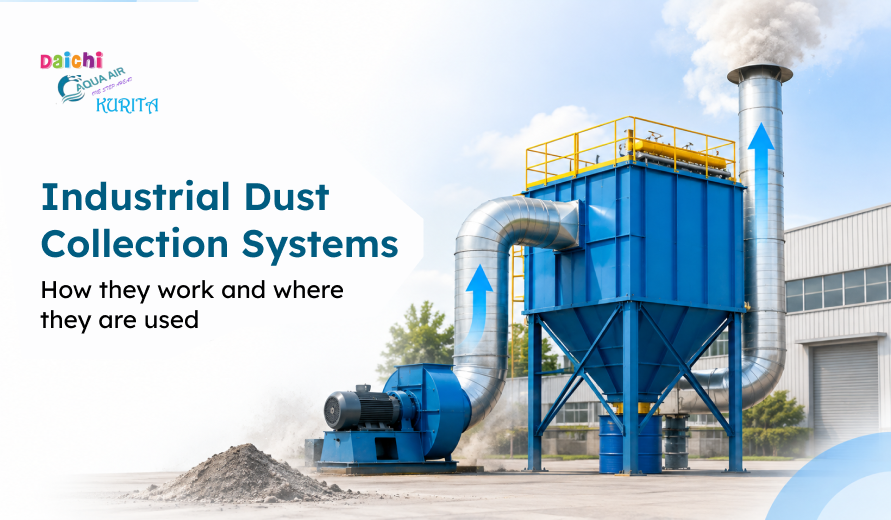
Industrial dust collection systems are equipment arrangements designed to capture and remove dust particles from the air in industrial facilities. They generally use hoods, ductwork, fans and dust collectors to control airborne particles produced during manufacturing and material-handling activities.
The main purpose is to collect dust as close as possible to its source. This prevents particles from spreading into nearby work areas and reduces the amount of dust that remains suspended in the air.
These systems form an important part of industrial air pollution control. They can be used in facilities where dust is produced regularly during production, processing, storage or transportation of materials.
A dust collection system may be designed for a single machine, a specific production area or several dust-generating points across a facility. The final arrangement depends on the plant layout, dust characteristics and required airflow.
How Do Industrial Dust Collection Systems Work?
The working process of a dust collection system involves capturing dust, moving dust-filled air through ducts, separating particles and collecting the removed material. Although equipment designs may differ, the basic process follows a few common steps.
1. Dust Is Captured at the Source
The first step is to collect dust where it is generated. A collection hood or extraction point is placed near the machine or process that releases particles.
For example, a hood may be positioned near a cutting machine, grinding station, mixing unit or material transfer point. Capturing dust at its source helps prevent it from spreading throughout the workplace.
The position and design of the hood are important. If the extraction point is too far from the dust source or does not provide suitable airflow, some particles may escape into the surrounding area.
2. Dust-Laden Air Moves Through Ducts
After dust is captured, a fan moves the dust-filled air through a connected duct system. These ducts carry the air from extraction points towards the dust collector.
The duct layout must consider the number of collection points, airflow requirements, distance and bends in the system. Poor duct design can affect airflow and reduce the amount of dust collected.
In facilities with multiple machines, the duct network may connect several extraction points to one central collection unit.
3. Dust Particles Are Separated
When dust-laden air reaches the collector, the system separates dust particles from the air. The separation method depends on the collector design and the type of dust being handled.
Different collection technologies may use filtration, centrifugal force or other separation methods. The selected technology depends on particle size, dust concentration, material properties and operating requirements.
4. Collected Dust Is Stored
After separation, the collected dust moves into a storage section, hopper or collection container. It can then be removed for suitable handling and disposal according to the material type and applicable requirements.
Proper dust removal is necessary to prevent collected material from building up inside the equipment. The collection unit should be checked regularly to maintain its operating condition.
5. Filtered Air Is Managed
Once dust particles have been separated, the treated air is either returned to the facility or discharged outside, depending on the system design and applicable requirements.
The filtration arrangement must be suitable for the particles being handled. Some industrial processes may also require additional treatment because dust collection alone does not remove every type of gas, vapour or chemical contaminant.
Common Types of Industrial Dust Collection Systems
The type of collector used depends on the industrial process, dust characteristics and required level of collection. Some commonly used dust collection technologies include the following.
1. Baghouse Dust Collectors
Baghouse collectors use fabric filter bags to separate dust particles from an air stream. Dust-laden air passes through the filter material, which retains particles while allowing filtered air to pass through.
Over time, dust builds up on the filter surface. Cleaning arrangements are used to remove accumulated dust and maintain airflow.
Baghouse systems are used in different industrial applications, including cement production, metal processing and other manufacturing operations where suitable fabric filtration can be applied.
2. Cartridge Dust Collectors
Cartridge collectors use pleated filter elements to capture airborne particles. Their filter arrangement provides a large filtration surface within a relatively compact unit.
They may be used in applications such as metalworking, welding and manufacturing processes where dust and fine particles are generated.
The filter material and cleaning method should be selected according to the dust type and operating conditions.
3. Cyclone Dust Collectors
Cyclone collectors use centrifugal force to separate heavier dust particles from an air stream. Dust-laden air enters the collector and moves in a circular path. The resulting movement causes heavier particles to move towards the outer wall and fall into a collection section.
Cyclone collectors are commonly used for removing larger particles and may also serve as pre-cleaners before another filtration stage.
4. Wet Dust Collection Systems
Wet collection systems use water or another suitable liquid to capture particles from an air stream. The dust comes into contact with the liquid, allowing particles to be separated from the air.
These systems may be considered for specific industrial applications depending on the dust properties and process conditions. Water use, wastewater handling and maintenance requirements should be considered before selecting this type of equipment.
Where Are Industrial Dust Collection Systems Used?
Dust collection is required in industries where production and material handling release airborne particles. The equipment and system design vary according to the activities performed at each facility.
Manufacturing Plants
Manufacturing facilities may generate dust during cutting, grinding, drilling, polishing, mixing and packaging. Dust collection systems capture particles near production machines and help maintain cleaner work areas.
They also help reduce dust accumulation on equipment and surrounding surfaces.
Metal Processing Units
Metal processing operations such as grinding, sanding, cutting and polishing can release fine metal particles into the air. A suitable dust collection arrangement helps capture these particles near the source.
The system should be selected after considering the material being processed and the nature of the particles produced.
Cement Industries
Cement manufacturing and handling involve materials such as limestone, clinker, cement and other mineral substances. Dust may be generated during crushing, grinding, conveying, storage and packing.
Dust collection equipment is used at suitable process points to control particulate emissions and limit the spread of dust within the facility.
Food Processing Facilities
Food processing activities such as handling, grinding, mixing and transferring dry ingredients can release airborne particles. Dust collection systems help manage these particles around processing and packaging areas.
The system design should consider the material being handled and the hygiene requirements of the facility.
Pharmaceutical Facilities
Pharmaceutical manufacturing may involve handling powders and other fine materials. Dust control is important for maintaining suitable production conditions and reducing the movement of airborne particles between work areas.
The collection arrangement must be planned according to the process, material properties and cleanliness requirements.
Warehouses and Material Handling Areas
Dust can also be produced while loading, unloading, transferring and storing bulk materials. Collection points near conveyors, transfer stations and handling equipment can help control dust before it spreads across the facility.
How Dust Collection Supports Air Pollution Control
Industrial dust is one of the sources of particulate pollution. When particles are released into the surrounding environment, they can affect workplace conditions and contribute to industrial emissions.
An appropriate Air Pollution Control System helps industries manage dust and other airborne contaminants through equipment designed for specific pollution sources.
Dust collectors are mainly used for particulate matter. Other contaminants, such as gases, chemical vapours and unpleasant odours, may require separate treatment technologies, including air scrubber or odour control systems.
This distinction is important when planning complete Air Pollution Solutions. A dust collector should not be expected to remove every type of air pollutant. The treatment equipment must match the contaminant and the industrial process.
A properly planned Air Pollution Control arrangement can include dust collection, industrial air filtration, ventilation and other treatment systems where required. Together, these measures support better Air Quality Control within industrial facilities.
Factors to Consider When Selecting Dust Collection Equipment
Choosing suitable Air Pollution Control Equipment requires an understanding of the dust source and the operating conditions of the facility. The following factors should be considered before selecting a system.
Type of Dust
Different processes produce different dust materials. Fine powder, metal particles, cement dust and food ingredients may require different collection arrangements. The size, weight and other properties of the particles should be assessed.
Dust Generation Rate
The amount of dust produced during a process affects the required collection capacity. A system designed for a small machine may not be suitable for a large production line with several dust-generating points.
Airflow Requirements
The system must provide suitable airflow to capture dust at each extraction point. The hood, ductwork, fan and collector should be considered as parts of one connected arrangement.
Available Space
The plant layout and available installation area can influence the choice of collector. Duct routes, equipment access and space for dust storage and removal should be considered during planning.
Filter Selection
The filter material should be compatible with the dust and operating conditions. Factors such as particle size, temperature, moisture and cleaning requirements can affect filter selection.
Maintenance Requirements
Dust collection equipment requires regular inspection and maintenance. Filters, ducts, fans, hoppers and dust discharge arrangements should be checked according to the equipment manufacturer’s recommendations.
Considering these points helps industries select equipment that matches their actual process requirements.
Role of Dust Collection in Industrial Air Quality Management
Dust collection is an important part of Air Quality Management because it helps control particulate matter at the point where it is generated. When dust is allowed to spread, it can settle on machinery, floors, storage areas and other surfaces.
Collecting dust near its source helps limit this spread and supports cleaner working conditions. It can also reduce dust accumulation on equipment and help maintain production areas.
However, dust collection is only one part of a wider industrial air treatment plan. Facilities may also need ventilation systems to improve air circulation, air scrubbers to treat certain gases and vapours, and other filtration equipment based on the contaminants present.
A complete approach to Environmental Pollution Solutions begins with identifying the sources of pollution and selecting suitable treatment equipment for each source. Regular inspection and maintenance are also necessary to keep the systems working as intended.
Maintenance of Industrial Dust Collection Systems
Regular maintenance helps maintain the working condition of dust collection equipment. Without proper inspection, dust can accumulate inside ducts, filters can become blocked and airflow may be affected.
Some important maintenance activities include:
- Inspecting filters: Check filter condition and replace or clean them according to the equipment requirements.
- Checking airflow: Monitor airflow to identify possible blockages, leakage or changes in system performance.
- Cleaning ducts: Inspect ductwork for dust accumulation and remove deposits where necessary.
- Checking fans and motors: Examine connected equipment for unusual noise, vibration or other signs of operating problems.
- Emptying collection hoppers: Remove collected dust regularly to prevent material from building up.
- Inspecting connections: Check hoods, ducts and equipment joints for leakage or damage.
Maintenance frequency depends on the type of dust, operating hours and equipment design. Following a planned maintenance schedule helps identify problems before they affect the complete collection system.
Conclusion
Industrial dust collection systems help control airborne particles produced during manufacturing, material handling and other industrial activities. By capturing dust near its source, moving dust-laden air through ducts and separating particles in a suitable collector, these systems help maintain cleaner industrial work areas.
Manufacturing plants, metal processing units, cement industries, food processing facilities, pharmaceutical companies and warehouses can all benefit from dust collection arrangements suited to their processes.
Dust collection also plays an important role in industrial air pollution control. However, the right equipment depends on the type of contaminant, airflow requirements, plant layout and operating conditions.
Daichi Kurita Aqua-Air provides industrial air treatment solutions, including dust collection systems, industrial air filtration, air scrubbers, ventilation and air pollution control systems. Contact the team to discuss an air treatment solution based on your facility’s requirements.
Frequently Asked Questions
What is an industrial dust collection system?
An industrial dust collection system is equipment used to capture and remove dust particles from the air generated during manufacturing, grinding, cutting, sanding, and other industrial processes. It helps maintain cleaner work areas and supports better air quality control.
How does an industrial dust collection system work?
The system draws dust-filled air through ducts into a dust collector. Filters separate dust particles from the air, and the collected material is stored in a hopper or collection container. The filtered air is then released or returned to the facility, depending on the system design.
Which industries need industrial dust collection systems?
Industries such as cement, pharmaceuticals, food processing, woodworking, metalworking, chemicals, and mining commonly use dust collection systems. These systems help manage industrial air pollution produced during different manufacturing activities.
What are the common types of industrial dust collection equipment?
Common types include baghouse dust collectors, cartridge dust collectors, cyclone separators, and wet scrubbers. The right air pollution control equipment depends on the type of dust, particle size, air volume, and operating conditions.
How do dust collection systems support air pollution control?
Dust collection systems capture airborne particles before they spread into the workplace or surrounding environment. They are an important part of an air pollution control system and broader air quality management practices, helping industries implement effective air pollution solutions and environmental pollution solutions.