Table of Contents
Industries depend on water and air for many daily operations. Water is used for manufacturing, cleaning, cooling, processing, and other activities. At the same time, industrial processes can release dust, fumes, gases, and other pollutants into the air. If these materials are not managed properly, they can affect the workplace and the surrounding environment.
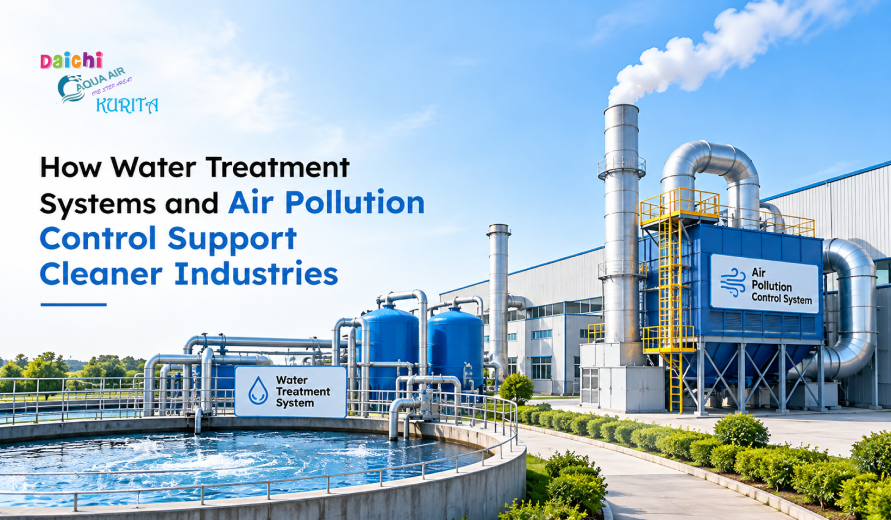
This is why Water Treatment Systems and Air Pollution Control are important parts of industrial operations. Water treatment helps remove unwanted substances from water and wastewater, while air treatment equipment helps capture or control pollutants released during production.
Both systems serve different purposes, but they support the same goal: helping industries manage pollution and use resources responsibly. Understanding how these systems work can help businesses choose suitable treatment methods for their facilities.
Why Industries Need Water and Air Treatment
Industrial activities produce different types of waste depending on the manufacturing process. Wastewater may contain suspended solids, oils, chemicals, organic matter, and dissolved salts. Similarly, industrial air emissions may include dust, smoke, fumes, chemical vapours, and odours.
Releasing untreated wastewater or uncontrolled air emissions can create environmental problems. It can also affect working conditions and make it difficult for industries to meet applicable environmental requirements.
Proper Water Treatment helps prepare water for industrial use, reuse, or discharge according to the required quality. Air treatment equipment helps control pollutants at their source or before they are released into the surrounding atmosphere.
A suitable combination of treatment methods allows industries to manage water and air pollution as part of their regular operations.
Understanding Industrial Water Treatment Systems
Industrial Water Treatment involves different processes used to remove impurities from water and make it suitable for a particular purpose. The required treatment depends on the source of water, the type of industry, and the quality needed for production or other applications.
For example, water used in manufacturing may have different requirements from water used in boilers, cooling systems, cleaning, or other industrial processes.
An industrial setup may include several treatment units working together. These can include:
- Pre-treatment systems
- Sand and multimedia filters
- Activated carbon filters
- Water softening systems
- Reverse osmosis plants
- Ultrafiltration plants
- Demineralisation systems
- Effluent Treatment Plants (ETP)
- Sewage Treatment Plants (STP)
Each unit has a specific role. The complete arrangement is selected according to water quality and the intended use of treated water.
Common Processes Used in Water Treatment
Different treatment processes are used to remove different types of impurities. A facility may need one process or a combination of several methods.
1. Pre-Treatment and Filtration
Pre-treatment is generally used to remove larger particles, sediments, and suspended materials from incoming water. It helps prepare water for further treatment and protects equipment used in later stages.
Sand filters and multimedia filters are commonly used for removing suspended particles. Activated carbon filters can help reduce certain organic compounds, colour, and unwanted odours.
The choice of filter depends on the condition of the incoming water and the treatment requirements.
2. Water Softening
Hard water contains minerals such as calcium and magnesium. These minerals can form scale inside pipes, boilers, heat exchangers, and other equipment.
A water softening system reduces hardness by using an ion exchange process. This helps control scale formation and supports the operation of equipment that requires softer water.
3. Reverse Osmosis
Reverse osmosis (RO) is a membrane-based process used to reduce dissolved salts and other impurities in water. Water passes through a semi-permeable membrane under pressure, while many dissolved substances are separated from the treated water.
RO plants are used in industries where water with lower dissolved solids is required. The system may also be used as part of a larger water purification process.
4. Ultrafiltration
Ultrafiltration uses membranes to separate suspended solids, colloids, and certain microorganisms from water. It is often used as a pre-treatment stage before reverse osmosis or as part of a water purification setup.
The selection of ultrafiltration depends on the quality of incoming water and the required treatment output.
5. Demineralisation
Some industrial processes require water with very low mineral content. Demineralisation systems remove dissolved mineral ions from water to meet these requirements.
These systems are used in applications where mineral content needs to be controlled, including certain boiler and manufacturing processes.
Industrial Wastewater Treatment and Reuse
Apart from treating incoming water, industries also need to manage wastewater produced during manufacturing, cleaning, and other activities.
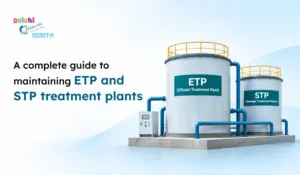
Industrial wastewater can contain different pollutants depending on the production process. An Effluent Treatment Plant (ETP) is used to treat wastewater generated by industrial operations. The treatment stages are selected according to the wastewater characteristics and the required treated-water quality.
A typical wastewater treatment setup may include:
- Screening and removal of larger materials
- Equalisation of wastewater flow
- Chemical treatment
- Coagulation and flocculation
- Sedimentation or clarification
- Biological treatment, where required
- Filtration and further purification
- Sludge handling
Sewage Treatment Plants (STPs) are used for domestic sewage generated by toilets, bathrooms, kitchens, offices, and similar facilities. ETPs and STPs serve different wastewater sources, so the correct system should be selected according to the type of wastewater.
Water Recovery Through Advanced Treatment
In some facilities, treated wastewater may be suitable for reuse after additional treatment. RO and ultrafiltration can be used where the water needs further purification for a particular application.
Multi Effect Evaporators (MEE) and Zero Liquid Discharge (ZLD) systems may also be considered for industrial wastewater management. These systems are used in treatment arrangements where wastewater concentration and water recovery are required.
The suitability of reuse depends on the treated water quality and the requirements of the intended application.
What Is Air Pollution Control in Industries?
Industrial air pollution can come from activities such as material handling, cutting, grinding, welding, chemical processing, heating, and manufacturing. These processes may release dust, fumes, smoke, gases, and other airborne contaminants.
Air Pollution Control involves using suitable equipment and processes to capture, filter, or treat these pollutants. The right solution depends on the contaminant type, its source, airflow requirements, and operating conditions.
An Air Pollution Control System may include dust collection units, industrial air filters, air scrubbers, ventilation systems, and odour control equipment.
These systems help industries manage emissions and maintain better air conditions in production areas.
Common Air Pollution Control Equipment
Different types of equipment are used to manage different air quality problems. Selecting the right equipment matters because a dust collector, for example, may not suit every type of gas or chemical vapour.
1. Dust Collection Systems
Dust collection systems capture dust generated during manufacturing, grinding, cutting, material handling, and other industrial activities.
The system generally draws dust-filled air through ducts and passes it through a collection unit. Filters separate dust particles from the air, and the collected material is stored in a hopper or collection container.
These systems are used in industries where dust needs to be controlled at specific production points.
2. Industrial Air Filtration Systems
Industrial air filtration systems remove dust, suspended particles, and other airborne impurities. Different filters are selected according to particle size, airflow, and the required level of filtration.
These systems can be used in manufacturing facilities, pharmaceutical units, food processing plants, and other industrial environments where air cleanliness is important.
3. Air Scrubber Systems
Air scrubbers are used to treat certain gases, chemical vapours, odours, and other pollutants in industrial exhaust streams.
In a wet scrubber, contaminated air comes into contact with a liquid that helps capture or absorb selected pollutants. The liquid may also contain treatment chemicals depending on the nature of the contaminant.
The design of the scrubber depends on the gas composition, temperature, airflow, and treatment requirements.
4. Industrial Ventilation Systems
Industrial ventilation systems help control the movement of air inside a facility. They can remove contaminated air, bring in fresh air, and support better airflow in production areas.
Local exhaust ventilation can capture dust, fumes, or vapours close to the point where they are generated. This helps prevent contaminants from spreading across the workplace.
5. Air Washer Units and Air Handling Units
Air washer units use water spray or wetted media to remove certain airborne particles while also cooling and humidifying air. They are used in applications where dust control and humidity management are required.
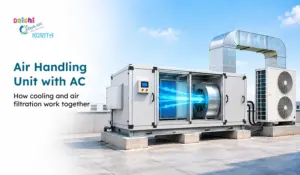
Air Handling Units (AHUs) help manage airflow, filtration, temperature, and humidity. Depending on the system design, they can support controlled indoor conditions in industrial and commercial facilities.
How Water and Air Treatment Work Together
Water and air treatment systems handle different types of pollution, but both are necessary for managing the environmental impact of industrial operations.
For example, a manufacturing facility may use an ETP to treat wastewater from its production process. It may also use dust collection systems to capture particles generated during material handling and production.
A facility that produces chemical wastewater and airborne fumes may need separate treatment arrangements for each waste stream. The wastewater system will be selected according to the water contaminants, while the air treatment system will depend on the type of gases or vapours being released.
This approach helps industries address pollution from different sources instead of relying on a single treatment method.
How to Choose the Right Treatment Systems
Every industrial facility has different water and air treatment requirements. The equipment should be selected after understanding the production process and the type of pollutants generated.
Before selecting a system, industries should consider the following factors:
Water quality: Check the source water and identify the impurities that need to be removed.
Wastewater characteristics: Understand the wastewater flow, pollutant levels, and required treatment quality before selecting an ETP or other treatment process.
Air pollutants: Identify whether the facility generates dust, smoke, fumes, gases, chemical vapours, or odours.
Treatment capacity: Select equipment according to the volume of water or air that needs to be treated.
Available space: Consider the plant layout, installation area, pipelines, ducts, and equipment access.
Operating requirements: Review power consumption, maintenance needs, filter replacement, chemical use, and other operating conditions.
Environmental requirements: Check the applicable standards for wastewater discharge and industrial air emissions.
A proper assessment helps industries select suitable systems rather than installing equipment that does not match their actual requirements.
The Role of Regular Maintenance
Installing treatment equipment is only one part of managing water and air quality. Regular inspection and maintenance are also important for keeping the systems in working condition.
For water treatment plants, maintenance may include checking pumps, filters, membranes, valves, tanks, chemical dosing units, and other components. Water quality should also be tested at suitable intervals to check whether the treatment process is meeting the required output quality.
For air treatment equipment, operators should inspect filters, fans, ducts, scrubbers, pumps, and dust collection units. Airflow and pressure readings can help identify blockages, filter loading, or other operating problems.
Following a planned maintenance schedule helps identify issues early and supports consistent system operation.
Supporting Better Industrial Environmental Management
Effective Air Quality Control and water management require more than choosing individual machines. Industries need to understand where pollution is generated, what type of treatment is required, and how different systems will operate together.
Suitable Water Purification Systems help prepare water for industrial applications, while wastewater treatment plants manage used water before discharge or reuse. On the air side, filtration, dust collection, scrubbing, and ventilation systems help control airborne pollutants.
These measures form part of wider Air Pollution Solutions and environmental management practices. They also help businesses take a more organised approach to resource use, wastewater handling, and emission control.
Daichi Kurita Aqua-Air provides industrial water, wastewater, and air treatment solutions, including ETP, STP, RO, ultrafiltration, MEE, ZLD, dust collection, air filtration, air scrubbers, and other air treatment systems. The suitable combination depends on the facility’s process and treatment requirements.
Conclusion
Water and air quality are important considerations for every industry. Wastewater from production activities needs suitable treatment, while dust, fumes, gases, and other airborne pollutants require appropriate air pollution control equipment.
Water Treatment Systems such as filtration units, RO plants, ultrafiltration plants, ETPs, and STPs help industries manage water quality and wastewater. Similarly, dust collectors, air filters, scrubbers, ventilation systems, and air washers help control different types of air pollutants.
By selecting suitable equipment, monitoring treatment performance, and carrying out regular maintenance, industries can manage water and air pollution more effectively. Daichi Kurita Aqua-Air offers water and air treatment solutions designed around industrial requirements, helping businesses plan suitable systems for cleaner and more controlled operations.
Frequently Asked Questions
Why are water treatment systems important for industries?
Water treatment systems help remove impurities, suspended particles, dissolved salts, and other unwanted substances from water. They prepare water for industrial processes and help treat wastewater before discharge or reuse.
What is an air pollution control system?
An air pollution control system uses equipment such as dust collectors, air filters, and scrubbers to capture or treat pollutants released during industrial activities. The system is selected according to the type of air pollutant and the facility’s requirements.
What are the common types of industrial water treatment systems?
Common industrial water treatment systems include reverse osmosis plants, ultrafiltration plants, water softeners, sand filters, activated carbon filters, Effluent Treatment Plants (ETPs), and Sewage Treatment Plants (STPs).
Which equipment is used for industrial air pollution control?
Industries use dust collection systems, industrial air filters, wet scrubbers, air washer units, and ventilation systems for air pollution control. The suitable equipment depends on whether the facility produces dust, fumes, gases, vapours, or odours.
How do water treatment and air pollution control support cleaner industries?
Water treatment systems help manage industrial water use and wastewater, while air pollution control equipment captures or treats airborne pollutants. Together, they help industries manage different sources of pollution and maintain better environmental control.