Table of Contents
Industrial processes such as manufacturing, material handling, metalworking, and food processing can release dust and small particles into the air. If these particles spread through a workplace, they can settle on machinery, affect product quality, and make it harder to maintain clean working conditions. Industrial Air Filters help control these particles by capturing them from the air before they spread further.
Choosing the right filtration system requires an understanding of the type of dust produced, the amount of air that needs treatment, and the conditions in which the equipment will operate. This guide explains how industrial air filters work, where they are used, and what businesses should consider when selecting an air filtration solution.
What Are Industrial Air Filters?
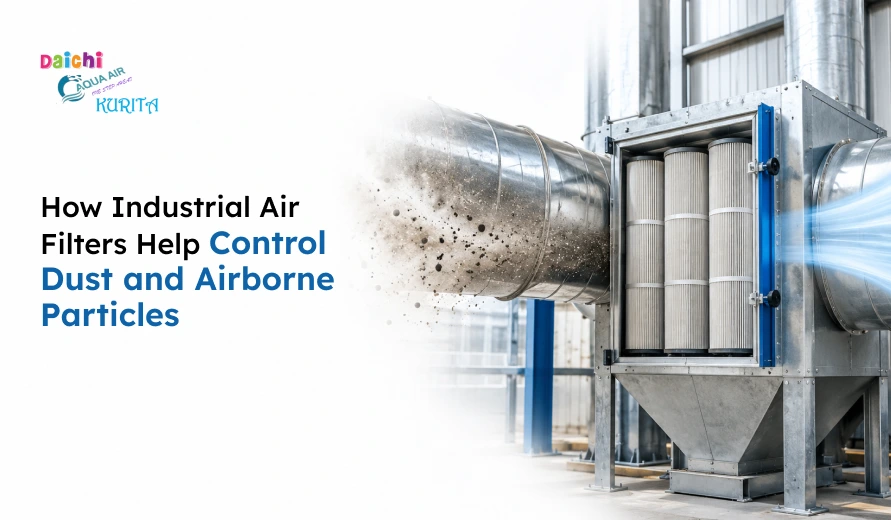
Industrial Air Filters are designed to remove dust, suspended particles, and other airborne contaminants from air in industrial and commercial facilities. They are commonly used in manufacturing plants, warehouses, workshops, and processing units where air quality needs to be managed.
The filter captures particles as air passes through its filtering material. The type of filter and its performance depend on the size of the particles, the filtration method, and the operating conditions.
Industrial air filtration can be part of a larger air treatment system. Depending on the facility’s requirements, this system may also include ventilation, dust collection, air washers, or other air pollution control equipment.
How Do Industrial Air Filtration Systems Work?
An industrial air filtration system draws contaminated air through a filter or a series of filters. As the air passes through the filtering material, particles are captured while the filtered air moves to the next stage or returns to the required area, depending on the system design.
The basic process includes the following steps:
- Air intake: Dusty or contaminated air enters the system through an inlet or collection point.
- Particle capture: The air passes through suitable filter media that trap particles.
- Filtered air movement: The treated air moves through the system according to its design.
- Filter inspection and maintenance: Filters are checked, cleaned where appropriate, or replaced when required.
The actual process varies according to the equipment and the contaminants involved. Some industrial systems are designed for general airborne particles, while others are built to capture dust generated at specific production points.
A well-designed system should match the required airflow, type of particles, operating hours, and conditions of the facility.
Why Is Dust Control Important in Industrial Facilities?
Dust control is an important part of maintaining suitable working conditions and protecting industrial equipment. Dust from production processes can settle on machinery, electrical components, work surfaces, and finished products.
Industrial Air Filtration Systems can help manage airborne particles and reduce the amount of dust moving through a facility when properly selected and maintained.
Some key reasons for using dust control systems include:
- Cleaner production areas: Capturing airborne particles can help reduce dust spreading around the workplace.
- Equipment protection: Controlling dust may reduce particle buildup on machinery and other components.
- Product quality: Certain manufacturing processes require controlled air conditions to limit contamination.
- Better workplace conditions: Appropriate filtration can support efforts to manage airborne dust.
- Cleaner operations: A suitable system helps businesses manage dust as part of their overall industrial air treatment plan.
Filtration alone may not address every air-quality problem. The system must be selected according to the type of contamination and the requirements of the process.
Industries That Use Industrial Air Filters
Industrial air filtration is useful in many sectors, but the required system can differ from one industry to another.
Manufacturing Plants
Manufacturing operations may generate dust during cutting, grinding, machining, packaging, and material handling. Suitable filtration or dust collection equipment can help capture particles before they spread through production areas.
Pharmaceutical Facilities
Pharmaceutical production may require controlled air conditions to reduce unwanted particles in specific areas. The filtration system should be selected according to the process and the cleanliness requirements of the facility.
Food Processing Units
Food processing and packaging operations may produce airborne particles from ingredients, powders, and handling activities. Suitable filtration and dust control can help manage these particles around production equipment.
Textile and Garment Industries
Textile operations can release fibres, lint, and dust during spinning, weaving, cutting, and fabric handling. The air treatment system should account for the type of particles generated and the amount of air that needs to be handled.
Warehouses and Material Handling Areas
Moving, storing, and transferring materials can release dust into the air. Depending on the activity, a facility may need general air filtration, local dust extraction, or a dedicated dust collection system.
Industrial Air Filtration vs Dust Collection Systems
Industrial air filtration and dust collection are related, but they do not always serve the same purpose.
Industrial Air Filtration Systems are generally used to remove airborne particles as air passes through filter media. They may be installed in air handling equipment or dedicated filtration units, depending on the application.
Dust Collection Systems are commonly designed to capture dust close to where it is generated. For example, a collection hood may be placed near a cutting machine, grinder, or material transfer point. Ductwork then carries the dusty air to the collection equipment.
A facility may need both systems if it produces dust at specific machines and also needs to manage airborne particles across wider areas.
The correct choice depends on the dust source, particle characteristics, airflow requirements, production process, and facility layout.
Factors to Consider When Choosing Industrial Air Filters
Selecting an appropriate filter requires more than checking its size or price. The equipment should suit the actual conditions of the facility.
1. Type and Size of Particles
Different processes produce different types of dust and particles. Identify whether the contamination includes fibres, powder, metal dust, smoke, or other airborne material. This information helps determine the suitable filtration approach.
2. Airflow Requirements
The system must handle the amount of air that needs to be filtered. Airflow requirements depend on the size of the area, the production process, and the points where dust is generated.
3. Operating Conditions
Temperature, humidity, dust concentration, and operating hours can affect filter selection and service life. These conditions should be reviewed before choosing equipment.
4. Filter Maintenance
Filters gradually collect particles and may need cleaning or replacement. Maintenance access, inspection requirements, and replacement costs should be considered during system planning.
5. Energy and Operating Costs
Fans and other system components use energy to move air through the equipment. Filter resistance, system design, and maintenance can affect operating costs. A suitable design should balance filtration needs with practical energy use.
6. Facility Layout
The location of machinery, dust sources, ductwork, extraction points, and available installation space can affect how the system is designed. These details are especially important when dust needs to be captured directly from production equipment.
How Maintenance Supports Air Filtration Performance
Even a suitable industrial air filtration system needs regular inspection. Dust buildup can restrict airflow, while damaged filters or leaks may allow particles to pass through the system.
Maintenance requirements depend on the equipment and the manufacturer’s recommendations. Common checks include:
- Inspecting filters for damage or excessive dust buildup.
- Checking airflow and pressure readings where applicable.
- Looking for leaks or blockages in ducts and connections.
- Cleaning or replacing filters according to the system’s requirements.
- Checking fans and other components for proper operation.
A maintenance schedule helps identify problems before they affect system performance. Filter replacement intervals should be based on operating conditions and manufacturer guidance rather than a fixed schedule for every facility.
Industrial Air Treatment Systems for Different Air Quality Needs
Dust is only one of the challenges industries may need to manage. Some facilities also produce fumes, gases, chemical vapours, heat, humidity, or unpleasant odours. These problems may require different technologies.
Daichi Kurita Aqua-Air’s Air Treatment Systems cover solutions such as industrial air filtration, dust collection, air scrubbers, industrial ventilation, odour control, and air washer systems. Each option serves a different purpose.
For example, filtration and dust collection can help control airborne particles, while air scrubbers are used for specific gases, chemical vapours, odours, and industrial emissions. Air washers can help with air cooling and humidification while capturing some dust and airborne impurities, depending on operating conditions.
The right combination depends on the pollution source, production process, airflow, and facility requirements. Businesses should assess these factors before selecting equipment.
Conclusion
Industrial Air Filters help manage dust and airborne particles produced by manufacturing, material handling, and other industrial activities. When properly selected and maintained, they can support cleaner production areas, protect equipment from particle buildup, and help businesses manage workplace air quality.
Before choosing an industrial air filtration system, consider the type of particles, required airflow, operating conditions, maintenance needs, and layout of the facility. Where dust is generated directly by machinery, a dedicated dust collection system may also be necessary.
Daichi Kurita Aqua-Air provides industrial air treatment solutions designed around different facility and process requirements. Reviewing the specific air-quality challenge is the first step towards choosing a suitable filtration or dust control system.
Frequently Asked Questions
What are Industrial Air Filters used for?
Industrial Air Filters are used to capture dust, suspended particles, and other airborne contaminants from air in industrial and commercial facilities. Their suitability depends on the type of pollutant and the operating conditions.
How do industrial air filtration systems remove dust?
These systems move contaminated air through filter media that capture particles. The filtered air then moves through the system according to its design. Filter type, particle size, airflow, and maintenance affect performance.
What is the difference between air filtration and dust collection?
Air filtration removes particles as air passes through filter media. Dust collection is often designed to capture dust close to the machine or process producing it. Some facilities need both approaches.
Which industries can benefit from industrial air filtration?
Manufacturing, pharmaceutical, food processing, textile, metalworking, and warehouse operations may benefit from industrial air filtration. The equipment should be selected according to the type of particles and the needs of the facility.
How often should industrial air filters be cleaned or replaced?
The schedule depends on the filter type, dust concentration, operating hours, and manufacturer’s instructions. Regular inspection and checks of airflow or pressure readings can help determine when cleaning or replacement is needed.