Table of Contents
Water is used in industries for heating, cooling, cleaning, manufacturing, and many other processes. However, water from borewells, rivers, and other sources may contain dissolved minerals that affect equipment and production systems. One common problem is hard water, which contains higher levels of calcium and magnesium. When these minerals form deposits on pipes, boilers, heat exchangers, and other equipment, they can reduce operating efficiency and increase maintenance needs.
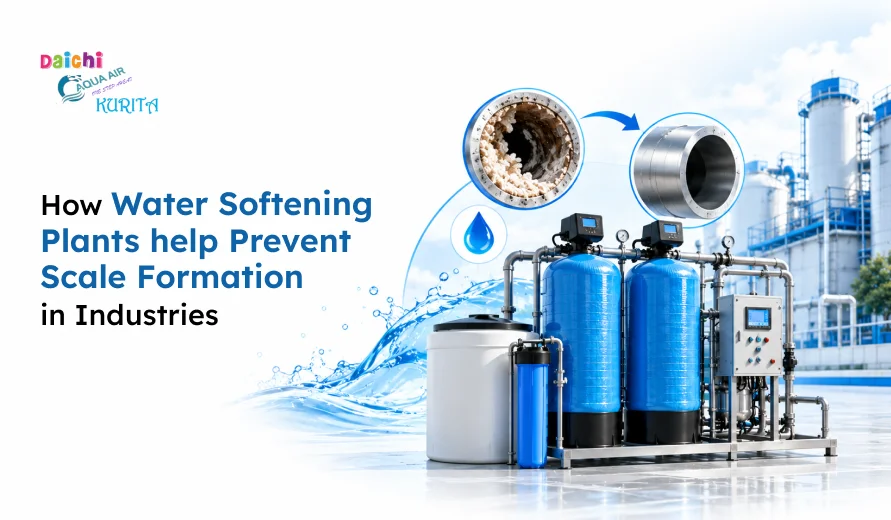
A Water Softening Plant helps reduce water hardness before the water enters equipment or industrial processes. By controlling hardness, industries can reduce the risk of scale formation and maintain better control over their water quality.
This blog explains how water softening plants work, why hard water causes scale, and how industries can select and maintain a suitable water softening system.
What Is a Water Softening Plant?
A Water Softening Plant is a treatment system designed to reduce the hardness of water. Hardness mainly comes from dissolved calcium and magnesium salts. These minerals are naturally present in many water sources and can create problems when hard water is heated or used repeatedly in industrial equipment.
An industrial water softening plant commonly uses an ion exchange process. In this process, water passes through a special resin that exchanges calcium and magnesium ions for sodium ions. This reduces the hardness of the treated water.
Water softening is different from reverse osmosis and general filtration. A softener mainly targets hardness-causing minerals; it does not remove all dissolved salts or every impurity present in water.
Industries often use a water softening system before supplying water to boilers, cooling systems, heat exchangers, and other equipment that can be affected by hardness.
How Does Hard Water Cause Scale Formation?
Hard water can cause scale when dissolved minerals form solid deposits on surfaces. This problem is especially common in systems where water is heated, evaporates, or circulates repeatedly.
Calcium compounds are a common part of scale deposits. For example, when hard water is heated, changes in water chemistry can encourage calcium carbonate to form and settle on equipment surfaces.
Scale may build up in:
- Boiler tubes and heating equipment
- Cooling towers and heat exchangers
- Water supply pipes and valves
- Industrial washing systems
- Process equipment that uses heated water
As deposits grow, they can restrict water flow and reduce heat transfer. Equipment may then require more energy to deliver the same heating or cooling performance. In severe cases, scale can contribute to blockages, overheating, and additional maintenance.
The amount and type of scale depend on water chemistry, temperature, pressure, evaporation, and operating conditions. Therefore, water testing is important before selecting a suitable treatment method.
How Does a Water Softening Plant Prevent Scale?
A Water Softening Plant helps control one of the main causes of scale by reducing calcium and magnesium in the incoming water.
1. Removes Hardness-Causing Minerals
In a typical ion exchange softener, hard water passes through a tank containing resin beads. These beads hold sodium ions and exchange them for calcium and magnesium ions as water moves through the resin bed.
The treated water contains less calcium and magnesium hardness, which helps reduce the likelihood of scale formation caused by these minerals.
2. Supplies Softer Water to Industrial Equipment
After softening, the water can be supplied to suitable industrial water applications. This is useful where hardness could otherwise create deposits in pipes, heating equipment, or cooling systems.
The softener must be correctly sized according to the incoming water hardness and the volume of water the facility needs.
3. Supports Heat Transfer Performance
Scale acts as a layer between water and a heating surface. This layer can reduce heat transfer and make equipment work harder to achieve the required temperature.
By reducing hardness, water softening can help control scale buildup and support the performance of boilers and heat exchangers. However, softened water alone does not prevent every type of deposit or corrosion, so other water chemistry controls may still be needed.
4. Helps Reduce Scale-Related Maintenance
Heavy scale can require equipment cleaning, descaling, or temporary shutdowns. Reducing the hardness of incoming water can help limit these problems where calcium and magnesium are the main cause.
The results depend on the water quality, treatment design, and operating conditions. Regular testing is still necessary to confirm that the softening system is working correctly.
How Does Ion Exchange Water Softening Work?
Ion exchange water softening is a common method used in industrial water treatment. The process usually involves three main stages.
Stage 1: Water Passes Through the Resin
Hard water enters the softener tank and flows through the ion exchange resin. The resin captures calcium and magnesium ions and releases sodium ions into the water.
Stage 2: Softened Water Moves to the Application
After the exchange process, the water contains less hardness and can be sent to the required industrial equipment. The actual water quality system should be checked against the requirements of the application.
Stage 3: Resin Regeneration
Over time, the resin becomes loaded with calcium and magnesium. The system then requires regeneration, usually using a brine solution containing sodium chloride. This restores the resin’s ability to exchange hardness ions.
Regeneration produces a waste stream that needs suitable management. The frequency depends on the water hardness, water demand, resin capacity, and system settings.
Industrial Applications of Water Softening Plants
Water softening is used across industries where hardness can interfere with equipment performance or process requirements.
Boiler Feed Water Systems
Boilers heat water to produce steam for industrial processes. Hardness can contribute to scale formation on heating surfaces, affecting heat transfer and maintenance requirements.
A water softening system may be used as part of boiler feed-water pre-treatment. However, boilers often need additional treatment and chemical control depending on their operating pressure and water quality requirements.
Cooling Towers
Cooling towers remove heat by allowing some water to evaporate. As evaporation takes place, dissolved minerals become more concentrated in the remaining water. Under unsuitable conditions, this can lead to scale formation.
Water softening may help in selected cooling-water applications, but cooling tower treatment also needs to consider cycles of concentration, corrosion, biological growth, and other water chemistry factors.
Manufacturing Plants
Manufacturing facilities use water for cleaning, processing, heating, and cooling. Where hardness affects the process or equipment, an industrial water softening plant can help maintain more consistent water conditions.
The appropriate treatment depends on the materials being produced, equipment design, and required water quality.
Textile and Food Processing Industries
Textile operations may use water for washing, dyeing, and other processing stages. Food processing facilities may need controlled water quality for cleaning and production.
Softening can be useful where hardness affects product consistency, cleaning, or equipment performance. Other treatment stages may still be required to manage suspended particles, dissolved salts, or microorganisms.
Commercial and Institutional Facilities
Hotels, large buildings, laundries, and similar facilities may use softeners to reduce hardness-related deposits in water heaters, pipes, and washing equipment.
The system should be sized according to water use, hardness levels, and the intended application.
Benefits of an Industrial Water Softening Plant
Installing a suitable water softening system can help industries manage the problems associated with hard water.
Key benefits include:
- Reduced scale risk: Lower calcium and magnesium hardness helps limit deposits caused by these minerals.
- Better equipment operation: Controlling scale can help maintain water flow and heat transfer.
- Lower cleaning requirements: Reduced mineral deposits may mean less frequent scale removal in suitable applications.
- Support for pre-treatment: Softening can protect selected downstream equipment when hardness is a concern.
- More controlled water quality: Industries can manage hardness to meet the needs of specific processes.
These benefits depend on proper system design, regular regeneration, and monitoring. Softening does not replace filtration, reverse osmosis, corrosion control, or other treatments where they are needed.
How to Choose the Right Water Softening System
Before choosing a water softener plant, industries should understand their water quality and daily demand. Selecting equipment without these details can lead to insufficient treatment or unnecessary operating costs.
1. Check Water Hardness
Test the incoming water to determine its calcium and magnesium hardness. The result helps establish how much hardness the system needs to remove.
Other parameters, including iron, manganese, turbidity, and total dissolved solids, may also need to be checked because they can affect system selection and performance.
2. Calculate Daily Water Demand
Estimate the amount of water required during normal production. The softener’s capacity should account for peak demand, operating hours, and the hardness load entering the system.
3. Review the Application
A boiler, cooling tower, washing system, and manufacturing process may have different water quality requirements. The selected system should match the specific application.
4. Consider Regeneration and Salt Use
Ion exchange softeners require regeneration after the resin’s capacity is used. Review salt consumption, water used during regeneration, waste handling, and the availability of maintenance support.
5. Plan for Routine Maintenance
Regular checks help identify problems such as resin fouling, salt bridging, valve issues, and poor regeneration. Maintenance requirements should be included when comparing water softening systems.
Maintenance Tips for Better Softener Performance
A water softening system needs routine monitoring to maintain its performance. Useful practices include:
- Checking treated-water hardness at suitable intervals.
- Keeping the brine tank supplied with the correct salt.
- Inspecting the tank, valves, and connections for leaks or damage.
- Checking that regeneration takes place as scheduled.
- Following the manufacturer’s instructions for cleaning and resin care.
- Reviewing the system capacity if water demand or source-water quality changes.
If treated-water hardness starts increasing, possible causes include exhausted resin, incorrect regeneration settings, excessive water demand, or a mechanical fault. Identifying the cause helps restore the required treatment performance.
Water Softening as Part of Industrial Water Treatment
Water softening is one part of a wider industrial water treatment process. Different facilities may also need sediment filtration, activated carbon, reverse osmosis, ultrafiltration, demineralisation, or wastewater treatment.
For example, a softener may reduce hardness before an RO plant, helping control one potential cause of membrane scaling. However, RO pre-treatment must also account for other factors such as suspended solids, iron, silica, and feed-water chemistry.
Daichi Kurita Aqua-Air provides industrial water treatment solutions designed for different water quality and process requirements. Businesses can review their incoming water, daily demand, and treatment objectives to identify an appropriate combination of technologies.
Conclusion
A Water Softening Plant helps industries reduce calcium and magnesium hardness, which can contribute to scale formation in pipes, boilers, cooling systems, and other equipment. By controlling hardness, industries can help reduce mineral deposits and support more reliable equipment operation.
The right system depends on the source-water quality, hardness level, daily demand, and intended use. Water testing, correct system sizing, and regular maintenance are essential for effective operation.
Water softening does not remove every contaminant or prevent all forms of scale and corrosion. When combined with other suitable industrial water treatment processes, however, it can play an important role in managing water quality and protecting equipment.
Frequently Asked Questions
What is a Water Softening Plant?
A Water Softening Plant is a treatment system that reduces water hardness, mainly by removing calcium and magnesium ions through ion exchange. It is used where hard water may cause scale or affect industrial processes.
How does a water softening plant prevent scale formation?
It reduces calcium and magnesium hardness in water. This helps limit scale formation caused by these minerals on pipes, boilers, heat exchangers, and other equipment.
Which industries use industrial water softening plants?
Boiler operations, manufacturing plants, cooling systems, textile facilities, food processing units, laundries, hotels, and other facilities may use water softening where hardness control is required.
Does a water softener remove TDS from water?
A conventional ion exchange water softener mainly exchanges calcium and magnesium for sodium. It does not remove total dissolved solids in the same way as reverse osmosis and may not significantly reduce overall TDS.
How often should a water softening plant be maintained?
Maintenance depends on incoming water hardness, daily demand, resin capacity, and system settings. Treated-water hardness should be monitored, while salt levels, regeneration, valves, and resin condition should be checked according to the manufacturer’s instructions.