Table of Contents
Maintaining good indoor air conditions is important in factories, hospitals, laboratories, offices, cleanrooms, and other controlled spaces. Temperature, humidity, airflow, and air cleanliness can affect people, equipment, products, and daily operations. This is where Air Handling Units play an important role.
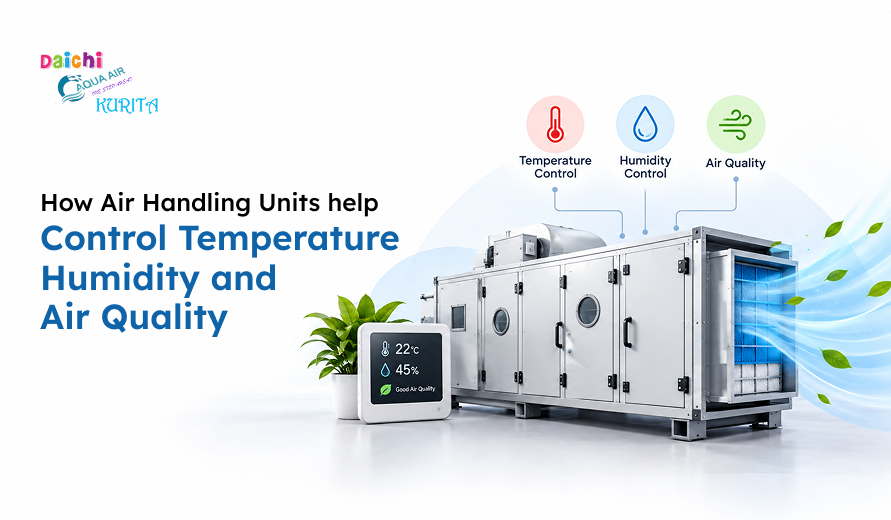
An Air Handling Unit, commonly called an AHU, is designed to handle and condition air before supplying it to a particular area. Depending on the system design, an AHU can filter air, control temperature, manage humidity, and maintain proper airflow. These functions make AHUs an important part of modern ventilation and Industrial Air Treatment Systems.
What Are Air Handling Units?
Air Handling Units are equipment used to circulate and condition air inside a building or industrial facility. An AHU generally receives fresh air, return air, or a combination of both. The air is then filtered and conditioned before being supplied through ducts to the required areas.
The exact design of an AHU depends on the application. A system used in a pharmaceutical facility may require different filtration and environmental controls compared with an office or commercial building.
A typical AHU may include filters, cooling coils, fans, dampers, and other components required for controlling airflow and air conditions. Some systems can also include additional controls for humidity and temperature.
How Air Handling Units Work
Understanding how air handling units work is easier when the process is divided into a few basic steps.
First, fresh outdoor air or return air enters the AHU. The air passes through filters that help remove dust and other airborne particles. Depending on the required level of air cleanliness, different types of filters can be used.
After filtration, the air may pass over a cooling coil. This helps reduce the temperature of the air before it is supplied to the required space. In applications where humidity needs to be controlled, the cooling and air-conditioning process can also help manage moisture in the air.
A fan then moves the conditioned air through the duct system. The air is distributed to different rooms or working areas according to the requirements of the facility.
This process allows an AHU to provide controlled airflow while helping maintain suitable temperature, humidity, and air cleanliness.
How AHUs Control Temperature
Temperature control is one of the main functions of an AHU. In many industrial and commercial applications, maintaining a stable temperature is important for both comfort and operations.
An AHU can use cooling coils to remove heat from the incoming air. The cooled air is then supplied to the required area through ducts. Depending on the system design and application, heating components may also be used when warmer air is required.
Stable temperature control can be particularly important in areas where products, equipment, or processes need controlled environmental conditions.
For example, manufacturing areas may require a consistent temperature to support production processes, while laboratories and cleanrooms may need controlled conditions for their specific operations.
Air Filtration in AHUs
Filtration is another important function of an AHU. Dust, particles, and other airborne contaminants can enter a building through outdoor air or return air.
An AHU uses filters to reduce these contaminants before the air is supplied to occupied or controlled areas. The type and number of filters depend on the cleanliness requirements of the application.
This makes AHUs an important part of Air Filtration Systems used in different commercial and industrial environments.
Regular filter inspection and replacement are also important. A blocked or dirty filter can restrict airflow and increase the load on the system.
How AHUs Help Control Humidity
Humidity refers to the amount of moisture present in the air. Very high or very low humidity can create problems in certain working environments.
When humid air passes over a cooling coil, moisture can condense and be removed from the air. This helps reduce excessive humidity when the system is designed for this purpose.
Humidity control can be important in pharmaceutical facilities, laboratories, food processing areas, cleanrooms, and other environments where moisture levels need to remain within a specific range.
Proper humidity control can also help reduce conditions that may contribute to condensation and moisture-related problems.
Air Handling Equipment for Different Applications
Different facilities have different air requirements, so Air Handling Equipment is not designed in exactly the same way for every application.
For example, a hospital may require strong filtration and controlled ventilation, while a manufacturing facility may need higher airflow and specific temperature control. Pharmaceutical production areas and cleanrooms can require more controlled air conditions and filtration.
AHUs can therefore be designed according to factors such as:
- Required airflow
- Temperature range
- Humidity requirements
- Filtration level
- Room size
- Application requirements
- Fresh air requirements
- Duct layout
Proper system selection helps ensure that the air treatment equipment matches the needs of the facility.
Role of Air Quality Control Systems
Temperature and humidity are only part of indoor air management. Air cleanliness is also important.
Air Quality Control Systems can combine filtration, ventilation, and other air treatment methods to improve the condition of air within a facility. The exact system depends on the type of contaminants and the requirements of the application.
In industrial environments, air may contain dust, fumes, odors, or other airborne particles. Different air treatment equipment can be used to address these problems.
AHUs can work as one part of a larger air management system, helping provide filtered and conditioned air to different areas.
Industrial Air Quality Control
Factories and industrial facilities can face different air quality challenges depending on their processes. Dust from production, fumes, odors, and airborne particles may affect the working environment if they are not properly managed.
Industrial Air Quality Control involves selecting suitable equipment and processes to manage these conditions. Depending on the application, this can include air filtration, ventilation, dust collection, scrubbers, and other air treatment solutions.
An AHU can support this system by controlling the air supplied to specific areas and maintaining the required temperature, humidity, and filtration levels.
Why Industrial Air Treatment Systems Matter
Good air management is important for facilities where environmental conditions directly affect operations. Industrial Air Treatment Systems can help control different aspects of indoor air, including filtration, ventilation, temperature, humidity, and the movement of air.
The right system depends on the facility and the type of air quality issue that needs to be addressed. A complete solution may include AHUs along with filtration equipment, ventilation systems, dust collection equipment, scrubbers, or other suitable technologies.
Instead of using the same system for every facility, the equipment should be selected according to the actual airflow and air treatment requirements.
Benefits of Using Air Handling Units
Air Handling Units can provide several benefits when properly designed and maintained.
Better Temperature Control
AHUs can help maintain the required temperature by cooling or heating air before distribution.
Improved Air Filtration
Filters inside the AHU can reduce dust and airborne particles before conditioned air enters the required area.
Controlled Humidity
AHUs can help manage excessive moisture when the system includes suitable humidity control features.
Better Air Distribution
Fans and duct systems allow conditioned air to be distributed across different areas of a facility.
Support for Industrial Processes
Controlled temperature, humidity, and air cleanliness can support facilities where environmental conditions are important for production or equipment.
Where Air Handling Units Are Used
AHUs are used across many types of facilities where controlled air conditions are required. Common applications include:
- Pharmaceutical manufacturing units
- Hospitals and healthcare facilities
- Laboratories
- Cleanrooms
- Food processing facilities
- Commercial buildings
- Offices
- Hotels
- Industrial production areas
The size and configuration of the AHU can vary depending on the building, airflow requirement, filtration level, and environmental conditions needed.
Maintaining an AHU for Better Performance
Regular maintenance is important for keeping an AHU working properly. Filters should be checked and replaced when required. Fans, coils, dampers, and other components should also be inspected as part of routine maintenance.
Dust buildup on filters or coils can affect airflow and system performance. Regular cleaning and inspection can help identify such issues before they affect the operation of the system.
The maintenance schedule should depend on the application, operating conditions, and equipment design.
Choosing the Right Air Handling System
Every facility has different air treatment requirements. Before selecting an AHU, it is important to understand the required airflow, temperature range, humidity level, filtration needs, and available space.
The system should also be suitable for the type of facility and the conditions in which it will operate.
A properly planned air treatment setup can combine Air Handling Units, filtration, ventilation, and other suitable equipment to provide the required air conditions.
Conclusion
Air Handling Units are an important part of air treatment systems used in industrial, commercial, healthcare, and controlled environments. They help manage temperature, humidity, airflow, and air cleanliness through processes such as filtration, cooling, and controlled air distribution.
When combined with suitable Air Handling Equipment, Air Filtration Systems, ventilation, and other air treatment solutions, AHUs can support better indoor air conditions and the requirements of different industrial applications.
The right system should always be selected according to the facility’s airflow, temperature, humidity, filtration, and air quality requirements.
Frequently Asked Questions
What are air handling units used for?
Air handling units are used to regulate temperature, humidity, airflow and air cleanliness in industrial, commercial and controlled environments.
How do air handling units control temperature?
Air handling units pass air over a cooling coil to remove heat and condition the air to the required temperature before supplying it through ducts.
Can air handling units control humidity?
Yes. Depending on the application, air handling units can help control humidity during the air conditioning and treatment process.
How do air handling units improve air quality?
Air handling units use pre-filters and fine filters to remove dust and airborne contaminants before conditioned air is supplied to the required areas.
Where are air handling units commonly used?
Air handling units are commonly used in pharmaceutical facilities, hospitals, offices, hotels, food processing units, cleanrooms, laboratories and industrial production areas.