Table of Contents
Industrial processes can create dust, smoke, fumes, gases, odors, and other airborne contaminants. Manufacturing plants, pharmaceutical facilities, food and beverage units, chemical plants, textile industries, automotive facilities, warehouses, and other industrial locations may need proper systems to manage these air-quality challenges.
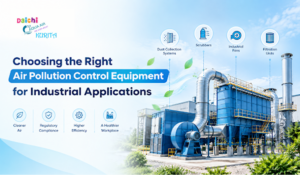
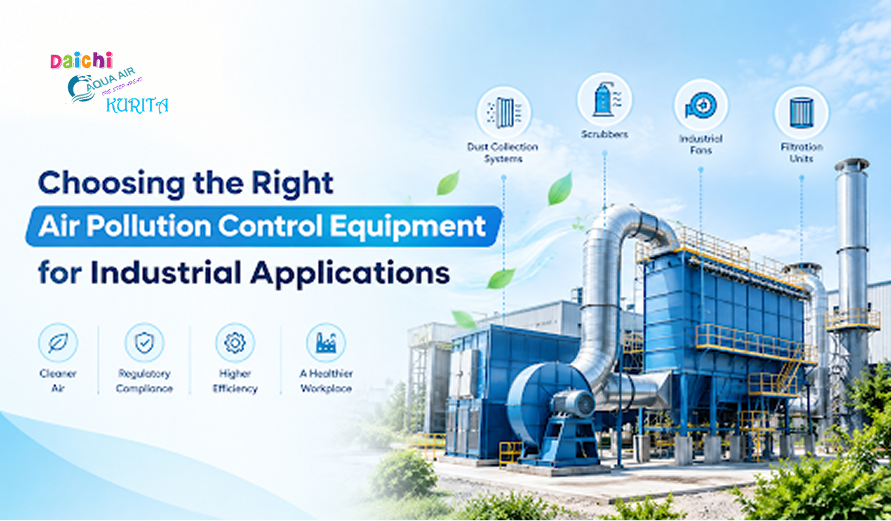
Choosing the right Air Pollution Control Equipment is important because every industrial process produces different types of pollutants. A system used to control dust may not be suitable for chemical vapors or harmful gases. Similarly, a filtration system designed for suspended particles may not provide the treatment needed for industrial emissions.
The right solution starts with understanding the source of pollution, the type of contaminant, airflow requirements, operating conditions, and the requirements of the facility. Daichi Kurita Aqua-Air provides customized air treatment and pollution control solutions based on production processes, pollution levels, airflow requirements, and environmental requirements.
Why Choosing the Right Air Pollution Control Equipment Matters
Air pollution control is not simply about installing equipment and connecting it to a production process. The system needs to match the actual conditions of the facility.
For example, manufacturing operations may produce dust and smoke, while chemical processes may release fumes, gases, or chemical vapors. Food processing units may also need odor control, while pharmaceutical facilities may require controlled air conditions.
Proper Air Pollution Control Equipment can help industries manage these different problems through suitable filtration, dust collection, air scrubbing, ventilation, or odor control systems.
A properly selected system can help:
- Control airborne dust and particles
- Reduce industrial emissions
- Improve workplace air quality
- Protect industrial equipment
- Support cleaner production areas
- Help meet applicable environmental requirements
- Reduce unnecessary maintenance problems
- Support more efficient industrial operations
The actual result depends on the equipment selected, system design, process conditions, and regular maintenance.
Start by Identifying the Type of Air Pollution
The first step in selecting Air Pollution Control Equipment is to understand what the industrial process is producing.
Different contaminants require different treatment methods. Dust, smoke, fumes, gases, chemical vapors, and odors cannot always be controlled using the same equipment.
For example, a manufacturing unit may need a dust collection system around machines that produce particles. A chemical plant may require an air scrubber to treat gases or chemical vapors. A facility with general airborne particles may need an industrial air filtration system.
Understanding the pollution source makes it easier to select suitable Industrial Air Pollution Control equipment.
Industrial Air Filtration Systems for Dust and Suspended Particles
Industrial Air Filtration Systems are used to remove dust, suspended particles, smoke, and other airborne contaminants generated during industrial operations.
These systems can be useful in facilities where airborne particles affect production areas, equipment, or workplace air quality. Daichi Kurita Aqua-Air provides industrial air filtration systems designed around industrial requirements, with features including filtration efficiency, low maintenance, energy-efficient operation, and long filter service life.
When selecting filtration equipment, industries should consider the type and size of particles, airflow, operating conditions, and the location where contamination is generated.
The filtration system should also be practical to inspect and maintain. Regular maintenance helps the equipment continue working as intended.
Dust Collection Systems for Industrial Processes
Dust is common in manufacturing, material handling, woodworking, metal processing, cement operations, food processing, pharmaceutical facilities, and warehouses.
Dust Collection Systems capture dust generated during these processes and help prevent it from spreading through the facility.
The design of a dust collection system depends on where the dust is generated and how much air needs to be collected. Collection points, ducting, airflow, filters, and the main collection equipment all need to work together.
Industries should therefore consider the complete setup rather than selecting a dust collector only on the basis of its size.
Air Scrubber Systems for Gases and Chemical Vapors
Not every industrial air-quality problem is related to dust. Some processes produce harmful gases, chemical vapors, odors, or other emissions.
In these situations, Industrial Air Pollution Control Systems may include air scrubbers designed for the specific contaminants involved.
Daichi Kurita Aqua-Air’s Air Scrubber Systems are designed to remove harmful gases, chemical vapors, odors, and industrial emissions from exhaust air before it is released into the atmosphere.
The right scrubber depends on the type of pollutant, concentration, airflow, process conditions, and treatment requirements. A proper assessment is therefore important before selecting an air scrubber.
When to Consider Air Emission Control Systems
Industrial plants that release process emissions may require dedicated Air Emission Control Systems.
The type of control equipment depends on what the process releases. Particulate emissions may require filtration or dust collection, while gases and chemical vapors may require air scrubbing or another suitable treatment method.
An effective emission control approach starts with identifying the source and characteristics of the emissions. It also considers the operating conditions of the plant and the environmental requirements applicable to the facility.
This makes Industrial Emission Control an important part of planning air treatment for manufacturing and processing facilities.
Industrial Air Treatment Systems Can Combine Different Technologies
Many industrial facilities have more than one air-quality challenge. A plant may generate dust in one production area, fumes in another, and odors from a separate process.
In such cases, one piece of equipment may not be enough.
Industrial Air Treatment Systems can combine different technologies according to the needs of the facility. These may include:
- Industrial Air Filtration Systems
- Dust Collection Systems
- Air Scrubber Systems
- Industrial Ventilation Systems
- Odor Control Systems
- Air Pollution Control Systems
- Air Washer Systems
- PLC-based automated air treatment systems
Daichi Kurita Aqua-Air lists these solutions as part of its customized air treatment offering.
Combining suitable systems can help address different pollution sources while keeping the overall air-treatment setup organized around the production process.
Consider Airflow Before Selecting Equipment
Airflow is one of the important factors when selecting pollution control equipment.
A system needs to handle the amount of air generated by the process and collect contaminated air effectively. If airflow requirements are not properly considered, the system may not perform as expected.
The facility layout also matters. Production machines, extraction points, ducts, filters, fans, scrubbers, and exhaust points need to be considered during system planning.
Daichi Kurita Aqua-Air states that its customized systems are designed based on airflow requirements along with production processes, pollution levels, and environmental regulations.
Consider the Industrial Process and Working Conditions
The production process can have a direct effect on the type of Air Pollution Control Equipment required.
Factors that should be reviewed include:
- Type of manufacturing process
- Source of airborne contaminants
- Type of pollutant
- Pollution concentration
- Airflow requirements
- Operating hours
- Temperature and process conditions
- Facility layout
- Required maintenance
- Applicable environmental requirements
For example, a chemical plant may need equipment capable of handling fumes and gases, while a metal processing facility may need dust collection and filtration.
This is why equipment selection should be based on actual process conditions instead of using the same solution for every facility.
Air Quality Control Systems for Different Industries
Air Quality Control Systems can be used across a wide range of industrial and commercial applications.
Manufacturing plants may require dust collection, filtration, and ventilation. Pharmaceutical companies may need clean-air solutions designed around production requirements. Food and beverage facilities may require filtration, ventilation, and odor control.
Chemical industries may need pollution control systems for fumes, gases, and industrial emissions. Automotive facilities, textile industries, warehouses, healthcare facilities, and commercial buildings can also have different air-treatment requirements.
Daichi Kurita Aqua-Air provides air treatment solutions for manufacturing, pharmaceutical, food and beverage, chemical, textile, automotive, warehouse, healthcare, educational, and commercial facilities.
Industrial Air Quality Control Is More Than Equipment Selection
Good Industrial Air Quality Control depends on the complete system.
Even suitable equipment needs correct installation, proper operation, and regular maintenance. Filters may require inspection or replacement. Ducting should be checked for leaks or blockages. Fans and other system components also need regular attention.
Maintenance requirements should therefore be considered before selecting equipment.
A system that is difficult to access or maintain may create unnecessary problems later. Choosing equipment with practical maintenance requirements can make long-term operation easier.
Consider the Complete Air Pollution Control System
A complete Air Pollution Control System should be designed around the facility’s actual requirements.
For example, an industrial plant may need dust collection at production machines, filtration for suspended particles, an air scrubber for chemical vapors, and ventilation to improve airflow.
Daichi Kurita Aqua-Air provides customized systems after evaluating production processes, environmental conditions, operational objectives, pollution levels, and airflow requirements. Its project process includes site assessment, system design, manufacturing, installation and commissioning, and after-sales support.
This type of approach helps industries select solutions based on their own operating conditions.
What to Check Before Choosing Air Pollution Control Equipment
Before purchasing or installing equipment, industries can review a few basic points.
Identify the Pollution Source
Find out exactly where dust, fumes, gases, smoke, or odors are being generated.
Understand the Pollutant
Determine what type of contaminant needs to be controlled. This helps narrow down suitable treatment technologies.
Check Airflow Requirements
Understand how much air needs to be collected or treated and where the extraction points should be located.
Review the Facility Layout
Available space, production equipment, duct routes, access points, and exhaust locations should be considered.
Plan Maintenance
Check how filters, fans, scrubbers, ducts, and other components will be inspected and maintained.
Consider Future Requirements
Production changes can affect air treatment needs. The system should be planned with the facility’s operating requirements in mind.
Why Customized Industrial Pollution Control Solutions Matter
Every industrial facility has its own production process and air-quality requirements. A system designed for one application may not be suitable for another.
Industrial Pollution Control Solutions should therefore be customized according to the pollution source, process conditions, airflow, facility layout, and environmental requirements.
Daichi Kurita Aqua-Air provides customized engineering solutions and turnkey project execution, including system design, manufacturing, installation, commissioning, technical support, and annual maintenance contracts.
This allows industries to address their specific air-treatment requirements rather than relying on a standard system.
Supporting Cleaner Industrial Operations
The purpose of pollution control is not limited to reducing visible dust or emissions. Good air management can also support equipment protection, workplace air quality, maintenance, and overall industrial operations.
Suitable Air Pollution Control Equipment can help industries manage airborne contaminants according to their process requirements.
When filtration, dust collection, air scrubbing, ventilation, and odor control are selected correctly, they can work together as part of a complete air-treatment plan.
The right solution should always be based on the actual pollution problem and operating conditions of the facility.
Conclusion
Choosing the right Air Pollution Control Equipment starts with understanding the pollution source, type of contaminant, airflow, production process, facility layout, and maintenance requirements.
Industrial Air Pollution Control Systems can include filtration, dust collection, air scrubbers, ventilation, odor control, and other suitable technologies. The correct combination depends on what an industry needs to control.
Daichi Kurita Aqua-Air provides customized Industrial Air Pollution Control and Industrial Air Treatment Systems for different industrial applications. Its solutions cover air filtration, dust collection, air scrubbing, ventilation, odor control, and broader air pollution control requirements.
For industries planning a new system or improving an existing one, a detailed assessment of the production process and air-quality requirements can help in selecting suitable Air Pollution Control Equipment for reliable and practical operation.
Frequently Asked Questions
What is Air Pollution Control Equipment?
Air Pollution Control Equipment is used to capture, filter, treat, or manage airborne contaminants generated by industrial processes. The type of equipment depends on whether the facility needs to control dust, smoke, fumes, gases, odors, or other pollutants.
How do I choose the right Air Pollution Control Equipment?
Start by identifying the pollutant, its source, airflow requirements, production process, operating conditions, facility layout, and applicable environmental requirements. These factors help determine whether filtration, dust collection, air scrubbing, ventilation, or a combination of systems is suitable.
What is the difference between air filtration and air scrubbing?
Air filtration is commonly used to remove dust, suspended particles, smoke, and other airborne contaminants. Air scrubbing is used for specific gases, chemical vapors, odors, and industrial emissions. The suitable system depends on the type of pollutant being generated.
Which industries use Industrial Air Pollution Control Systems?
Industrial Air Pollution Control Systems can be used in manufacturing, pharmaceutical, food and beverage, chemical, textile, automotive, warehouse, healthcare, and other facilities where airborne contaminants need to be managed.
Can Air Pollution Control Systems be customized?
Yes. Air pollution control systems can be designed according to production processes, pollution levels, airflow requirements, facility conditions, and environmental requirements. Daichi Kurita Aqua-Air provides customized air treatment solutions along with design, manufacturing, installation, commissioning, and after-sales support.