Clean air is important in every workplace, but it is especially critical in industrial and commercial environments. Manufacturing units, pharmaceutical facilities, hospitals, laboratories, food processing plants, offices, and other controlled spaces often need more than basic ventilation. They require proper air filtration, temperature control, humidity management, and consistent airflow.
This is where industrial air purification systems can play an important role.
Industrial air purification is not simply about removing dust from the air. A well-designed air treatment system can help manage airflow, filter airborne contaminants, control temperature and humidity, and maintain suitable indoor conditions for people, equipment, and production processes.
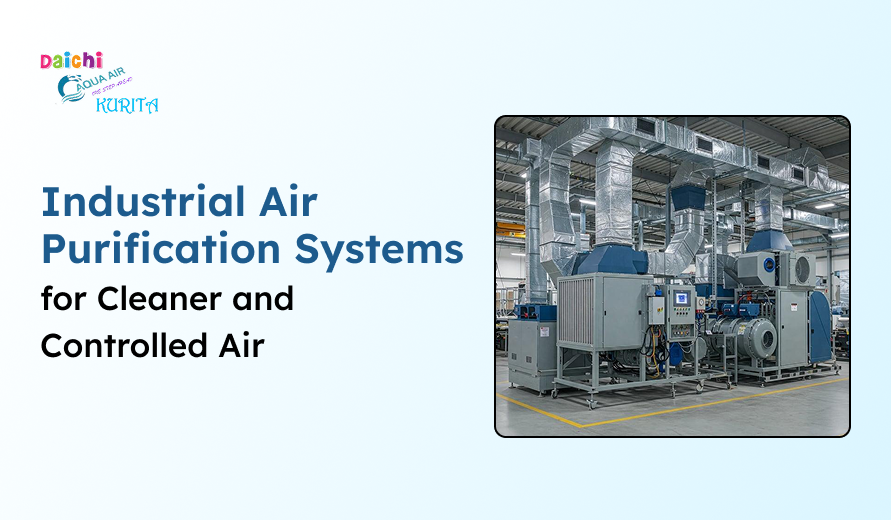
For facilities with specific environmental requirements, Air Handling Units (AHUs) with air conditioning can provide an integrated solution. These systems are designed to handle fresh or return air, filter it, cool it, control humidity when required, and distribute conditioned air through ducts.
What Are Industrial Air Purification Systems?
Industrial air purification systems are air treatment solutions designed for larger buildings, industrial facilities, commercial spaces, and controlled environments.
Unlike small standalone air purifiers used in individual rooms, industrial systems are designed to handle much larger volumes of air. They can be integrated into a building’s ventilation and air distribution system.
Depending on the application, an industrial air treatment setup may include:
- Pre-filters
- Fine filters
- Cooling coils
- Air handling units
- Air distribution ducts
- Temperature control
- Humidity control
- Airflow management
The exact configuration depends on the size of the facility, the required airflow, the working environment, and the level of air cleanliness needed.
Why Is Industrial Air Purification Important?
Industrial and commercial facilities can have different sources of airborne particles and contaminants. Dust can enter from outside, while manufacturing and production activities may also affect indoor air quality.
At the same time, some industries need carefully controlled environmental conditions to protect products, equipment, and processes.
An effective air treatment system can help create a cleaner and more controlled indoor environment by combining filtration with proper ventilation and conditioning.
For example, an AHU with AC can draw fresh or return air into the unit, pass it through pre-filters and fine filters, cool the air through a cooling coil, and then distribute the conditioned air through ducts.
How Does an Industrial Air Filtration System Work?
The working process depends on the system design, but the basic process is straightforward.
1. Air Intake
Fresh air or return air is drawn into the air handling unit. The system is designed to meet the facility’s required airflow capacity.
2. Pre-Filtration
The incoming air passes through pre-filters. These filters help capture larger dust particles and airborne contaminants before the air moves to the next filtration stage.
3. Fine Filtration
After pre-filtration, the air can pass through fine filters for additional particle removal. Multiple filtration stages can help improve the cleanliness of the air supplied to the facility.
4. Cooling and Conditioning
The filtered air can then pass over a cooling coil, where heat is removed. This helps bring the air to the required temperature.
Humidity can also be controlled depending on the requirements of the application.
5. Air Distribution
Once the air has been filtered and conditioned, it is supplied through ducts to different areas of the facility.
This integrated process allows filtration, cooling, airflow, and environmental control to work together.
Industrial Air Purification vs Basic Ventilation
Ventilation and air purification are related, but they are not the same.
Basic ventilation mainly focuses on bringing fresh air into a building and removing stale air. Industrial air purification and air treatment can go further by incorporating filtration and conditioning into the airflow process.
For facilities where temperature, humidity, air cleanliness, and airflow need to remain consistent, an integrated air handling solution can be more suitable.
This is particularly important in controlled environments where changes in indoor conditions can affect production, product quality, equipment, or working conditions.
Key Benefits of Industrial Air Purification Systems
Choosing the right industrial air purification systems can provide several benefits for commercial and industrial facilities.
Cleaner Air
Filtration helps remove dust and airborne particles from the air passing through the system. This can contribute to a cleaner indoor environment.
Controlled Airflow
Industrial facilities often require a consistent supply of air across different areas. Proper air distribution helps maintain controlled airflow throughout the required spaces.
Temperature Management
Air treatment systems can combine filtration with cooling to help maintain the desired indoor temperature.
An AHU with AC, for example, combines air handling and cooling within an integrated system.
Humidity Control
Some facilities need humidity to remain within a specific range. Depending on the system configuration, humidity can be managed during the air-conditioning process.
Better Working Environment
Controlled airflow, filtration, and temperature management can contribute to a more comfortable and suitable working environment.
Support for Sensitive Processes
Certain industries require controlled environmental conditions to support their processes. Proper air treatment can help maintain those conditions.
Energy Efficiency
Modern air handling systems can be designed with energy efficiency in mind. Proper system sizing, airflow management, and efficient components can help control operating costs.
Applications of Industrial Air Purification Systems
Different industries have different air treatment system requirements. A properly designed system can be configured according to the needs of the facility.
Pharmaceutical Manufacturing
Pharmaceutical production often requires controlled environmental conditions. Air filtration, temperature management, humidity control, and controlled airflow can all be important in such facilities.
Hospitals and Healthcare Facilities
Healthcare environments require proper ventilation and air quality management. Air handling systems can help provide filtered and conditioned air to different areas.
Food Processing
Food processing facilities need suitable environmental conditions for production and storage areas. Air treatment can help manage temperature, humidity, and air cleanliness.
Laboratories and Cleanrooms
Laboratories and cleanrooms can require controlled airflow and filtration. The air handling system can be designed according to the cleanliness and environmental requirements of the space.
Commercial Buildings
Offices and commercial buildings also need comfortable and properly conditioned indoor air. Industrial-grade air handling solutions can be used where larger airflow capacities are required.
Hotels and Hospitality
Hotels need to maintain comfortable indoor conditions across rooms, common areas, and service spaces. Proper air handling can support temperature control and air quality.
Industrial Production Areas
Manufacturing and production facilities can have high airflow requirements and specific environmental needs. Customized air handling and filtration solutions can help meet these requirements.
These applications align with the listed uses of AHU with AC systems, which include pharmaceutical manufacturing, hospitals, offices, hotels, food processing units, cleanrooms, laboratories, and industrial production areas.
How to Choose the Right Industrial Air Purification System
Every facility has different requirements, so an industrial air purification system should be selected carefully.
Consider Airflow Requirements
The system should be capable of handling the required volume of air. An undersized system may not provide sufficient airflow, while an unnecessarily oversized system can increase operating costs.
Understand Filtration Needs
Different environments require different levels of filtration. The type and number of filters should be selected according to the expected airborne particles and application.
Look at Temperature Requirements
If the facility needs temperature control along with filtration, an AHU with integrated cooling may be appropriate.
Consider Humidity
Some production and controlled environments require humidity management. This should be considered while designing the air treatment system.
Plan for Maintenance
Filters, coils, fans, and other components require regular inspection and maintenance. Easy access for servicing can help keep the system operating efficiently.
Choose a Customized Design
Industrial buildings are rarely identical. A system designed according to the facility’s airflow, layout, application, and environmental requirements can provide better results than a standard solution.
Importance of Air Handling Units in Industrial Air Treatment
Air Handling Units are an important part of many large-scale air treatment systems.
An AHU can combine several functions within one system, including air intake, filtration, cooling, airflow management, and air distribution.
An AHU with AC can draw fresh or return air, pass it through filtration stages, cool it through a coil, and supply the conditioned air through ducts. The system can also be configured for humidity control depending on the application.
This makes AHUs useful for facilities where air quality and environmental conditions need to be managed together.
Why Customization Matters
A good industrial air treatment system should match the facility rather than forcing the facility to adapt to a standard system.
Factors such as building size, production process, number of occupants, required airflow, temperature range, humidity requirements, filtration level, and operating schedule can influence the final design.
Custom-built configurations can help ensure that the system is suited to the actual application. The website’s AHU solution specifically highlights custom-built configurations based on airflow and application requirements.
Maintenance of Industrial Air Purification Systems
Regular maintenance is essential for maintaining the performance of an industrial air treatment system.
Filters should be inspected and replaced according to their condition and recommended service schedule. Cooling coils should be checked to ensure proper heat transfer, while fans and other mechanical components should also be inspected.
Blocked filters can restrict airflow and place additional load on the system. Regular maintenance can help identify such issues early and support reliable operation.
For larger systems, scheduled professional inspection and servicing can help maintain performance over the long term.
The Future of Industrial Air Treatment
As industries become more focused on efficiency, product quality, workplace conditions, and controlled manufacturing environments, the need for effective air treatment is likely to continue growing.
Modern industrial air purification systems are increasingly being designed as complete air management solutions rather than simple filtration units.
The combination of filtration, cooling, humidity management, controlled airflow, and energy-efficient operation can provide a more complete approach to indoor air management.
For industries with strict environmental requirements, selecting the right air handling and purification solution can be an important part of maintaining reliable operations.
Conclusion
Clean and controlled air is an important requirement for many industrial and commercial facilities. Industrial air purification systems can help manage airborne particles while also supporting filtration, cooling, humidity control, and consistent airflow.
From pharmaceutical manufacturing and healthcare facilities to food processing, laboratories, hotels, offices, and industrial production areas, the right air treatment system can be designed around the specific needs of the facility.
If you are looking for customized air handling and treatment solutions for your industrial or commercial facility, Daichi Kurita Aqua-Air offers AHU solutions designed around airflow and application requirements. Contact the team to discuss your requirements and find a suitable air handling solution for your facility.
Frequently Asked Questions
What are industrial air purification systems?
Industrial air purification systems are large-scale air treatment solutions designed to filter and condition air in industrial, commercial, and controlled environments. They can include filtration, cooling, airflow management, and humidity control.
Where are industrial air purification systems used?
They can be used in pharmaceutical facilities, hospitals, food processing units, offices, hotels, laboratories, cleanrooms, and industrial production areas.
What is the role of an AHU in air purification?
An Air Handling Unit can bring in fresh or return air, pass it through pre-filters and fine filters, cool and condition it, and distribute the treated air through ducts.
How often should industrial air filters be replaced?
The replacement schedule depends on the filter type, operating conditions, air quality, and system usage. Filters should be inspected regularly and replaced according to their condition and manufacturer’s recommendations.
Can industrial air purification systems control temperature and humidity?
Yes. Depending on the system design, industrial air handling solutions can provide filtration along with temperature control and humidity management to meet the requirements of a specific facility.