Table of Contents
Water and air are important resources for almost every industrial operation. Manufacturing plants use water for production, cooling, cleaning, and processing. At the same time, industrial activities can release dust, smoke, fumes, gases, and other pollutants into the air.
If these pollutants are not managed properly, they can affect the workplace and the surrounding environment. Industries therefore need suitable systems to treat wastewater, maintain water quality, and control air emissions.
Water and Air Pollution Control involves using different treatment processes and equipment to manage these problems. Water treatment systems help remove impurities from water and wastewater, while air treatment equipment captures or treats airborne pollutants.
Daichi Kurita Aqua-Air provides industrial water treatment, wastewater management, and air treatment solutions for different industrial requirements. Understanding how these systems work can help businesses select suitable equipment for their facilities.
Why Industries Need Water and Air Pollution Control Systems
Industrial operations generate different types of waste depending on their processes. Water used during manufacturing may contain suspended solids, oils, chemicals, dissolved salts, and other impurities. Similarly, industrial processes may release dust, fumes, smoke, and gases.
Untreated wastewater can affect water bodies and soil, while uncontrolled air emissions can reduce air quality around industrial facilities. Both problems require suitable treatment methods.
A proper Air Pollution Control System helps capture or treat pollutants before they spread into the workplace or surrounding atmosphere. Similarly, industrial water treatment systems prepare water for production, cleaning, cooling, reuse, or discharge according to the required quality.
These systems support better environmental management and help industries handle waste generated during daily operations.
Industrial Water Treatment Systems and Their Uses
Industrial Water Treatment is the process of removing unwanted substances from water so that it can be used for specific industrial applications. The treatment method depends on the source of water, the type of impurities, and the quality required by the industry.
For example, water used in a boiler may require different treatment from water used for general cleaning or cooling. Some manufacturing processes also require water with low dissolved mineral content.
Water Treatment Systems may combine several treatment stages to achieve the required water quality. Common equipment and processes include:
- Pre-treatment and screening
- Sand and multimedia filtration
- Activated carbon filtration
- Water softening
- Reverse osmosis
- Ultrafiltration
- Demineralisation
- Effluent Treatment Plants (ETP)
- Sewage Treatment Plants (STP)
- Multi-Effect Evaporators (MEE)
- Zero Liquid Discharge (ZLD) systems
The selection of equipment depends on the water analysis and the intended application.
Common Water Treatment Processes Used in Industries
Different treatment processes remove different types of impurities. A plant may use one process or combine multiple technologies depending on its requirements.
1. Water Filtration
Filtration is commonly used to remove suspended particles, sediments, and other unwanted materials from water. Sand filters, multimedia filters, and activated carbon filters are examples of equipment used in industrial water treatment.
These filters are often installed before advanced treatment equipment to reduce the amount of suspended material entering later stages.
2. Reverse Osmosis Plant
A Reverse Osmosis (RO) plant uses a semi-permeable membrane to reduce dissolved salts and other impurities in water. Water passes through the membrane under pressure, while many dissolved substances are separated.
RO plants are used in industries that require water with lower dissolved solids for manufacturing, processing, and other applications.
3. Ultrafiltration Plant
Ultrafiltration uses a membrane to separate suspended particles, colloids, and certain microorganisms from water. It is commonly used as a pre-treatment stage before reverse osmosis or as part of a larger water purification process.
The system is selected according to the incoming water quality and the required treatment level.
4. Water Softening Systems
Hard water contains minerals such as calcium and magnesium. These minerals can form deposits inside pipes, boilers, cooling systems, and other equipment.
Water softening systems reduce water hardness through an ion exchange process. This helps control scale formation in equipment where hard water can create operating problems.
5. Demineralisation Systems
Some industrial processes require water with very low mineral content. Demineralisation systems remove dissolved mineral ions to produce water suitable for these applications.
They are used where controlling the mineral content of water is important for the production process or equipment.
Industrial Wastewater Treatment and Management
Industries produce wastewater during manufacturing, equipment cleaning, processing, and other activities. The composition of this wastewater depends on the type of industry and the materials used in production.
For example, food processing wastewater may contain organic matter and oils, while textile and chemical industries may generate wastewater containing colour, chemicals, and other contaminants.
Industrial wastewater needs suitable treatment before it is discharged or reused.
Effluent Treatment Plant (ETP)
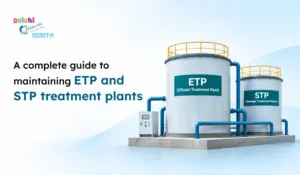
An Effluent Treatment Plant is used to treat wastewater generated by industrial processes. The treatment stages are selected according to the type and concentration of pollutants present in the wastewater.
An ETP may include screening, equalisation, chemical treatment, clarification, biological treatment, filtration, and sludge handling.
The purpose is to reduce contaminants and prepare the treated water for the intended discharge or reuse application.
Sewage Treatment Plant (STP)
A Sewage Water Treatment Plant treats domestic wastewater generated from toilets, bathrooms, kitchens, offices, and other similar sources.
STPs generally use physical and biological treatment processes to remove solids and organic matter from sewage. Additional filtration or disinfection may be included depending on the required treated-water quality.
ETPs and STPs are designed for different wastewater sources, so industries should select the appropriate plant according to the type of wastewater they generate.
Zero Liquid Discharge Systems
Zero Liquid Discharge (ZLD) systems are used in industrial wastewater treatment arrangements where the aim is to minimise or eliminate liquid wastewater discharge from the process.
These systems may combine filtration, membrane treatment, evaporation, and crystallisation. Multi-Effect Evaporators (MEE) can be used to concentrate wastewater as part of certain ZLD arrangements.
The selection of a ZLD system depends on wastewater characteristics, water recovery requirements, and the treatment process.
What Is Air Pollution Control in Industrial Facilities?
Industrial air pollution can come from activities such as grinding, cutting, welding, material handling, chemical processing, and manufacturing. These activities may release dust, fumes, smoke, gases, and other airborne contaminants.
Air Pollution Control involves using suitable equipment to capture, filter, or treat these pollutants. The system selected depends on the type of contaminant, its source, airflow requirements, and the operating conditions of the facility.
Daichi Kurita Aqua-Air provides air treatment solutions that include industrial air filtration, dust collection, air scrubbers, ventilation, air washers, and air pollution control systems.
These solutions help industries manage different air quality problems based on their production processes.
Types of Air Pollution Control Equipment
Different pollutants require different treatment methods. Dust collectors, for example, are used for airborne particles, while air scrubbers can be designed to treat certain gases, chemical vapours, and odours.
1. Industrial Air Filtration Systems
Industrial air filtration systems are used to remove dust, smoke, suspended particles, and other airborne contaminants.
The filters are selected according to the size and type of particles, airflow, and required filtration level. These systems are used in manufacturing plants, pharmaceutical facilities, food processing units, and other industrial environments.
2. Dust Collection Systems
Dust collection systems capture dust generated during activities such as grinding, cutting, material handling, woodworking, and metal processing.
The system collects dust-filled air through ducts and passes it through a dust collection unit. Filters separate the particles from the air, and the collected dust is stored in a hopper or collection container.
These systems help prevent dust from spreading across production areas.
3. Air Scrubber Systems
Air scrubbers are used to treat certain harmful gases, chemical vapours, odours, and industrial emissions.
In a wet scrubber, contaminated air comes into contact with a liquid that helps capture or absorb selected pollutants. The treatment method depends on the nature of the gas and the operating conditions.
Industries that generate chemical fumes, gases, or unpleasant odours may require a suitable air scrubber system.
4. Industrial Ventilation Systems
Industrial ventilation systems control the movement of air inside a facility. They can remove contaminated air, bring fresh air into the workplace, and support better airflow.
Local exhaust ventilation can capture dust, fumes, or vapours close to the point where they are generated. This helps prevent contaminants from spreading into other areas.
5. Air Washer Units
An air washer unit uses water spray or wetted media to remove certain airborne particles while also cooling and humidifying air.
The unit draws air through the system, where water droplets help capture dust and other impurities. The treated air can then be supplied to the required area.
Air washer units are used in textile industries, pharmaceutical facilities, food processing plants, workshops, warehouses, and other industrial or commercial spaces.
6. Air Handling Units
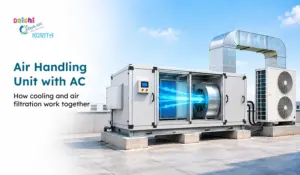
Air Handling Units (AHUs) help manage airflow, filtration, temperature, and humidity inside industrial and commercial facilities.
An AHU with air conditioning can combine air handling and cooling to maintain controlled indoor conditions. It may include filters, fans, cooling components, and other sections depending on the system design.
These units are useful in facilities where temperature, humidity, and clean airflow need to be managed.
How Water and Air Treatment Systems Work Together
Water and air treatment systems handle different types of pollution, but both are important for industrial environmental management.
Consider a manufacturing plant that uses water for production and cleaning. After use, the water may contain chemicals, suspended solids, or other impurities. An ETP can be installed to treat this wastewater before it is discharged or considered for reuse.
The same facility may generate dust during cutting, grinding, or material handling. A dust collection system can capture these particles near the source. If the process also produces chemical fumes or gases, an air scrubber may be required.
In this way, water treatment and air treatment equipment manage separate waste streams within the same facility.
A suitable combination of systems helps industries plan their pollution control requirements according to the production process.
How to Select the Right Water and Air Treatment Equipment
Every industrial facility has different water and air treatment requirements. A system suitable for one industry may not be appropriate for another.
Before selecting equipment, businesses should consider the following factors:
1. Water and wastewater quality: Check the source water and identify the impurities present in wastewater. Water testing helps determine the treatment processes required.
2. Type of air pollutants: Identify whether the process generates dust, smoke, fumes, gases, chemical vapours, or odours. Different pollutants require different equipment.
3. Treatment capacity: The system should be selected according to the volume of water or air that needs to be treated.
4. Industrial application: Consider how the treated water or air will be used and what quality is required for the process.
5. Available space: Check the facility layout, installation area, pipelines, ducts, and equipment access before planning the system.
6. Maintenance requirements: Filters, membranes, pumps, fans, ducts, and other components need regular inspection. Maintenance access should be considered during system selection.
7. Environmental requirements: Industries should check the applicable standards for wastewater discharge and air emissions before finalising the treatment arrangement.
A proper assessment helps businesses select equipment that matches their actual operating needs.
Importance of Regular Maintenance
Regular maintenance is necessary for both water and air treatment plants. Even a properly selected system needs inspection to maintain its intended operation.
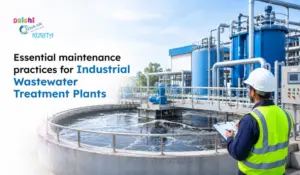
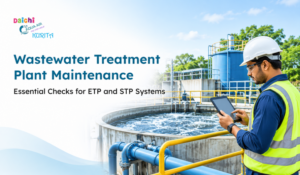
For water treatment plants, maintenance may include checking filters, membranes, pumps, valves, chemical dosing units, and tanks. Water quality testing also helps operators understand whether the treatment process is producing the required output.
For air treatment systems, filters, fans, ducts, scrubbers, and dust collection units should be inspected at suitable intervals. Blocked filters, damaged ducts, or poor airflow can affect system performance.
Following a maintenance schedule helps identify operating issues and supports the reliable functioning of treatment equipment.
Supporting Cleaner Industrial Operations with Suitable Treatment Solutions
Managing water and air pollution requires a planned approach. Industries need to understand the type of waste they generate and select treatment systems that match their processes.
Industrial water treatment solutions such as RO plants, ultrafiltration plants, ETPs, STPs, MEE, and ZLD systems help manage water quality and wastewater. Air treatment solutions such as dust collectors, industrial air filters, scrubbers, air washers, and air handling units help control different airborne contaminants.
These systems form an important part of Air Pollution Solutions and industrial environmental management. They also support better Air Quality Control by addressing pollutants according to their source.
Daichi Kurita Aqua-Air provides water treatment, wastewater management, and air treatment solutions for industrial and commercial applications. Its systems are selected according to the requirements of the facility, the type of pollutants, and the intended treatment process.
Conclusion
Water and air pollution are two important concerns for industrial facilities. Wastewater needs suitable treatment before discharge or reuse, while dust, fumes, gases, and other airborne pollutants require proper control.
Water and Air Pollution Control systems help industries manage these challenges through different treatment technologies. RO plants, ultrafiltration, ETPs, STPs, and ZLD systems support industrial water and wastewater management. Dust collection systems, air filtration, scrubbers, air washers, and air handling units help manage air quality.
The right equipment depends on the industry, the type of pollutants, treatment capacity, and operating requirements. With suitable system selection and regular maintenance, businesses can manage water and air pollution more effectively.
Daichi Kurita Aqua-Air offers industrial water and air treatment solutions designed around different facility requirements.
Frequently Asked Questions
Why are water and air pollution control systems important for industries?
Water and air pollution control systems help industries manage wastewater and airborne pollutants generated during production. They support proper water treatment, emission control, and better environmental management.
What are the common industrial water treatment systems?
Common industrial water treatment systems include reverse osmosis plants, ultrafiltration plants, water softeners, sand filters, activated carbon filters, Effluent Treatment Plants (ETPs), and Sewage Treatment Plants (STPs).
Which equipment is used for industrial air pollution control?
Industries use dust collection systems, industrial air filters, air scrubbers, air washer units, and ventilation systems to manage dust, fumes, gases, and other airborne contaminants.
What is the difference between an ETP and an STP?
An Effluent Treatment Plant (ETP) treats wastewater generated from industrial processes, while a Sewage Treatment Plant (STP) treats domestic wastewater from toilets, bathrooms, kitchens, and similar sources.
How can industries choose the right water and air treatment systems?
Industries should consider water quality, wastewater characteristics, types of air pollutants, treatment capacity, available space, maintenance requirements, and applicable environmental standards before selecting a system.