Table of Contents
Water is used in almost every industry, from food processing and pharmaceuticals to textiles, chemicals and manufacturing. It is needed for production, cleaning, cooling, heating and several other activities. However, water from natural and other sources may contain sand, suspended particles, dissolved salts, minerals, chemicals and microorganisms. Using this water without proper treatment can affect equipment, production processes and the quality of the final product.
This is where modern water treatment systems become important. These systems use different processes to remove unwanted substances and prepare water for its intended use. Depending on the source water and the required quality, treatment may include filtration, softening, reverse osmosis, ultrafiltration and other purification methods.
Water treatment is also important after industrial operations. Wastewater may contain chemicals, oils, suspended solids and other pollutants that need to be removed before discharge or reuse.
Understanding the water treatment process helps industries choose the right equipment and manage their water resources more effectively.
What Is Water Treatment?
Water treatment is the process of removing unwanted substances from water to make it suitable for a particular purpose. Treatment requirements depend on the water source and how it will be used.
For example, water used for general cleaning may not need the same level of purification as water used in pharmaceutical manufacturing or boiler operations. Similarly, wastewater generated by a factory needs a different treatment approach from domestic sewage.
The main objectives of a water treatment system include:
- Removing suspended particles, dirt and sediments.
- Reducing unwanted dissolved salts and minerals.
- Controlling water hardness.
- Removing selected chemicals and other contaminants.
- Improving water quality for industrial applications.
- Treating wastewater before discharge or reuse.
There is no single treatment method that works for every type of water. A suitable system is selected after checking water quality, daily demand and the requirements of the application.
Why Do Industries Need Modern Water Treatment Systems?
Industrial operations require water with specific quality characteristics. If untreated or unsuitable water enters a production process, it may cause problems such as scale formation, deposits, corrosion and equipment fouling.
Different industries also have different water requirements. A food processing unit may need water that meets its process and hygiene requirements, while a boiler system may require water with controlled hardness and dissolved mineral content.
Modern industrial water treatment systems help businesses manage these requirements through suitable treatment stages.
1. Better Water Quality
Water treatment removes unwanted particles, minerals and other impurities. The level of treatment depends on the quality needed for the intended application.
2. Protection of Industrial Equipment
Hard water and suspended particles can contribute to scale deposits and blockages in pipes, heat exchangers, boilers and other equipment. Suitable treatment can help reduce these problems.
3. Support for Production Processes
Many manufacturing activities depend on consistent water quality. Proper treatment helps provide water that meets the requirements of the production process.
4. Better Water Management
Industries can also treat and reuse suitable wastewater. This can reduce the amount of fresh water required for selected operations and support more organised water management.
How Does the Water Treatment Process Work?
The water treatment process may involve several stages. The exact arrangement depends on the source of water, the impurities present and the required treated-water quality.
A typical industrial setup may include the following stages.
1. Water Testing and Pre-Treatment
The first step is to understand the quality of the incoming water. Testing helps identify suspended solids, hardness, dissolved salts, pH and other relevant parameters.
After testing, pre-treatment equipment may be selected to remove larger particles and reduce the load on the main treatment system.
Pre-treatment can include:
- Screening to remove larger materials.
- Sand or multimedia filtration to reduce suspended particles.
- Activated carbon filtration to reduce selected organic substances, odour and chlorine.
- Chemical dosing for specific water quality requirements.
Pre-treatment is important because it helps prepare water for further purification and protects downstream equipment.
2. Water Filtration
Filtration is one of the basic stages used in many water filtration systems. It helps remove suspended solids, sediments and other physical impurities from water.
Different filters are used depending on the type and size of particles that need to be removed.
Common filtration equipment includes:
Sand filters: These filters help remove suspended particles and reduce turbidity.
Multimedia filters: They use different filter materials to remove particles of varying sizes.
Activated carbon filters: These are used to reduce certain organic compounds, odour and chlorine.
Cartridge filters: They provide finer particle filtration and are often used before membrane-based treatment.
The right filter depends on the incoming water quality and the requirements of the next treatment stage.
3. Water Softening
Water hardness is mainly caused by dissolved calcium and magnesium salts. Hard water can form scale inside pipes, boilers, cooling systems and other equipment.
A water softening system commonly uses ion exchange to replace hardness-causing calcium and magnesium ions with sodium ions.
Softening helps control hardness, but it does not remove all dissolved salts or every type of impurity. Additional treatment may be needed depending on the final water quality requirement.
4. Reverse Osmosis
Reverse osmosis (RO) is a membrane-based purification process used to reduce dissolved salts and many other impurities in water.
In an RO system, pressure is applied to push water through a semi-permeable membrane. The membrane separates a large portion of dissolved substances from the treated water.
An industrial RO plant may be used in applications where lower dissolved solids are required. It is commonly considered for industries such as pharmaceuticals, food processing, chemicals and manufacturing.
The performance of an RO system depends on feed-water quality, pressure, membrane condition, recovery rate and operating conditions. Proper pre-treatment and regular maintenance are important for its operation.
5. Ultrafiltration
Ultrafiltration (UF) is another membrane-based treatment method. It uses membranes with small pores to separate suspended particles, colloids and many microorganisms from water.
UF is often used as a pre-treatment stage before reverse osmosis or as part of a larger water purification setup.
However, ultrafiltration does not significantly remove most dissolved salts. If the water requires a reduction in total dissolved solids, additional treatment such as RO may be needed.
6. Disinfection and Final Treatment
Some applications require an additional stage to control microorganisms. Depending on the water quality and intended use, disinfection may involve ultraviolet treatment, ozone or carefully controlled chemical methods.
The final treatment stage is selected according to the quality standards required for the application. Treated water should be tested to confirm that it is suitable for its intended use.
Different Water Purification Systems Used in Industries
Not every industry needs the same treatment equipment. Some facilities need basic filtration, while others require advanced purification to control dissolved salts, hardness or microorganisms.
Different water purification systems can be combined to meet specific requirements.
| Treatment System | Main Purpose |
| Sand Filter | Removes suspended particles and sediments |
| Activated Carbon Filter | Reduces selected organic substances, odour and chlorine |
| Water Softening Plant | Reduces calcium and magnesium hardness |
| Reverse Osmosis Plant | Reduces dissolved salts and many other impurities |
| Ultrafiltration Plant | Removes suspended particles, colloids and many microorganisms |
| Demineralisation Plant | Removes dissolved mineral ions to produce low-mineral water |
The selection of equipment depends on water analysis, required capacity, operating conditions and the final water quality needed by the industry.
How Is Industrial Wastewater Treated?
Water treatment does not end after water has been used. Industrial activities can produce wastewater containing oils, chemicals, suspended solids, organic matter and other pollutants.
The composition of wastewater varies from one industry to another. For example, textile wastewater may contain dyes and processing chemicals, while food processing wastewater may contain organic matter, oils and grease.
Industrial wastewater treatment generally involves different stages.
Primary Treatment
Primary treatment focuses on removing larger and suspended materials. Processes may include screening, oil separation, sedimentation and clarification.
Secondary Treatment
Secondary treatment may use biological processes to reduce biodegradable organic matter. Microorganisms help break down organic pollutants under controlled conditions.
Tertiary Treatment
Tertiary treatment provides additional purification when required. It may include filtration, membrane treatment, disinfection or other processes to achieve the required treated-water quality.
The final water may be discharged or considered for reuse, depending on its quality and applicable requirements.
Role of ETP and Sewage Treatment Plants
Industrial facilities may generate both industrial effluent and domestic sewage. These wastewater streams have different characteristics and may require separate treatment systems.
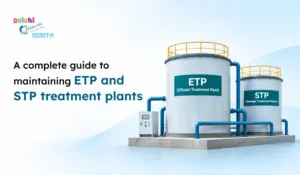
An Effluent Treatment Plant (ETP) is used to treat wastewater generated by industrial processes. Its design depends on the pollutants present in the effluent and the required treatment results.
A sewage treatment plant (STP) is designed to treat domestic wastewater from toilets, bathrooms, kitchens, offices and residential facilities. It commonly uses physical and biological processes to reduce suspended solids and biodegradable organic matter.
Some industrial facilities need both an ETP and an STP because they generate wastewater from manufacturing activities as well as domestic areas.
Choosing the correct system requires an assessment of the wastewater source, flow rate, pollutant levels and intended discharge or reuse.
How Water Treatment Supports Water Reuse
Water reuse is an important part of industrial water management. Instead of using fresh water for every activity, industries can consider reusing treated water for suitable purposes.
For example, treated water may be used for cooling, cleaning, gardening or other non-potable applications if it meets the required quality standards.
Some facilities may need additional treatment before reuse. RO, ultrafiltration and other purification technologies can be included depending on the water quality requirements.
For wastewater streams with high dissolved solids, advanced solutions such as Zero Liquid Discharge (ZLD) may also be considered. ZLD systems use treatment methods such as membrane separation, evaporation and crystallisation to recover water and minimise or eliminate liquid discharge from the treatment process.
The right reuse approach depends on the quality of treated water and the needs of the facility.
Factors to Consider When Choosing Water Treatment Systems
Selecting the right equipment is important for maintaining suitable water quality and reliable plant operation. Before choosing a system, industries should review the following points.
Water source: Check whether the water comes from a borewell, municipal supply, surface water or another source. Different sources may have different impurities.
Water quality: Testing helps identify hardness, dissolved salts, suspended solids, pH and other contaminants.
Daily water requirement: The system capacity should match the amount of water required by the facility.
Application: Water used for cooling, boilers, cleaning and manufacturing may have different quality requirements.
Treatment technology: Select filtration, softening, RO, UF or other processes according to the water analysis and required output.
Maintenance requirements: Filters, membranes, pumps, valves and other equipment need regular inspection and maintenance.
Future needs: The system should be planned with possible changes in production capacity and water demand in mind.
A proper assessment helps avoid selecting equipment that is either unsuitable or unnecessarily complex.
Water Treatment Solutions by Daichi Kurita Aqua-Air
Different industries need different solutions to manage incoming water, process water and wastewater. A complete treatment setup may include filtration, softening, membrane purification and wastewater treatment equipment.
Daichi Kurita Aqua-Air offers water and wastewater treatment solutions for industrial requirements. Its range includes:
- ETP Plants: For treating industrial effluent generated during manufacturing and processing.
- STP Plants: For treating domestic sewage from residential and commercial facilities.
- RO Plants: For reducing dissolved salts and impurities in water.
- Ultra Filtration Plants: For removing suspended particles, colloids and many microorganisms.
- Multi Effect Evaporators: For concentrating wastewater through evaporation.
- Zero Liquid Discharge Systems: For recovering water and managing concentrated wastewater.
The suitable combination depends on the source and quality of water, treatment capacity, process requirements and intended use of the treated water.
To understand the available systems, visit the Water Treatment page.
Conclusion
Modern water treatment systems help turn water containing unwanted impurities into water suitable for specific industrial and commercial applications. Processes such as filtration, softening, reverse osmosis and ultrafiltration address different water quality problems.
Wastewater treatment is equally important because used water may contain pollutants that need to be removed before discharge or reuse. ETP plants, sewage treatment plants, RO systems and Zero Liquid Discharge solutions can be selected according to the type of wastewater and treatment requirements.
The first step is always to understand the water quality and the purpose for which treated water is needed. With the right treatment process and suitable equipment, industries can manage water more effectively and make better use of available resources.
Frequently Asked Questions
What are water treatment systems?
Water treatment systems are equipment and processes used to remove unwanted substances from water. They may include filtration, softening, reverse osmosis, ultrafiltration and disinfection, depending on the water quality and intended use.
What are the main stages of the water treatment process?
The main stages may include water testing, pre-treatment, filtration, softening, membrane purification and disinfection. The exact process depends on the source water and the quality required for the application.
What is the difference between water filtration and water purification?
Water filtration generally focuses on removing suspended particles, sediments and certain other impurities. Water purification is a broader term that can include filtration, reverse osmosis, softening, disinfection and other processes to improve water quality.
Why do industries need industrial water treatment?
Industries need water treatment to maintain suitable water quality for production, cleaning, cooling and other operations. Treatment can also help manage wastewater, protect equipment and support the reuse of suitable treated water.
What is the purpose of a sewage treatment plant?
A sewage treatment plant treats domestic wastewater generated from toilets, bathrooms, kitchens and similar sources. It removes suspended solids and biodegradable organic matter before the treated water is discharged or considered for suitable reuse.