Table of Contents
Maintaining suitable air conditions is important for many industrial and commercial facilities. Heat, dust, and dry air can affect the working environment, equipment, and production activities. Industries such as textiles, pharmaceuticals, food processing, and manufacturing may need equipment that helps cool air, manage humidity, and reduce airborne dust.
Air Washer Systems are used for these purposes. They bring air into contact with water to help cool and humidify it while capturing some dust and airborne particles. The system can be useful in facilities where both air cooling and moisture control are important.
However, an air washer is not the right solution for every air quality problem. Its performance depends on the incoming air conditions, water quality, required humidity, and type of contaminants. Understanding how these systems work can help businesses decide whether an air washer is suitable for their facility.
What Are Air Washer Systems?
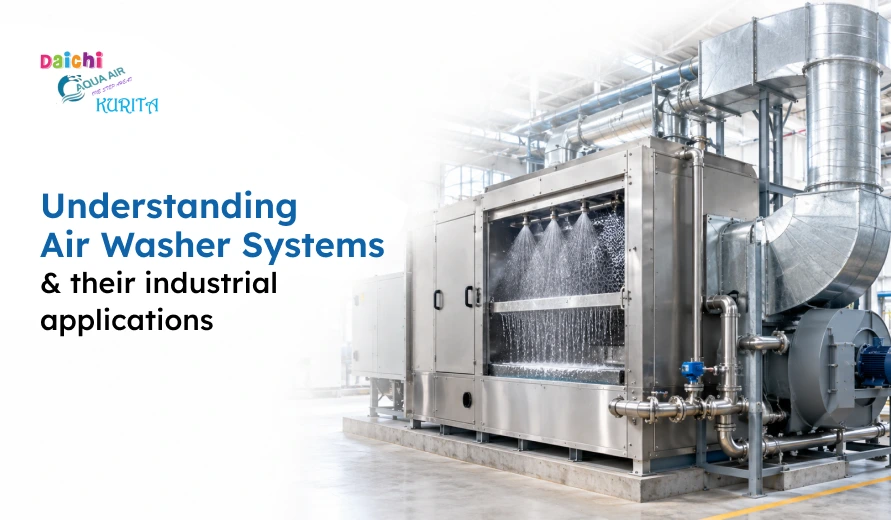
Air Washer Systems are air treatment units that use water to condition incoming air. As air passes through water sprays or wetted media, some dust and impurities are captured by the water. The process can also lower air temperature and increase humidity under suitable conditions.
An Air Washer Unit generally includes an air inlet, water spray arrangement, water collection section, pump, and fan. Depending on the design, the system may also include water filtration and circulation components.
These units are used in industrial and commercial environments where cooling, humidification, and basic dust removal are required. They can help improve indoor conditions and support production processes that depend on suitable temperature and humidity levels.
An air washer is different from a conventional air conditioning system. Air conditioning typically uses a refrigeration cycle to cool air, while an air washer can cool air through direct contact with water. The best choice depends on the local climate and the conditions the facility needs to maintain.
How Does an Air Washer System Work?
The working principle of an industrial air washer is relatively simple. Air enters the unit and comes into contact with water before being supplied to the required area.
The process usually involves the following stages.
1. Air Intake
Fresh air enters the unit through an inlet. The amount of air handled depends on the system’s capacity and the airflow requirements of the facility.
2. Contact With Water
The incoming air passes through water spray nozzles or wetted media. This creates contact between the air and water, allowing some airborne dust and particles to be captured.
3. Cooling and Humidification
As water evaporates, it can absorb heat from the air. This can reduce the air temperature while increasing its moisture content. The amount of cooling depends on the temperature and humidity of the incoming air.
4. Water Collection and Circulation
Water that does not evaporate is collected and may be circulated back through the system. Pumps and water distribution components help maintain the required flow.
Water quality needs regular attention because dissolved minerals, dust, and other impurities can build up over time.
5. Supply of Treated Air
The treated air is directed into the industrial or commercial area. Fans and air distribution arrangements help move the air to the required locations.
The exact design varies between applications. A system should be selected according to the required airflow, temperature, humidity, and air quality conditions.
Why Do Industries Use Air Washer Systems?
Industrial facilities have different air treatment requirements. Some need cooling to manage heat from machinery, while others need humidity control to support production activities.
Air Washer Systems can help address these needs when water-based cooling and humidification are suitable for the application.
Common reasons for using an air washer include:
- Cooling incoming air in suitable climatic conditions.
- Increasing humidity where additional moisture is required.
- Capturing some dust and airborne particles.
- Improving comfort in large production areas.
- Supporting temperature and humidity management.
- Providing a practical air treatment option for selected industrial processes.
An air washer may also be considered where a facility needs to treat a large volume of air. However, the system must be properly sized and designed to achieve the required results.
Industrial Applications of Air Washer Systems
Air washers are used across several industries. Their suitability depends on the production process, indoor environment, and local climate.
1. Textile and Garment Industries
Textile manufacturing is one of the applications where humidity management can be important. In some textile processes, very dry air can contribute to static electricity and affect the handling of fibres and fabrics.
An air washer can help cool and humidify the air when the process requires additional moisture. It may also capture some airborne dust generated during production.
The required humidity level varies according to the type of textile, machinery, and production activity. Businesses should assess these conditions before selecting an industrial air washer.
2. Pharmaceutical Manufacturing
Pharmaceutical facilities may require controlled temperature, humidity, and air cleanliness to support manufacturing activities and protect products.
An air washer may be suitable for selected areas where its cooling and humidification functions meet the process requirements. However, it should not automatically be treated as a replacement for high-efficiency filtration or other specialised air treatment equipment.
The system must be selected according to the facility’s cleanliness requirements, applicable standards, and production process. Areas with strict environmental controls may need additional filtration and HVAC equipment.
3. Food Processing Facilities
Food processing operations can generate heat and airborne particles. Some production areas also need specific temperature and humidity conditions to support product handling and processing.
An Air Washer Unit may help cool and humidify air where those conditions are appropriate. The system design should account for hygiene, water quality, cleaning requirements, and the risk of moisture affecting products or equipment.
Air washers are not suitable for every food processing area. Facilities should determine whether the process requires humidification or whether lower humidity and tighter moisture control are more appropriate.
4. Workshops and Manufacturing Units
Workshops and manufacturing plants may experience high temperatures from machinery, production equipment, and continuous operation.
An industrial air washer can help cool incoming air under suitable conditions. It may also reduce some airborne dust through water contact.
However, when a process produces large amounts of dust, metal particles, chemical fumes, or harmful gases, additional equipment may be necessary. Dust collection systems, industrial air filtration, ventilation, or air scrubbers may be required depending on the pollutants.
5. Warehouses and Large Halls
Large warehouses and production halls can be difficult to cool because of their size and internal heat loads. Consider an air washer where evaporative cooling is suitable and precise refrigeration-based temperature control isn’t essential.
Before installation, businesses should review the building’s size, roof heat gain, outdoor humidity, ventilation needs, and working conditions. These factors influence how much cooling the system can provide.
Air Washer Systems and Temperature Control
Temperature control is one of the main reasons industries consider an air washer. The system can cool air as water evaporates, reducing some of the heat carried by the incoming air.
However, an air washer does not provide the same cooling performance in every climate. Evaporative cooling is generally more effective when the incoming air is hot and relatively dry. When outdoor humidity is high, the air has less capacity to absorb additional moisture, so the cooling effect may be limited.
Businesses should therefore assess local weather conditions and the required indoor temperature before choosing an air washer.
If a facility needs a stable temperature regardless of outdoor humidity, an air handling unit with AC may be more suitable. In some applications, different air treatment systems can be combined to meet specific operating requirements.
How Air Washer Systems Help With Humidity Control
Humidity is an important factor in many industrial processes. Too little moisture may cause static electricity or affect materials, while too much moisture can lead to condensation or create problems for certain products.
An air washer adds moisture to air through evaporation. This can be useful in applications where humidity needs to increase. However, it does not automatically maintain a precise humidity level in every condition.
Before choosing an air washer, businesses should identify the required humidity range and consider the moisture already present in the incoming air.
If a facility needs both humidification and dehumidification, or very precise control, it may require additional equipment and control systems.
Can Air Washer Systems Remove Dust From Air?
Air washers can capture some dust and airborne particles when they come into contact with water droplets. This can help reduce certain particles in the incoming air.
However, their dust removal performance depends on the system design, particle size, airflow, and operating conditions. They should not be assumed to remove every type of contaminant or achieve a particular filtration efficiency without supporting technical information.
For industrial processes that generate significant dust, a dedicated dust collection or filtration system may be needed. Similarly, chemical vapours, harmful gases, and specific industrial emissions may require an air scrubber or another pollution control method.
Selecting equipment according to the actual pollutant is important for achieving the required air quality.
Air Washer vs Air Handling Unit
Air washers and air handling units both help manage indoor air conditions, but they work differently.
| Feature | Air Washer | Air Handling Unit |
| Main function | Water-based cooling and humidification | Air conditioning, filtration, and air distribution |
| Cooling method | Evaporative cooling through contact with water | Often uses a cooling coil; an AHU with AC includes cooling equipment |
| Humidity control | Adds moisture to air under suitable conditions | Can manage humidity depending on system design |
| Dust removal | Captures some particles through water contact | Uses filters selected for the required filtration level |
| Best suited for | Applications needing evaporative cooling and humidification | Applications needing conditioned, filtered, and distributed air |
| Key selection factor | Climate, water quality, cooling, and moisture needs | Airflow, cooling capacity, filtration, and environmental control needs |
Neither system is automatically better for every facility. The choice depends on the required indoor conditions, production process, local climate, and level of air filtration needed.
Factors to Consider Before Choosing an Industrial Air Washer
Selecting the right system requires more than checking its capacity. Businesses should review several practical and technical factors.
Airflow Capacity
The unit should handle the required volume of air for the space. Facility size, occupancy, production activity, and ventilation needs all influence the airflow requirement.
Local Climate
Outdoor temperature and humidity affect evaporative cooling. An air washer may provide better cooling in hot, dry conditions than in hot, humid weather.
Required Humidity
Businesses should establish whether the process needs additional moisture and what humidity range must be maintained. This is particularly important for textiles, pharmaceuticals, and food processing.
Water Quality and Availability
Water quality affects system reliability. Minerals and impurities can build up in the water circulation system, so suitable water management and regular cleaning are important.
Maintenance Requirements
Water tanks, pumps, nozzles, filters, fans, and other components need periodic inspection. Maintenance helps prevent blockages, scaling, and reduced performance.
Installation Space
The facility should have sufficient space for the unit, water circulation equipment, air connections, and maintenance access. The layout should be assessed before installation.
Other Air Quality Problems
If the facility produces chemical fumes, harmful gases, high dust loads, or strong odours, an air washer alone may not be sufficient. Additional air treatment equipment may be needed.
Maintenance Tips for Better Performance
Regular maintenance helps an air washer operate reliably and maintain its intended performance.
Businesses should include the following tasks in their maintenance plan:
- Inspect and clean water tanks at suitable intervals.
- Check spray nozzles and water distribution components for blockages.
- Inspect pumps, fans, and motors.
- Monitor water quality and manage mineral buildup.
- Clean or replace filters where fitted.
- Check for leaks and unusual operating conditions.
- Inspect the system’s airflow and cooling performance.
The maintenance schedule should follow the equipment manufacturer’s recommendations and account for the quality of the incoming air and water.
Air Washer Solutions from Daichi Kurita Aqua-Air
Daichi Kurita Aqua-Air provides Air Washer Units for industrial and commercial environments, including textile and garment industries, pharmaceutical manufacturing, food processing facilities, workshops, production areas, warehouses, and large halls.
Its air washer solutions are designed to support cooling, humidification, and the removal of some dust and airborne impurities. The company provides support for system design, engineering, manufacturing, installation, commissioning, and maintenance.
The suitable configuration depends on the facility’s airflow requirements, indoor conditions, production process, and available water supply. Businesses should assess these factors before deciding whether an air washer is the right solution.
For facilities with more complex air quality needs, an air washer may be considered alongside other Industrial Air Treatment Systems, such as air filtration, dust collection, ventilation, or air scrubbing equipment.
Conclusion
Air Washer Systems can help industries cool and humidify air while capturing some dust and airborne particles. They are used in applications such as textile manufacturing, food processing, pharmaceutical facilities, workshops, warehouses, and large production halls where water-based air treatment is suitable.
Before selecting an air washer, businesses should consider airflow, local climate, humidity requirements, water quality, maintenance, and the type of contaminants present. An air washer may be a practical option for certain applications, but facilities that need precise temperature control or specialised pollutant removal may require additional equipment.
Daichi Kurita Aqua-Air provides air washer solutions for different industrial and commercial needs. Assessing the facility’s actual requirements is the best way to select an appropriate air treatment system.
Frequently Asked Questions
What are Air Washer Systems used for?
Air Washer Systems use water to cool and humidify air while capturing some dust and airborne particles. They are used in selected industrial and commercial facilities where these functions meet the application requirements.
How does an Air Washer Unit work?
An Air Washer Unit draws air through water sprays or wetted media. Some airborne particles are captured by water, while evaporation can cool the air and increase its moisture content. The treated air is then supplied to the required area.
Which industries use industrial air washers?
Air washers are used in textile and garment manufacturing, pharmaceutical facilities, food processing plants, workshops, production areas, warehouses, and large halls. Their suitability depends on the process and indoor conditions.
Can an air washer remove all dust and harmful gases?
No. An air washer can capture some dust and airborne particles, but it should not be assumed to remove every contaminant or harmful gas. Dedicated filtration, dust collection, or air scrubbing equipment may be required for specific pollutants.
What should I consider before selecting an Air Washer System?
Consider airflow capacity, outdoor temperature and humidity, required indoor humidity, water quality, installation space, maintenance needs, and the type of airborne contaminants. These factors help determine whether an air washer is suitable for the facility.