Industrial processes often produce dust, fumes, gases, odors, smoke, and other airborne pollutants. Manufacturing, chemical processing, food production, pharmaceutical operations, metal processing, and other industrial activities can release these pollutants into the air.
If these contaminants are not properly controlled, they can spread through production areas and affect the overall air quality of a facility. They can also settle on equipment and surfaces or contribute to higher levels of industrial emissions.
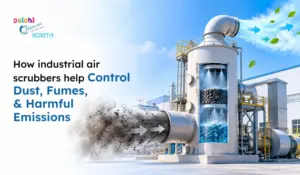
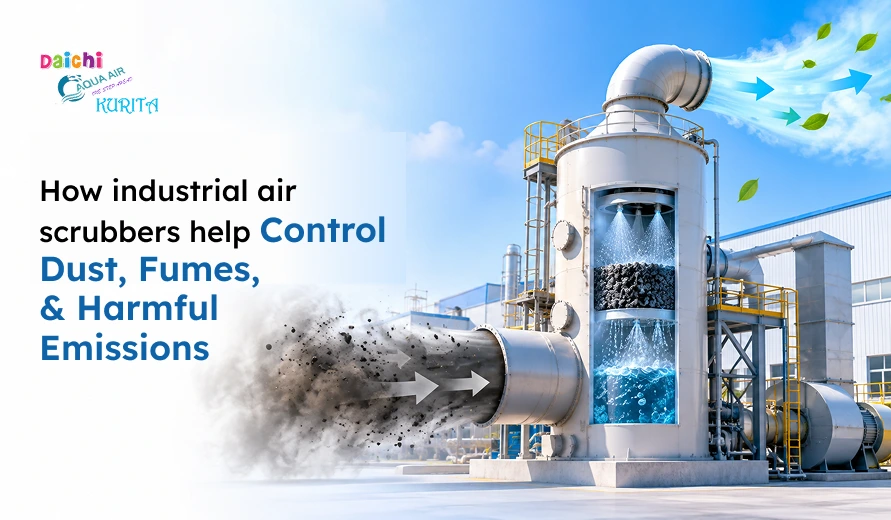
This is where an Industrial Air Scrubber can be used. An air scrubber is designed to treat contaminated air and remove specific pollutants before the air is released or circulated further. Depending on the application, an Air Scrubber System can help control gases, chemical vapors, odors, fumes, and certain airborne contaminants.
What Is an Industrial Air Scrubber?
An Industrial Air Scrubber is an air treatment system used to remove pollutants from industrial exhaust or process air.
Industrial processes do not all produce the same pollutants. One facility may generate chemical vapors, while another may deal with fumes, odors, gases, or a combination of different contaminants.
An air scrubber is selected and designed based on the pollutant type, airflow, production process, and the facility’s operating conditions.
The main purpose is to treat contaminated air before it creates problems in the surrounding work area or is released into the atmosphere.
According to Daichi Kurita Aqua-Air, its Air Scrubber Systems are designed to remove harmful gases, chemical vapors, odors, and industrial emissions from exhaust air.
How Does an Air Scrubber System Work?
The exact working method depends on the type of scrubber and the pollutant that needs to be controlled. However, the basic process is easy to understand.
Contaminated air is collected from the industrial process and directed into the scrubber system. Inside the system, the air comes into contact with a treatment medium or another method designed for the specific pollutant.
The unwanted contaminants are then separated or treated before the air moves to the next stage.
The system is designed around factors such as:
- Type of pollutant
- Concentration of contaminants
- Airflow volume
- Temperature and operating conditions
- Industrial process
- Required level of air treatment
- Available space
This makes proper system design important when selecting an Industrial Air Scrubber for a facility.
What Can Industrial Air Scrubbers Help Control?
Industrial facilities can produce different types of air pollutants. A properly selected scrubber can be used to address specific contaminants based on the application.
Fumes
Fumes can be produced during manufacturing, metal processing, chemical operations, and other industrial activities. These airborne contaminants may require dedicated treatment before exhaust air is released.
An appropriate Industrial Air Scrubbing System can be designed to handle the requirements of the process.
Harmful Gases
Some industrial processes release gases that need to be controlled before the exhaust air is discharged.
Air scrubbers can be used as part of an industrial air treatment setup to remove or reduce specific gases according to the system design.
Chemical Vapors
Chemical industries and other processing facilities may generate chemical vapors during production or handling.
An Air Scrubber System can be designed around the type of chemical vapors being generated and the operating conditions of the facility.
Odors
Unpleasant odors can be a concern in manufacturing, food processing, wastewater treatment, and chemical operations.
Odor control systems and air scrubbers can be used depending on the source and nature of the odor. Daichi Kurita Aqua-Air also provides dedicated Odor Control Systems for manufacturing, food processing, chemical operations, wastewater treatment facilities, and commercial buildings.
Industrial Emissions
Industrial processes can release different types of emissions. Industrial Emission Control systems are used to manage these emissions according to the requirements of the facility.
Air scrubbers can form an important part of an overall Air Emission Control System when the process produces gases, vapors, odors, or other pollutants that require treatment.
Can Air Scrubbers Control Dust?
Dust control and gas or fume treatment are related but are not always handled by the same equipment.
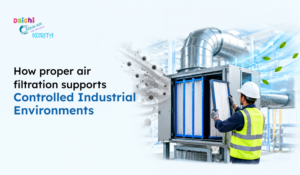
For dust and suspended particles, industries may use Industrial Air Filtration Systems and Dust Collection Systems. These systems are designed to capture dust, smoke, suspended particles, and other airborne contaminants.
Daichi Kurita Aqua-Air’s Air Treatment Systems page separates Dust Collection Systems from Air Scrubber Systems. Dust collection is used for dust generated during manufacturing, material handling, woodworking, metal processing, and other operations, while air scrubbers are used for harmful gases, chemical vapors, odors, and industrial emissions.
This distinction is important when selecting Air Pollution Control Equipment.
A facility that produces both dust and chemical fumes may need more than one type of air treatment system.
Industrial Air Pollution Control and Air Scrubbers
An air scrubber can be part of a wider Industrial Air Pollution Control strategy.
Air pollution control is not limited to one type of equipment. Different industrial processes can require filtration, dust collection, air scrubbing, ventilation, odor control, or a combination of these systems.
For example, an industrial facility may use:
- Dust collection for process-generated dust
- Air filtration for suspended particles and smoke
- Air scrubbers for gases and chemical vapors
- Odor control systems for unpleasant smells
- Industrial ventilation for better airflow
- Air pollution control systems for broader emission-control requirements
Daichi Kurita Aqua-Air provides these different air treatment solutions based on the pollution source, airflow requirements, production process, and environmental requirements.
Why Are Industrial Air Scrubber Systems Important?
There are several reasons industries may need Industrial Air Scrubber Systems.
Better Workplace Air Quality
Treating contaminated exhaust air can help reduce the presence of unwanted pollutants in industrial areas.
Reduced Industrial Emissions
Air scrubbers can help reduce specific industrial emissions by treating contaminated exhaust air before it is released.
Control of Chemical Vapors and Gases
Facilities dealing with chemical processes may need systems designed to control specific gases and vapors.
Support for Environmental Requirements
Air pollution control equipment can support industries in managing emissions and meeting applicable environmental requirements.
Protection of Equipment
Airborne contaminants can settle on equipment and production surfaces. Proper air treatment can help reduce this type of buildup.
Cleaner Industrial Operations
Controlling pollutants can contribute to cleaner production areas and better overall air management.
The actual performance of an air treatment system depends on its design, the pollutant being treated, operating conditions, and proper maintenance.
Industries That Can Use Air Scrubber Systems
Air scrubbers can be used across different industries where process air contains gases, vapors, odors, or other pollutants.
Chemical Industry
Chemical processes may generate gases, fumes, and chemical vapors. An Industrial Air Scrubber can be designed according to the pollutants produced by the process.
Manufacturing
Manufacturing operations can generate fumes, smoke, dust, and other airborne contaminants. Different air treatment systems may be combined based on the production process.
Food and Beverage
Food processing facilities can experience odors and airborne particles. Air treatment and odor control systems can help manage these conditions.
Pharmaceutical Industry
Pharmaceutical manufacturing can have strict air-quality requirements. Air filtration and other air treatment systems can be selected according to the production environment.
Automotive Industry
Automotive manufacturing and related processes can produce fumes, dust, and other airborne contaminants. Air pollution control equipment can help manage these pollutants.
Warehouses and Industrial Facilities
Warehouses and industrial facilities may require ventilation, filtration, dust collection, or other air treatment solutions depending on their operations.
These industries are among the sectors served by Daichi Kurita Aqua-Air’s air treatment solutions.
Choosing the Right Industrial Air Scrubber
Choosing an Industrial Air Scrubber should start with understanding the actual pollution problem.
Identify the Pollutant
First, identify whether the process produces dust, fumes, gases, chemical vapors, odors, smoke, or a combination of pollutants.
Check the Airflow
The amount of air that needs to be treated is an important part of system design. Airflow requirements should be evaluated before selecting equipment.
Understand the Production Process
The source of the pollution, production method, operating hours, and process conditions can affect the design of the system.
Consider the Facility Layout
The location of production equipment, exhaust points, ducts, and available installation space should be considered during planning.
Look at Maintenance Needs
Regular maintenance helps keep air treatment equipment operating properly. Access for inspection, servicing, and replacement of required components should be considered.
Plan for the Complete Air Treatment Requirement
A scrubber may not solve every air-quality issue in a facility. If the site produces dust as well as fumes or gases, it may need an air filtration or dust collection system along with the scrubber.
Air Scrubber Systems and Other Air Treatment Solutions
Industrial air quality problems can vary from one facility to another. This is why a complete solution should be based on the actual pollution sources and operating conditions.
For example, Industrial Air Filtration Systems can help capture dust, suspended particles, smoke, and other airborne contaminants. Dust Collection Systems can capture dust generated by manufacturing and material-handling operations. Air Scrubber Systems can address harmful gases, chemical vapors, odors, and industrial emissions.
Industrial ventilation can also help improve airflow and control airborne contaminants.
Together, these systems can form part of a complete Industrial Air Treatment System.
Customized Industrial Air Scrubbing Systems
Every industrial facility has different air-quality requirements. A standard system may not be suitable for every application.
An Industrial Air Scrubbing System can be planned according to factors such as pollution levels, airflow, production processes, facility conditions, and environmental requirements.
Daichi Kurita Aqua-Air states that its air treatment solutions are customized according to production processes, pollution levels, airflow requirements, and environmental regulations. Its project process includes site assessment, system design, manufacturing, installation and commissioning, followed by after-sales support.
This approach helps ensure that the selected Air Pollution Control System is based on the actual requirements of the facility.
Final Words
Industrial processes can generate fumes, gases, chemical vapors, odors, dust, smoke, and other airborne contaminants. Managing these pollutants is an important part of maintaining better industrial air quality and controlling emissions.
An Industrial Air Scrubber can help treat harmful gases, chemical vapors, odors, and industrial emissions. For dust and suspended particles, industries may also require Industrial Air Filtration Systems or Dust Collection Systems.
The right Air Pollution Control Equipment depends on the type of pollutant, production process, airflow, facility layout, and operating conditions.
Daichi Kurita Aqua-Air provides customized Air Scrubber Systems, Dust Collection Systems, Industrial Air Filtration Systems, Industrial Ventilation Systems, Odor Control Systems, and Air Pollution Control Systems for different industrial applications.
Frequently Asked Questions
What is an Industrial Air Scrubber?
An Industrial Air Scrubber is an air treatment system used to remove harmful gases, chemical vapors, odors, and industrial emissions from exhaust air.
What pollutants can an Air Scrubber System control?
An Air Scrubber System can be designed to control pollutants such as harmful gases, chemical vapors, odors, fumes, and certain industrial emissions, depending on the application.
Can air scrubbers remove industrial dust?
Air scrubbers are mainly used for gases, vapors, odors, and emissions. For dust and suspended particles, industries may use Industrial Air Filtration Systems or Dust Collection Systems.
Which industries use Industrial Air Scrubber Systems?
Industrial Air Scrubber Systems can be used in industries such as chemical processing, manufacturing, food processing, pharmaceutical production, and other facilities that generate fumes, gases, odors, or industrial emissions.
How do I choose the right Industrial Air Scrubber?
The system should be selected based on the type and level of pollutants, airflow requirements, production process, facility layout, and operating conditions. A customized system can be designed according to these requirements.