Table of Contents
Air quality is an important part of industrial operations. Manufacturing, pharmaceutical, food processing, chemical, textile, automotive, and other facilities can generate dust, smoke, fumes, odours, and other airborne contaminants during daily operations.
These contaminants can spread through production areas and affect workplace conditions, equipment, and production processes. Proper air treatment helps industries manage these issues according to their specific requirements.
Industrial Air Filtration Systems are designed to capture dust, suspended particles, smoke, and other airborne contaminants generated during industrial operations. They can be used as part of a wider air treatment setup to maintain cleaner air and support better working conditions.
The right filtration system depends on the production process, pollution sources, airflow requirements, environmental conditions, and operational needs of the facility.
What Are Industrial Air Filtration Systems?
Industrial Air Filtration Systems are used to remove unwanted particles and contaminants from industrial air. They can capture dust, suspended particles, smoke, and other airborne pollutants before they spread through a facility.
Industrial facilities can have different air quality challenges depending on their activities. A manufacturing plant may generate dust during production or material handling, while a pharmaceutical facility may require controlled and cleaner air for production areas.
These systems can be designed according to the specific requirements of the facility. Factors such as the type of contaminants, airflow, production process, and operating conditions need to be considered before selecting a suitable system.
Why Industrial Air Filtration Is Important
Industrial Air Filtration helps control airborne contaminants generated during production and other industrial activities. When dust and particles remain in the air, they can spread across work areas and settle on equipment and production surfaces.
A suitable filtration system can capture these contaminants before they move through the facility. This helps improve workplace air quality and can also support equipment protection.
The Air Treatment Systems offered by Daichi Kurita Aqua-Air include filtration solutions designed to remove dust, suspended particles, smoke, and other airborne contaminants. The systems are also designed with features such as high filtration efficiency, low maintenance, energy-efficient operation, long filter service life, and reliable performance.
How Air Filtration Systems Work
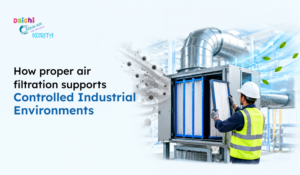
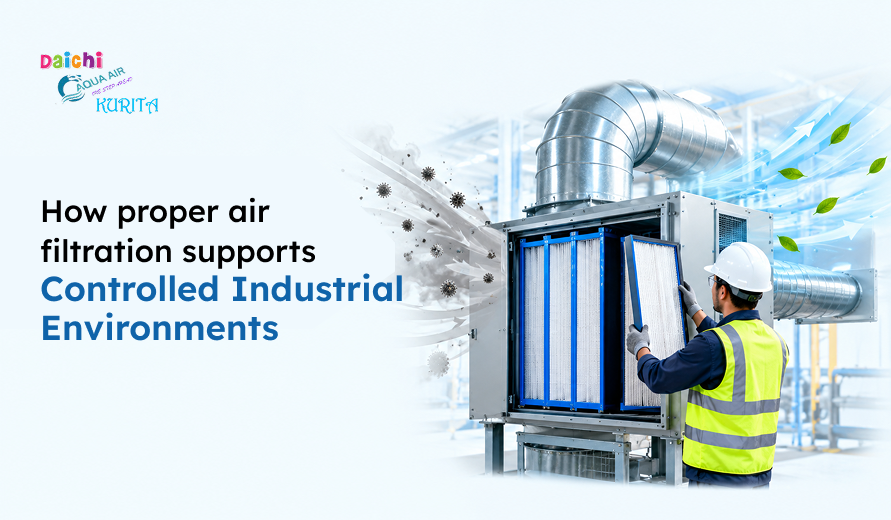
Air Filtration Systems work by passing contaminated air through suitable filtration equipment. The filters capture particles and other contaminants from the airstream.
The type of filtration required depends on the nature of the contaminants and the conditions in which the system will operate.
For industrial facilities, filtration may be used along with other air treatment methods. For example, a facility may need dust collection for production areas, an air scrubber for certain gases or industrial emissions, or ventilation to improve airflow.
This means filtration does not always work as a standalone solution. It can form one part of a complete air treatment system designed around the requirements of the facility.
Role of Industrial Air Filters
Industrial Air Filters are an important part of an industrial filtration system. They capture airborne particles as contaminated air passes through the filtration unit.
The choice of filter depends on the type and quantity of contaminants being generated. Dust, smoke, and suspended particles may require different filtration approaches based on the application.
Filter service life and maintenance are also important considerations. The Air Treatment Systems page highlights long filter service life and low maintenance as features of its industrial air filtration solutions.
Regular attention to filtration equipment helps maintain consistent system performance and supports cleaner air in the facility.
Industrial Air Treatment Systems Work Beyond Filtration
Industrial Air Treatment Systems can include several solutions depending on the air quality requirements of a facility.
Daichi Kurita Aqua-Air’s air treatment solutions include:
- Industrial Air Filtration Systems
- Dust Collection Systems
- Air Scrubber Systems
- Odor Control Systems
- Industrial Ventilation Systems
- Air Washer Systems
- Air Pollution Control Systems
- PLC-based automated air treatment systems
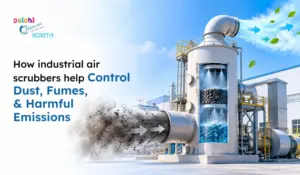
Each system has a different purpose. Dust collection systems capture dust generated during manufacturing and material handling. Air scrubbers help remove harmful gases, chemical vapors, odors, and industrial emissions from exhaust air. Ventilation systems help improve airflow and control airborne contaminants.
Selecting the right combination depends on the facility and its air quality requirements.
Air Quality Control Systems for Industrial Facilities
Air Quality Control Systems help industries manage different air quality challenges within their facilities.
Air quality requirements can vary between production areas, warehouses, processing units, healthcare facilities, and commercial buildings. The system therefore needs to be planned according to the conditions of the particular facility.
Proper airflow is also important. Industrial ventilation systems can help improve air circulation, reduce heat buildup, and lower airborne contaminant levels.
For facilities that require more than basic filtration, air treatment can combine filtration, dust collection, ventilation, odour control, and air pollution control according to the application.
Industrial Air Quality Control for Different Industries
Industrial Air Quality Control is relevant to many industries because each production process can create different air quality challenges.
The Air Treatment Systems page lists applications across manufacturing industries, pharmaceutical companies, food and beverage processing, chemical plants, textile industries, automotive manufacturing, warehouses, commercial buildings, healthcare facilities, and educational institutions.
For example, manufacturing plants may need dust collection and filtration, while chemical industries may require solutions for fumes, gases, and industrial emissions. Pharmaceutical facilities may require cleaner air for hygienic manufacturing environments.
This makes it important to assess the production process before selecting an air treatment solution.
Air Pollution Control Systems and Filtration
Air Pollution Control Systems can be used when industries need to manage particulate emissions, airborne contaminants, smoke, and harmful gases.
Filtration can be one part of this setup, particularly where dust and suspended particles are a concern. Other applications may require air scrubbers, ventilation systems, or additional treatment methods.
Daichi Kurita Aqua-Air provides customized air pollution control solutions designed to help industries improve workplace air quality, reduce industrial emissions, protect equipment, improve employee safety, and meet environmental requirements.
The appropriate system depends on the pollution source and operating conditions.
Choosing the Right Air Pollution Control Equipment
Air Pollution Control Equipment should be selected according to the type of contaminants and the industrial process.
Before selecting equipment, industries should consider:
- Type of airborne contaminants
- Pollution sources
- Airflow requirements
- Production conditions
- Environmental conditions
- Facility layout
- Required level of air treatment
- Maintenance requirements
For example, dust generated during manufacturing or material handling may require a dust collection system. Chemical vapours or certain industrial emissions may require an air scrubber system.
A proper assessment helps industries select equipment that matches their actual requirements instead of using the same solution for every application.
Dust Collection and Air Filtration
Dust is a common concern in manufacturing, material handling, woodworking, metal processing, cement, food processing, pharmaceutical facilities, and warehouses.
Dust collection systems capture and remove dust generated during these activities. When combined with suitable Industrial Air Filtration Systems, they can help manage airborne particles and improve air quality within the facility.
The system needs to be designed according to the source of dust, airflow, production process, and facility requirements.
Customizing Air Treatment for the Facility
Every industrial facility has different air quality requirements. A standard system may not always suit every production environment.
Daichi Kurita Aqua-Air states that its air treatment solutions are customized according to production processes, pollution levels, airflow requirements, and environmental regulations. The company provides customized solutions covering filtration, dust collection, air washers, air scrubbers, ventilation, odor control, and air pollution control.
This approach allows the air treatment setup to be planned around the actual conditions of the facility.
Air Treatment Project Process
Proper planning is an important part of an industrial air treatment project. The Air Treatment Systems page describes a process that begins with a site assessment, followed by system design, manufacturing, installation and commissioning, and after-sales support.
During site assessment, air quality requirements, pollution sources, and operating conditions are evaluated. System design then considers airflow requirements and environmental standards.
After manufacturing, the equipment is installed and commissioned. Preventive maintenance, technical assistance, spare parts, and annual maintenance contracts are also available as part of the stated after-sales support.
Conclusion
Proper air filtration can help industrial facilities manage dust, suspended particles, smoke, and other airborne contaminants. Industrial Air Filtration Systems can be used alongside dust collection, air scrubbers, ventilation, odor control, and other treatment solutions depending on the facility’s requirements.
The right Industrial Air Treatment Systems should be selected after considering the production process, pollution sources, airflow, facility conditions, and required level of treatment. Air Quality Control Systems can then be planned around the specific needs of the facility.
Daichi Kurita Aqua-Air provides customized air treatment and pollution control solutions for industrial, commercial, and institutional facilities. Contact Daichi Kurita Aqua-Air to discuss your air treatment requirements and find a suitable solution for your facility.
Frequently Asked Questions
What are Industrial Air Filtration Systems?
Industrial Air Filtration Systems are designed to capture dust, suspended particles, smoke, and other airborne contaminants generated during industrial operations.
How do Industrial Air Filters improve air quality?
Industrial Air Filters capture airborne contaminants before they spread through the facility. This can help improve workplace air quality and protect
What industries use Industrial Air Filtration Systems?
These systems can be used in manufacturing, pharmaceutical, food and beverage, chemical, textile, automotive, warehouse, healthcare, commercial, and other facilities with air treatment requirements.
What other systems can be used with air filtration?
Depending on the facility’s requirements, air filtration can be combined with dust collection, air scrubbers, odor control, industrial ventilation, air washers, and Air Pollution Control Systems.
Can air treatment systems be customized for an industrial facility?
Yes. Air treatment solutions can be customized according to production processes, pollution levels, airflow requirements, facility conditions, and environmental requirements.