Table of Contents
Industrial processes can generate dust, fumes, gases, vapours, and other airborne pollutants. Manufacturing plants, chemical facilities, pharmaceutical units, food processing plants, and other industrial facilities may need suitable systems to manage these emissions.
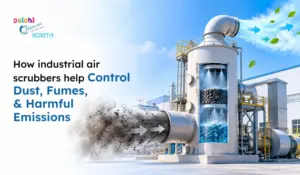
An Industrial Air Scrubber is one of the technologies used for controlling certain pollutants from industrial air and exhaust streams. It works by bringing contaminated air or gas into contact with a liquid so that selected pollutants can be removed from the gas stream.
The right system depends on the type of pollutant, airflow, temperature, moisture, and the requirements of the industrial process. This is why air pollution control needs to be planned according to the actual conditions of each facility.
What Is an Industrial Air Scrubber?
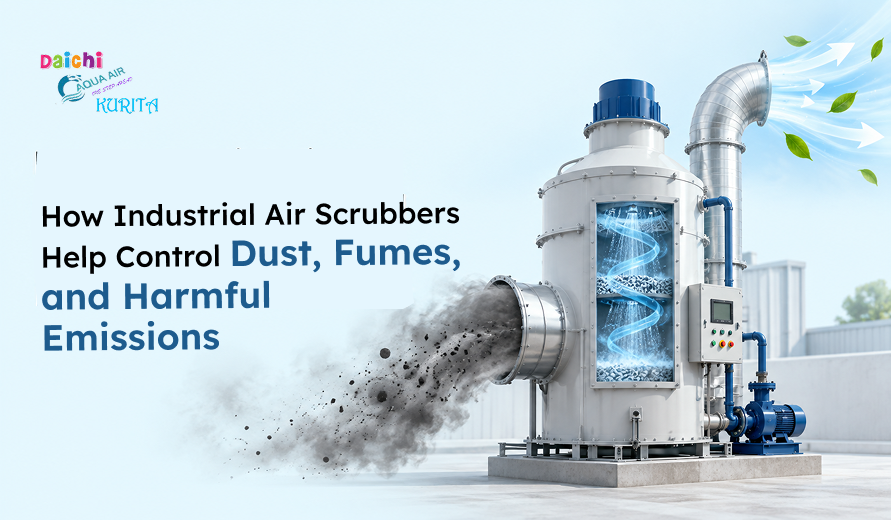
An Industrial Air Scrubber is a system designed to treat contaminated air or industrial exhaust. In a wet scrubbing process, the contaminated gas comes into contact with a liquid. Depending on the application, this process can help remove selected particles and gases from the air stream.
Industrial processes can produce different types of emissions. Dust may come from material handling and production activities, while fumes and gases can be generated during specific manufacturing or chemical processes.
An Air Scrubber System is therefore selected according to the nature of the emission and the conditions in which the system will operate.
How Industrial Air Scrubbing Systems Work
The basic working principle of Industrial Air Scrubbing Systems involves bringing contaminated gas into contact with a suitable liquid.
As the air or gas passes through the scrubber, selected pollutants can transfer from the gas stream into the liquid. The treated gas can then move through the system before being discharged according to the requirements of the application.
The actual design of a scrubber depends on factors such as:
- Type of pollutant
- Gas flow rate
- Temperature
- Moisture level
- Chemical characteristics
- Particle size
- Required treatment level
- Industrial process
These factors are important when selecting an appropriate air treatment system for a facility.
Why Industries Need Air Pollution Control Systems
Industrial emissions can affect the quality of air around production areas and the surrounding environment. Dust, fumes, gases, vapours, and fine particles can be generated by different industrial processes.
Air Pollution Control Systems help industries manage these emissions through suitable treatment methods. The system selected should match the source and characteristics of the pollution.
Air pollution control can include different technologies depending on the application. Dust collection, filtration, scrubbing, and other air treatment methods may be considered according to the type of emission.
A suitable system also needs to work with the existing industrial process. This makes proper assessment important before selecting equipment.
Controlling Dust and Fumes in Industrial Facilities
Dust and fumes are common concerns in many industrial environments. Their quantity and characteristics can vary depending on the production process and materials being handled.
Industrial Air Pollution Control focuses on managing these emissions through suitable equipment and process-based solutions.
For applications where dust is the main concern, filtration or dust collection may be suitable. Where certain gases or particles need to be treated through a liquid-based process, an air scrubber may be considered.
The solution should always be selected according to the actual emission source rather than using the same equipment for every industrial facility.
Choosing the Right Air Pollution Control Equipment
Selecting suitable Air Pollution Control Equipment requires an understanding of the industrial process and the pollutants being generated.
Before choosing equipment, industries should consider the type of emission, airflow, temperature, moisture, pollutant concentration, and required treatment level.
Available space and operating conditions can also influence system design. Equipment should fit the facility and work properly with the existing process.
A properly planned system can provide a more suitable approach to emission management than choosing equipment based only on general requirements.
Industrial Emission Control for Different Processes
Every industry has different production activities and emission sources. A pharmaceutical manufacturing facility may have different air treatment requirements from a chemical plant, food processing unit, textile facility, or automotive manufacturing plant.
Industrial Emission Control therefore needs to be based on the specific process.
The first step is to identify where emissions are generated. After this, the characteristics of the emissions can be assessed to determine which treatment method is appropriate.
This approach helps industries select systems that are better suited to their production conditions.
Role of Air Emission Control Systems
Air Emission Control Systems can be used to manage pollutants released from industrial processes and exhaust streams.
The system may include different treatment stages depending on the application. For example, filtration can be used for particulate matter, while scrubbing can be considered for selected gases and particles.
The choice depends on the emission characteristics and the operating requirements of the facility. Proper system planning is important to ensure that the equipment is suitable for the intended application.
Industrial Air Treatment Systems for Better Air Management
Industrial Air Treatment Systems can address different air quality requirements in industrial and commercial facilities.
Air treatment may involve filtration, dust removal, exhaust treatment, air handling, or other suitable processes. The right approach depends on whether the requirement is related to industrial emissions, indoor air conditions, or both.
Daichi Kurita Aqua-Air provides air treatment solutions for industrial and commercial applications. Its air-treatment offering includes Air Handling Units with AC, which use pre-filters and fine filters and can help control temperature, airflow, humidity, and air cleanliness in applications such as pharmaceutical facilities, hospitals, food processing units, cleanrooms, laboratories, and industrial production areas.
This shows why air treatment requirements should be considered according to the specific environment and application.
Factors to Consider Before Installing an Air Scrubber
An air scrubber should not be selected only by looking at its size or general capacity. The industrial process and emission characteristics should be considered first.
Important factors include:
Type of Pollutant
The system should be suitable for the type of dust, fumes, gases, or particles generated by the process.
Airflow
The amount of air or gas that needs to pass through the system is an important part of equipment selection.
Operating Conditions
Temperature, moisture, and other process conditions can affect the selection and design of the treatment system.
Available Space
The equipment should be suitable for the available installation area and the layout of the facility.
Maintenance Requirements
Filters, ducts, fans, scrubbers, and other components need regular inspection and maintenance according to their operating requirements.
Industrial Air Scrubber Systems for Different Industries
Different industrial sectors have different air treatment requirements. Manufacturing facilities, pharmaceutical companies, chemical industries, food processing units, textile and dyeing facilities, automotive industries, and other process industries may generate different types of emissions.
An Industrial Air Scrubber System should therefore be planned according to the process and the type of pollutants produced.
Daichi Kurita Aqua-Air works with industrial and commercial applications and provides treatment solutions based on operational requirements. Its wider industry coverage includes food and beverage, pharmaceutical, chemical, textile and dyeing, hospitality, healthcare, manufacturing, automotive, process industries, warehouses, and industrial plants.
Importance of Proper System Design
Installing an air scrubber is only one part of an industrial air treatment project. The system needs to be planned according to the process, airflow, emission source, and operating conditions.
Proper design can also help ensure that the system fits into the facility and works with the relevant industrial process.
Daichi Kurita Aqua-Air follows an end-to-end approach covering design, manufacturing, installation, commissioning, and after-sales support for its treatment solutions.
This type of approach can make it easier for industries to plan their air treatment requirements around their actual operational needs.
Conclusion
An Industrial Air Scrubber can be an important part of air pollution control where industrial processes generate certain dust, fumes, gases, or other pollutants that can be treated through scrubbing.
Choosing the right Air Scrubber System starts with understanding the industrial process, emission source, airflow, pollutant characteristics, temperature, moisture, and treatment requirements. Depending on the application, industries may also need filtration, dust collection, air handling, or other air treatment technologies.
Daichi Kurita Aqua-Air provides water, wastewater, and air treatment solutions for industrial and commercial applications. If your facility needs a suitable approach to industrial air treatment and emission control, Daichi Kurita Aqua-Air can help you plan a solution based on your operational requirements.
Frequently Asked Questions
What is an Industrial Air Scrubber?
An Industrial Air Scrubber is an air treatment system used to treat contaminated air or industrial exhaust. It can help remove selected particles and gases by bringing the gas stream into contact with a liquid.
How does an Air Scrubber System work?
An Air Scrubber System brings contaminated air or gas into contact with a suitable liquid. Depending on the application, selected pollutants can transfer from the gas stream into the liquid.
What factors should industries consider when selecting an air scrubber?
Industries should consider the type of pollutant, airflow, temperature, moisture, pollutant concentration, industrial process, available space, and required treatment level.
Are Industrial Air Pollution Control Systems suitable for every industry?
Air pollution control requirements vary from one industry to another. The suitable system depends on the production process, emission source, type of pollutants, and operating conditions of the facility.
What other Air Pollution Control Equipment may be used in industries?
Depending on the application, industries may use filtration systems, dust collection equipment, scrubbers, air handling systems, and other suitable air treatment equipment.