Table of Contents
Industries generate different types of air pollutants during manufacturing, processing, material handling, heating, and other operations. Dust, particles, fumes, gases, and other airborne contaminants can affect air quality and industrial working conditions. Choosing the right Air Pollution Control System helps industries manage these emissions according to their specific requirements.
Every industrial facility has different processes, airflow conditions, pollutants, and treatment needs. Because of this, there is no single system that works for every industry. The right solution depends on the type of pollution, the volume of air or gas being treated, and the required level of control.
Daichi Kurita Aqua-Air provides air treatment solutions for industrial and commercial applications, with a focus on practical engineering, system design, manufacturing, installation, commissioning, and after-sales support. The company serves sectors including pharmaceutical, chemical, food and beverage, textile, manufacturing, automotive, healthcare, hospitality, and other industrial facilities.
Why Industries Need Air Pollution Control Systems
Industrial processes can release dust, fumes, gases, vapours, and particulate matter into the surrounding air. The type of emission depends on the production process and materials used by the facility.
Industrial Air Pollution Control Systems help industries manage these pollutants through suitable treatment and filtration methods. The system should be selected according to the actual emission source rather than using the same setup for every application.
For example, particulate emissions may require filtration or dust collection, while certain gases and particles may require a suitable scrubbing process. The operating conditions of the facility also need to be considered before selecting equipment.
Understand the Type of Air Pollution First
The first step in selecting an Air Pollution Control System is to understand what type of pollutant is being generated.
Different industrial processes can produce different contaminants. Dust and larger particles may require collection and filtration systems, while fine particles may require more advanced filtration. Certain gases and particles can be treated using wet scrubbing systems.
Understanding the pollutant helps in selecting suitable Air Pollution Control Equipment. Other factors, such as gas temperature, flow rate, particle size, chemical composition, and moisture level, can also influence system selection.
Consider the Industrial Process
The production process is another important factor when choosing an Industrial Air Pollution Control solution.
A manufacturing facility may have different emission sources compared with a pharmaceutical plant, chemical industry, textile unit, food processing facility, or automotive manufacturing plant. The air treatment requirement should therefore match the process and the source of emissions.
The system should be planned around the actual operating conditions of the facility. This helps industries select equipment that fits their process instead of installing a system without considering the source and characteristics of the emissions.
Daichi Kurita Aqua-Air provides treatment and air management solutions for a range of sectors, including food and beverage, pharmaceutical industries, chemical industries, textile and dyeing units, hospitals and healthcare, manufacturing facilities, automotive industries, process industries, and warehouses and industrial plants.
Check Airflow and Operating Conditions
Airflow is an important consideration when selecting air treatment equipment. The amount of air or industrial gas that needs to be treated affects the design and capacity of the system.
Temperature, moisture, flow rate, and the characteristics of the pollutants should also be considered. These conditions help determine which type of treatment process is suitable for the application.
For an effective Industrial Emission Control setup, industries need to understand the conditions under which the system will operate. A system designed according to actual operating requirements can provide more consistent treatment than a standard solution that does not match the facility’s process.
Select the Right Air Pollution Control Equipment
Different types of equipment can be used for different air treatment requirements. The selection should be based on the pollutant and the industrial process.
For particulate matter, dust collection and filtration can be considered. Dust collection systems can help separate dust particles from industrial air streams. Cyclone separators can be used for larger dust particles, while bag filters and other filtration technologies can be used for particulate control.
Wet scrubbers can be considered where the application requires contaminated gas to come into contact with a liquid for the removal of selected pollutants. The choice depends on the characteristics of the emission and the required treatment.
Understand the Role of Industrial Air Filtration Systems
Industrial air filtration systems are used to remove unwanted particles from air streams. Filtration can be an important part of air management in industrial facilities where dust and airborne particles are generated.
The type of filter required depends on the size and characteristics of the particles and the operating conditions. In air handling applications, Daichi Kurita Aqua-Air’s Air Handling Unit with AC uses pre-filters and fine filters to help remove dust and airborne contaminants before conditioned air is supplied through ducts.
Filtration requirements should therefore be considered along with airflow, temperature, humidity, and the overall application.
When Industrial Air Scrubber Systems May Be Suitable
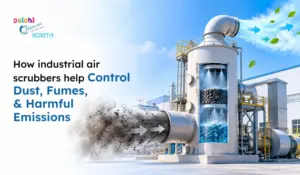
Industrial air scrubber systems work by bringing contaminated gas into contact with a liquid. Depending on the application, this process can help remove selected gases and particles from industrial exhaust streams.
Wet scrubbers are one of the technologies discussed by Daichi Kurita Aqua-Air for industrial air pollution control. However, the right system still depends on the type of pollutant, gas flow, temperature, moisture, chemical characteristics, and required emission control.
Industries should first understand their emission characteristics before deciding whether a scrubber is appropriate for their application.
Consider Indoor Air Quality Requirements
Air pollution control is not limited to industrial exhaust. Some facilities also need controlled indoor air conditions for production areas, healthcare environments, laboratories, cleanrooms, commercial buildings, and other spaces.
Industrial Air Quality Control can involve filtration, airflow management, temperature control, humidity control, and other air treatment requirements depending on the facility.
Daichi Kurita Aqua-Air provides Air Handling Units with AC that combine air handling and cooling. These systems can regulate temperature, airflow, humidity, and air cleanliness, with applications including pharmaceutical facilities, hospitals, commercial buildings, hotels, food processing units, cleanrooms, laboratories, and industrial production areas.
This means that industries should consider both emission control and the air conditions required inside their facilities.
Look for a System That Matches Your Facility
An effective Air Quality Control Systems approach should be based on the actual requirements of the facility. Important considerations include:
- Type of pollutant generated
- Source of the emission
- Air or gas flow rate
- Temperature and moisture conditions
- Particle size and concentration
- Chemical characteristics
- Required treatment level
- Available installation space
- Operating requirements
Considering these factors before selecting equipment can help industries choose a system that fits their process.
Why Customized Industrial Pollution Control Solutions Matter
Industrial facilities do not all operate in the same way. Production processes, emission sources, airflow requirements, and operating conditions can vary significantly.
For this reason, Industrial Pollution Control Solutions should be planned around the facility’s requirements. Daichi Kurita Aqua-Air states that its systems are designed according to client operational requirements and industry standards, with support covering design, manufacturing, installation, commissioning, and after-sales service.
A customized approach allows the treatment system to be planned according to the process instead of relying only on a standard configuration.
Think About Installation and Long-Term Support
Selecting the equipment is only one part of an air treatment project. Industries should also consider system design, installation, commissioning, and after-sales support.
A properly planned system needs to fit the available space and connect with the relevant industrial process. The equipment should also be practical to operate and maintain according to the facility’s requirements.
Daichi Kurita Aqua-Air provides end-to-end support from design and manufacturing to installation, commissioning, and after-sales service. Its approach focuses on customized engineering solutions, high-quality systems, and long-term operational support.
Choosing the Right Air Pollution Control System
The right Air Pollution Control System depends on the type of pollution, industrial process, airflow, operating conditions, and treatment requirements. Industries should first understand the source and characteristics of their emissions and then select suitable equipment.
For some applications, filtration and Dust collection systems may be appropriate. Other applications may require scrubbing or different emission-control technologies. Indoor environments may also require air handling, filtration, cooling, humidity control, and controlled airflow.
A careful assessment helps industries choose suitable Air Pollution Control Equipment rather than selecting equipment based only on general requirements.
Conclusion
Choosing the right air treatment setup starts with understanding the industrial process and the pollutants it produces. Factors such as airflow, particle size, gas characteristics, temperature, moisture, and required treatment should be considered before selecting equipment.
Industrial Air Pollution Control can involve filtration, dust collection, scrubbing, air handling, and other treatment methods depending on the application. The right Industrial Air Pollution Control Systems should match the actual requirements of the facility.
Daichi Kurita Aqua-Air provides customized water, wastewater, and air treatment solutions for industrial and commercial applications, with support from design and manufacturing through installation, commissioning, and after-sales service.
Frequently Asked Questions
What is an Air Pollution Control System?
An Air Pollution Control System is used to manage and treat pollutants such as dust, particles, fumes, gases, and other airborne contaminants generated by industrial processes.
How do I choose the right air pollution control system for my industry?
Consider the type of pollutant, emission source, airflow, temperature, moisture, particle size, and treatment requirements. The system should match the actual conditions of your industrial process.
What types of Air Pollution Control Equipment are used in industries?
Depending on the application, industries may use filtration systems, dust collection systems, scrubbers, and other air treatment equipment. The suitable equipment depends on the type of emission and process requirements.
When are industrial air scrubber systems used?
Industrial air scrubber systems can be used when contaminated gases or particles need to be treated through contact with a liquid. Their suitability depends on the pollutants, gas flow, temperature, and other operating conditions.
Why are Industrial Air Pollution Control Systems important for industries?
They help industries manage emissions and maintain better air quality around industrial processes. The right system can be selected based on the facility’s specific pollution sources and operating requirements.