Table of Contents
An air handling unit with AC helps maintain comfortable and controlled indoor conditions by combining air cooling, filtration and circulation. These systems are used in industrial and commercial buildings where clean air, stable temperature and proper ventilation are important.
An air handling unit is an important part of an HVAC system. It takes in fresh air or return air, filters it, cools it and supplies conditioned air to the required areas. Cooling and filtration work together to improve indoor air quality and maintain suitable conditions for people, equipment and production processes.
This article explains how an air handling unit with AC works, how its main components support cooling and filtration, and where these systems are used.
What Is an Air Handling Unit with AC?
An air handling unit with AC is a system that combines air conditioning with air distribution and filtration. It is designed to regulate temperature, airflow, humidity and air cleanliness in industrial, commercial and controlled environments.
The system draws air into the unit, passes it through filters and a cooling coil, and supplies conditioned air through ducts. Depending on the application, it can also help control humidity.
An AHU, or air handling unit, is commonly used where consistent indoor conditions are required. The system can be designed according to the airflow, cooling and air quality needs of the building or facility.
How Cooling and Air Filtration Work Together
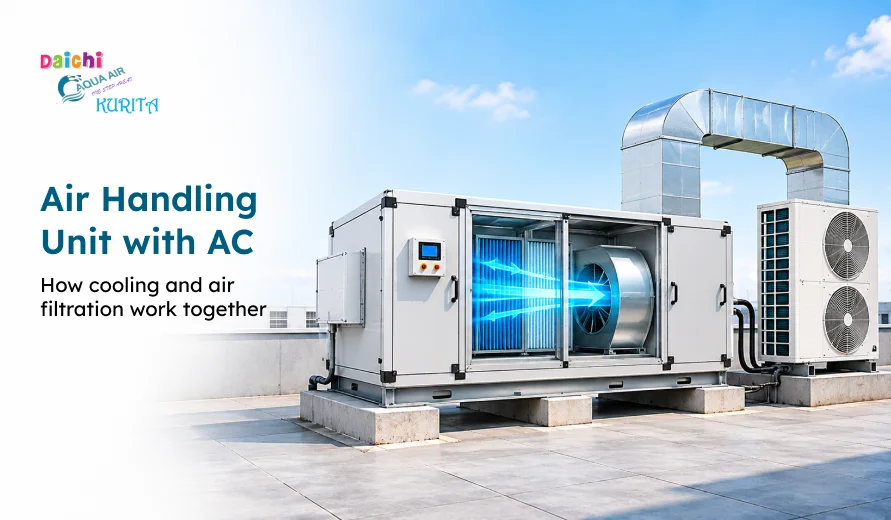
Cooling and filtration are two important functions of an air handling unit with AC. Filtration removes dust and airborne particles, while the cooling coil removes heat from the air. Together, they help provide clean and conditioned air to indoor spaces.
1. Air Intake
The process begins when fresh air or return air enters the unit. Fresh air comes from outside the building, while return air comes from indoor areas.
The air intake arrangement depends on the ventilation and conditioning requirements of the facility.
2. Air Filtration
After entering the unit, air passes through filters that help remove dust and other airborne contaminants.
Pre-filters remove larger particles, while fine filters provide further filtration according to the system requirements. This process helps improve the quality of air supplied to indoor spaces.
Filtration also helps reduce the amount of dust reaching other components of the system, including the cooling coil.
3. Air Cooling
After filtration, air passes across the cooling coil. The coil removes heat from the air and helps bring it to the required temperature.
Depending on the system design and operating conditions, the cooling process can also help control humidity.
Cooling is particularly important in facilities where temperature changes can affect indoor comfort, equipment or production processes.
4. Air Circulation
Once the air has been filtered and cooled, it is supplied to the required areas through a duct system.
Proper air circulation helps distribute conditioned air throughout the building. This supports consistent temperature and airflow in the spaces served by the unit.
Main Components of an Air Handling Unit with AC
An air handling unit with AC contains several components that work together to condition and distribute air.
| Component | Function |
| Air filters | Remove dust and airborne particles from incoming air |
| Cooling coil | Removes heat and cools the air |
| Fan or blower | Moves air through the unit and duct system |
| Air intake | Allows fresh air or return air to enter |
| Duct connections | Carry conditioned air to the required areas |
| Control system | Helps regulate temperature, airflow and other operating conditions |
The exact configuration depends on the application and the required airflow, cooling and filtration performance.
Role of Air Handlers in HVAC Systems
Air handlers in HVAC systems are designed to manage air movement and conditioning within a building. They work with other heating, ventilation and air conditioning components to maintain indoor conditions.
An air handling unit with AC combines cooling, air filtration and circulation in one system. This makes it useful in facilities where air quality and temperature need to be managed together.
Air handlers can be designed for different airflow and cooling requirements. The selection of a suitable unit depends on the building, the application and the conditions that need to be maintained.
Benefits of Using an Air Handling Unit with AC
Better indoor air quality
Air filtration helps remove dust and airborne particles before air is supplied to indoor spaces. This supports cleaner indoor conditions in commercial and industrial environments.
Consistent temperature control
The cooling coil helps maintain the required indoor temperature. This is important in facilities where stable temperature conditions are needed for comfort or process requirements.
Controlled airflow
The unit supplies conditioned air through ducts to the required areas. Proper airflow helps maintain consistent conditions across the spaces served by the system.
Humidity management
Depending on the application and system configuration, an AHU with AC can also help regulate humidity. This is useful in environments where moisture levels need to be controlled.
Support for industrial operations
Industrial air handling units can help maintain suitable environmental conditions for equipment and production processes. They are especially useful where air cleanliness, temperature and airflow are important.
Applications of Air Handling Units with AC
Air handling units with AC are used in a range of industrial and commercial environments.
- Pharmaceutical manufacturing facilities: Support controlled temperature, airflow and air quality.
- Hospitals and healthcare environments: Help maintain suitable indoor air conditions.
- Commercial buildings and offices: Provide conditioned air for indoor comfort.
- Hotels and hospitality spaces: Support air circulation and temperature control.
- Food processing units: Help maintain suitable environmental conditions.
- Cleanrooms and laboratories: Support controlled airflow and filtration.
- Industrial production areas: Help maintain conditions required for equipment and manufacturing processes.
The system should be selected according to the specific requirements of each application.
Fresh Air Handling Unit and Return Air Systems
A fresh air handling unit is designed to bring outdoor air into a building and condition it before supplying it to indoor areas.
Outdoor air may contain dust and other airborne particles. It may also have a different temperature and humidity level from the indoor environment. The unit filters and conditions this air before distribution.
Some air handling systems also use return air from indoor spaces. The arrangement depends on the ventilation requirements and the design of the HVAC system.
Both fresh air and return air systems use filtration and air conditioning to support suitable indoor conditions.
Choosing the Right Air Handling Unit
Selecting an air handling unit requires an understanding of the building and its air conditioning requirements.
Some important factors to consider include:
- Required airflow and cooling capacity.
- Temperature and humidity requirements.
- Type of filtration needed.
- Available installation space.
- Fresh air and return air requirements.
- Ductwork and air distribution arrangements.
- Operating conditions and maintenance needs.
When comparing air handling unit manufacturers, it is important to consider whether the system can be configured to meet the requirements of the facility.
The choice of air conditioning units should also take into account the intended application, air quality requirements and operating conditions.
Air Handling Unit with AC Solutions
A properly designed air handling unit with AC brings together cooling, filtration and air circulation to support clean and controlled indoor environments.
Daichi Kurita Aqua-Air provides air handling unit solutions for industrial, commercial and controlled environments. Its services include system design, engineering, manufacturing, installation, commissioning and after-sales support.
The company offers customised AHU configurations based on airflow, cooling and application requirements.
Conclusion
An air handling unit with AC helps maintain indoor air quality, temperature and airflow by combining filtration, cooling and air distribution in one system.
The filters remove dust and airborne contaminants, while the cooling coil conditions the air to the required temperature. The fan and duct system then distribute the conditioned air to the required areas.
For industrial and commercial facilities, choosing the right air handling unit helps support indoor comfort, controlled environmental conditions and reliable operations.
Frequently Asked Questions
What is an air handling unit with AC?
An air handling unit with AC is part of an HVAC system that filters, cools and circulates air. It helps maintain suitable indoor temperature, air quality and airflow.
How does an air handling unit with AC work?
The unit draws in fresh air, return air or a combination of both. Air passes through filters and a cooling coil before a fan supplies the conditioned air through the duct system.
Why is air filtration important in an AHU system?
Air filtration helps remove dust and airborne particles from the air. It also helps reduce dust buildup on internal components, including the cooling coil.
What is the difference between an AHU and a fresh air handling unit?
An AHU can handle fresh air, return air or a mixture of both, depending on its design. A fresh air handling unit is designed to bring outdoor air into a building and condition it before distribution.
Where are air handling units with AC commonly used?
They are used in industrial and commercial environments such as manufacturing facilities, hospitals, hotels, offices and cleanrooms where controlled temperature, airflow and air quality are required.