Table of Contents
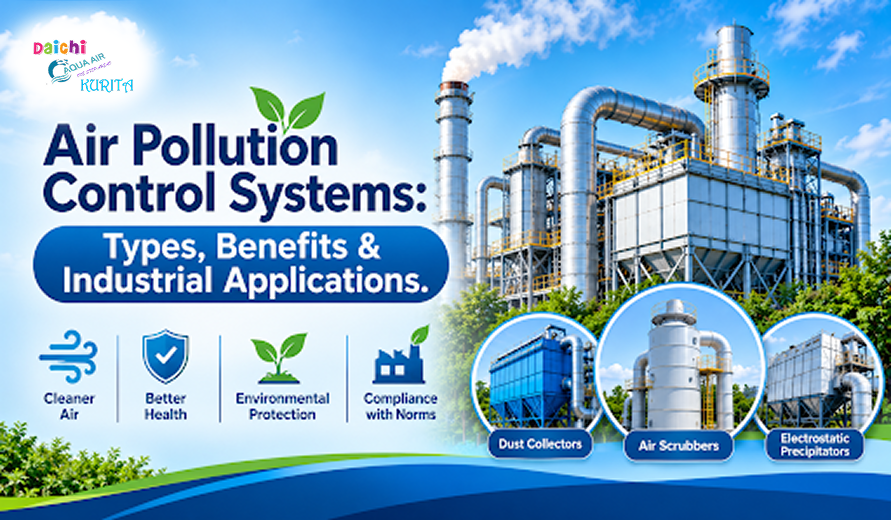
Industrial activities across manufacturing, power generation, chemical processing, cement production, and metal industries release different types of pollutants into the atmosphere. These emissions may contain dust, smoke, harmful gases, chemical vapours, and fine particles that affect workplace conditions and environmental quality. Air Pollution Control Systems help industries capture, separate, and treat these pollutants before releasing exhaust air into the atmosphere. Selecting suitable equipment depends on the type of emissions, production capacity, operating temperature, and environmental requirements. Modern industrial facilities use different pollution management technologies to control emissions, maintain cleaner workplaces, and meet applicable pollution standards. Understanding these systems, their working principles, benefits, and applications helps businesses make suitable decisions for their industrial operations.
What Are Air Pollution Control Systems?
Air Pollution Control Systems are specialised technologies used to remove or reduce harmful substances from industrial exhaust streams. These systems collect contaminated air from production areas, process it through suitable filtration or gas treatment equipment, and release treated air through designated outlets.
The equipment used in an industrial facility depends on the pollutants generated during production. For example, cement manufacturing produces large quantities of dust, while chemical processing may release acidic gases and volatile organic compounds (VOCs).
Industries generally use different types of air pollution control equipment to manage these emissions. Common pollutants include:
- Particulate matter: Dust, ash, smoke, and suspended solid particles.
- Sulphur dioxide (SO₂): A gas released during the burning of sulphur-containing fuels.
- Nitrogen oxides (NOx): Gases produced during high-temperature combustion.
- Volatile organic compounds: Chemical vapours released from solvents, paints, and industrial processes.
- Carbon monoxide (CO): A harmful gas produced by incomplete combustion.
- Acidic gases: Compounds such as hydrogen chloride and hydrogen fluoride.
Understanding the composition of industrial emissions is the first step towards selecting suitable treatment technology.
Types of Air Pollution Control Systems Used in Industries
Different industrial processes produce different pollutants. Therefore, businesses select equipment according to their emission characteristics and production requirements.
1. Electrostatic Precipitators (ESPs)
Electrostatic precipitators use electrical charges to remove suspended particles from industrial exhaust gases. When contaminated air passes through an electrical field, dust particles receive an electrical charge and move towards collection plates.
The accumulated dust is removed through mechanical cleaning arrangements and collected in a hopper.
Industrial applications:
- Thermal power plants
- Cement manufacturing units
- Steel production facilities
- Paper and pulp industries
- Industrial boilers
These systems are commonly used in facilities that generate large volumes of exhaust containing fine particulate matter.
2. Industrial Bag Filters
Bag filters use specially designed fabric materials to capture dust particles from contaminated air. The exhaust passes through filter bags, which retain solid particles while allowing cleaner air to move through.
Cleaning mechanisms remove accumulated dust from the filter surfaces, allowing the equipment to continue operating.
These Industrial air filtration systems are commonly installed in cement plants, pharmaceutical facilities, food processing units, metalworking industries, and chemical manufacturing plants.
Their design depends on operating temperature, dust characteristics, moisture levels, and the chemical properties of the exhaust.
3. Wet Scrubbers
Wet scrubbers use water or chemical solutions to remove selected pollutants from industrial exhaust gases. Contaminated air comes into contact with liquid droplets, allowing particles and certain gaseous compounds to transfer into the liquid.
Different scrubber designs are available for controlling dust, acidic gases, and other process emissions.
Common applications include:
- Chemical manufacturing
- Fertiliser production
- Metal processing
- Pharmaceutical industries
- Waste treatment facilities
The collected liquid may require additional treatment before disposal or reuse. Proper liquid circulation and chemical selection are important for scrubber operation.
4. Cyclone Separators
Cyclone separators remove larger dust particles through centrifugal force. Contaminated air enters the equipment and follows a circular movement. Heavier particles move towards the outer wall and fall into a collection hopper.
These air pollution control devices are frequently installed as pre-cleaning units before bag filters or other advanced filtration equipment.
They are suitable for wood processing, grain handling, cement manufacturing, mineral processing, and foundry operations.
5. Activated Carbon Adsorption Systems
Activated carbon adsorption systems remove selected chemical vapours and gaseous pollutants from industrial exhaust. Activated carbon has a porous structure that provides a large surface area for trapping suitable contaminants.
When polluted air passes through the carbon bed, certain chemical compounds attach to its surface.
These systems are commonly used in:
- Paint and coating facilities
- Printing industries
- Pharmaceutical manufacturing
- Chemical processing units
- Solvent handling facilities
Carbon replacement or regeneration depends on the pollutant concentration and operating conditions.
6. Thermal Oxidisers
Thermal oxidisers control combustible organic pollutants by heating contaminated exhaust to a suitable temperature for a specified period. This process converts many volatile organic compounds into carbon dioxide and water vapour.
Some equipment designs use heat recovery to reduce fuel consumption.
These systems are used in paint manufacturing, printing, chemical processing, packaging, and pharmaceutical production.
Major Benefits of Air Pollution Control Systems
Installing suitable Air Pollution Control Systems provides several environmental and operational benefits to industrial facilities.
1. Improved Workplace Air Quality
Industrial dust, fumes, and chemical vapours can affect workers who spend long hours in production areas. Proper collection and filtration reduce exposure to airborne contaminants and support healthier workplace conditions.
2. Reduced Environmental Emissions
Industrial exhaust can contain pollutants that contribute to poor air quality. Suitable treatment technologies reduce the quantity of selected contaminants released into the atmosphere.
3. Support for Environmental Compliance
Industries in India must follow applicable emission limits and environmental regulations. The Central Pollution Control Board (CPCB) and State Pollution Control Boards (SPCBs) establish and monitor requirements for different industrial activities.
Appropriate treatment equipment helps businesses manage emissions according to the standards applicable to their facilities.
4. Better Equipment Protection
Dust and chemical deposits can affect machinery, electrical components, ventilation ducts, and production equipment. Suitable filtration reduces unwanted particle accumulation and helps limit maintenance problems.
5. Improved Production Conditions
Controlling airborne dust and process fumes helps maintain cleaner production areas. It can also reduce contamination risks in industries where material cleanliness is important.
Industrial Applications of Flue Gas Treatment Systems
Industrial facilities require different technologies according to their manufacturing processes and exhaust characteristics. Flue gas treatment systems are particularly important in facilities where combustion processes produce gases and particulate emissions.
| Industry | Common pollutants | Suitable technologies |
| Cement manufacturing | Cement dust and particulate matter | Bag filters, ESPs, cyclones |
| Thermal power plants | Fly ash, SO₂, NOx | ESPs, scrubbers, NOx control units |
| Chemical industries | Acidic gases and chemical vapours | Wet scrubbers, carbon adsorption |
| Pharmaceutical industries | Powder dust and solvent vapours | Bag filters, carbon systems |
| Steel manufacturing | Metal fumes and dust | Dust collectors, ESPs |
| Food processing | Organic dust and fine particles | Cyclone separators, bag filters |
| Paint manufacturing | VOCs and solvent vapours | Carbon adsorption, thermal oxidisers |
Role of Air Quality Controllers in Industrial Facilities
Air quality controllers help monitor and manage air conditions within industrial environments. Depending on their design, these devices measure parameters such as particulate matter, gas concentrations, temperature, and other air quality indicators.
Monitoring equipment can help operators identify changes in emission levels and assess whether pollution treatment equipment is functioning within expected operating conditions.
When connected with suitable monitoring and control arrangements, these instruments support better observation of industrial emission performance.
How to Select Suitable Industrial Pollution Control Equipment
Choosing suitable equipment requires an assessment of the facility’s emission characteristics and operating requirements.
Consider these important factors before installation:
- Identify the pollutants: Determine whether emissions contain dust, smoke, acidic gases, or chemical vapours.
- Measure emission levels: Examine exhaust flow rate, pollutant concentration, moisture, and temperature.
- Check production capacity: Select equipment according to the volume of exhaust generated during normal operations.
- Review environmental requirements: Check applicable CPCB and SPCB regulations and facility-specific consent conditions.
- Consider maintenance needs: Evaluate filter replacement, cleaning arrangements, energy use, and spare parts.
- Assess installation space: Confirm that the equipment can fit within the available industrial area.
- Plan for future requirements: Consider possible production increases and changes in emission levels.
Businesses should consult experienced manufacturers and environmental engineering professionals to assess their requirements before selecting equipment.
Conclusion
Air Pollution Control Systems are an important part of responsible industrial operations. Technologies such as electrostatic precipitators, bag filters, wet scrubbers, cyclone separators, activated carbon units, and thermal oxidisers help manage different types of industrial emissions.
Their applications cover cement manufacturing, chemical processing, power generation, pharmaceutical production, food processing, and metal industries. Selecting suitable equipment requires an understanding of pollutants, operating conditions, maintenance requirements, and applicable environmental standards.
By adopting appropriate pollution management technologies, industrial facilities can reduce harmful emissions, maintain cleaner working environments, and support environmental compliance while continuing their production activities.
Frequently Asked Questions
What are Air Pollution Control Systems?
Air Pollution Control Systems are technologies used to capture, filter, or treat harmful substances such as dust, smoke, fumes, and gases released during industrial activities.
What are the different types of industrial air pollution control equipment?
Common types include electrostatic precipitators, industrial bag filters, wet scrubbers, cyclone separators, activated carbon adsorption systems, and thermal oxidisers. Each technology addresses specific pollutants.
How do industrial air filtration systems work?
Industrial air filtration systems collect contaminated air and pass it through specialised filters. These filters capture dust and suspended particles while allowing cleaner air to pass through.
Why are wet scrubbers used in industrial facilities?
Wet scrubbers use water or chemical solutions to remove selected particles and gaseous pollutants from industrial exhaust. They are commonly used in chemical, fertiliser, pharmaceutical, and metal processing industries.
How can industries select suitable air pollution control devices?
Industries should consider pollutant types, emission concentration, exhaust flow rate, operating temperature, production capacity, maintenance requirements, and applicable environmental regulations before selecting equipment.